Skip to content

The beauty and the beast romance trope is beloved, prevalent, pervasive. Almost to the point you might grow tired of it, because every year a new round of novels drops with BatB all over the marketing copy. This romance trope isn’t limited to retellings of the beloved fairytale. Stories can include an edge of beauty and the beast without any literal beast or magic at all.
The essence remains, the shape changes. Which makes it a genre-crossing genre-bending romance trope that’s incredibly appealing for readers, extremely useful for writers, and an understandably enduring motif that simply refuses to die.
And thank the gods for that, because we love it. Not so much because we’re all secretly nostalgic for enchanted castles and singing crockery (though, fair), but because it taps into something far older, darker, and more psychologically twisted than a lot of romance offers.
Something primal and feral and instinctive and deeper than can ever be afforded by tall, dark, handsome with wonderful cheekbones and a well-defined jaw.
We’ve all been trained to swoon over the handsome man candy. But despite the picture-perfect princely ending of Disney versions, the beauty and the beast trope isn’t a makeover story. We’re not here for the redemptive power of true love, or another tale of fixing a man until he becomes attractively damaged rather than simply unhinged.
It isn’t about making the beast beautiful, or even about beauty, particularly. The point was never that Beast is misunderstood. He’s understood perfectly, he’s just misjudged.
Or rather, simply judged.
Society judges the Beast according to its own assumptions and standards and whatever else the herd mentality wishes to impose upon him. They see a monster, who is monstrous, and refuse to see anything else. It’s a very binary way of looking at people, which is frankly a very apt commentary on how society works. People are good or bad. Beautiful or ugly. There are no grey areas.
And they’re not wrong about that beastly nature. But Beauty sees the beauty in his beast despite society telling her what to think of him. She looks deeper than the surface of his nature and behaviour, questions the assumption there can be nothing good or redeemable or beautiful in him simply because he’s a beast.
The binary sits right there in the title. One is judged to be beautiful by society; the other is judged to be a beast. But Beast is beautiful in a way only Beauty can see. And Beauty has some level of beast in her; if she didn’t, she wouldn’t recognise the beauty in Beast. And yes there are castles and isolation and a lot of other elements to the trope, but all of that exists purely to expose the nonsense of that binary.
Strip away the fairy tale scaffolding and you’re left with a romance forged by proximity, imbalance, and the slow, dangerous process of being seen, and fully perceived.
Of loving and being loved. Truly. Exactly as you both are.
And there lies the compelling heart of the trope. Because genuine acceptance is the one thing we all crave, and most of us are terrified it’s impossible to find.
Quick Recs: Beauty and the Beast Romance Books
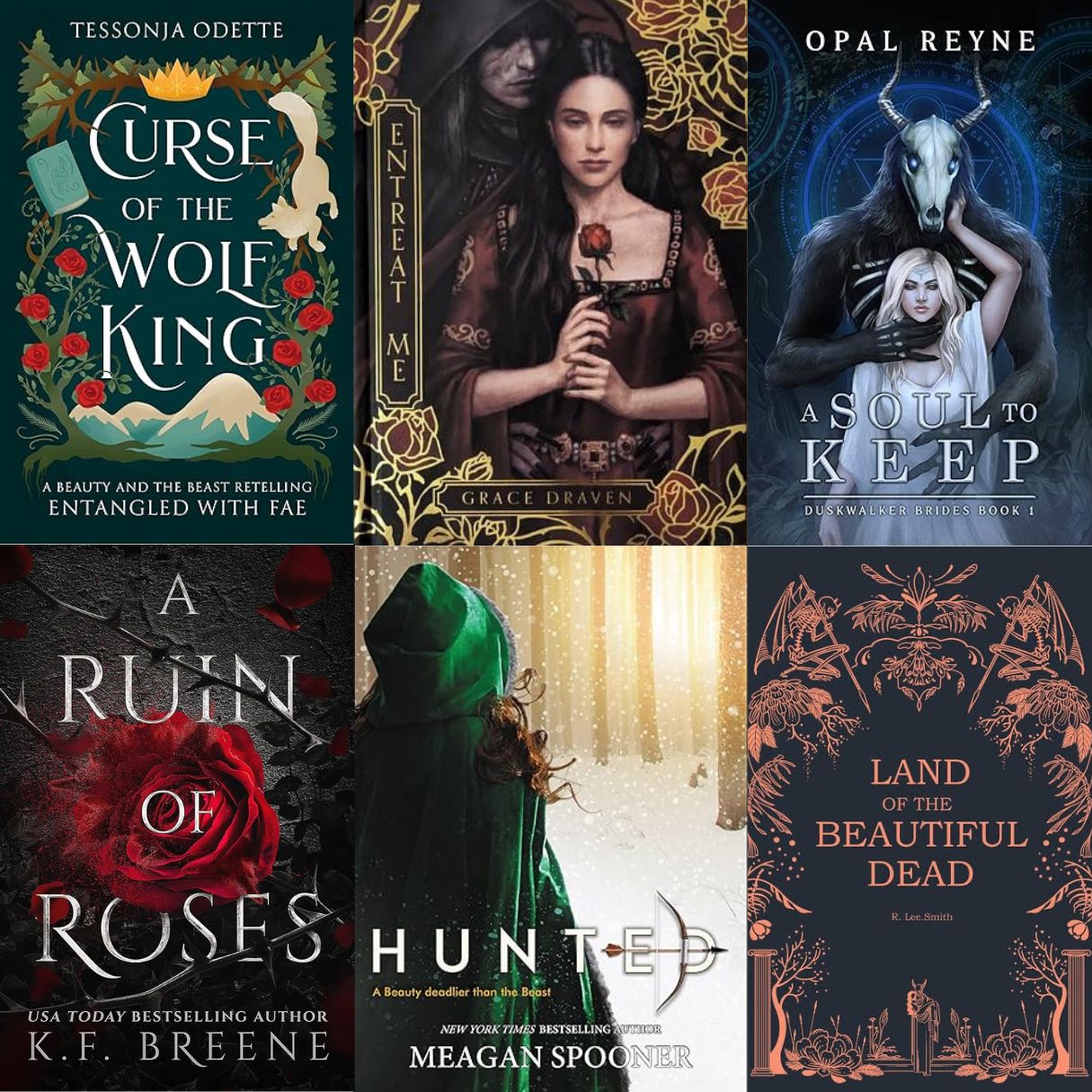
The Duchess Deal by Tessa Dare marries a scarred, spectacularly bad-tempered duke to a seamstress he expects to provide an heir and absolutely nothing else. Unfortunately for him, Emma has opinions about that arrangement.
Land of the Beautiful Dead by R. Lee Smith sends Lan into the court of a genuinely monstrous immortal, determined to end the horrors he’s inflicted on humanity, only to discover that falling in love with the bastard makes everything considerably more complicated.
The Belle of Belgrave Square by Mimi Matthews lets an anxious, book-loving heiress escape her controlling family by marrying a terrifyingly mysterious captain. Freedom comes with an isolated estate, a forbidden tower, and an inconvenient number of secrets.
When She Belongs by Ruby Dixon strands a traumatised former slave with a scarred, viciously grumpy war veteran on a remote space station, where mutual hostility gradually gives way to something rather more tender. (Yes, this one is a sci-fi rec. Yes, very unusual for me, I usually only watch it!)
Entreat Me by Grace Draven marches a sharp-tongued, sexually confident widow into a cursed castle to rescue her sister, only to have her encounter a disfigured warlord and discover neither of them is particularly inclined to behave.
Cruel Beauty by Rosamund Hodge raises Nyx to marry and murder a demon lord, then locks her in his enchanted castle and forces her to confront the fact her husband might be a monster, but she’s alarmingly comfortable with that (and her own considerable darkness).
A Soul to Keep by Opal Reyne sacrifices a village outcast to a skull-faced, human-eating Duskwalker, only for the terrifying creature to turn out to be desperately lonely, touch-starved, and rather inconveniently lovable.
Curse of the Wolf King by Tessonja Odette curses a fae king with a handsome human body, then recruits a bookish social outcast to help him return to his true wolf form. Unfortunately, falling for each other makes breaking the curse considerably less appealing.
Rose Daughter by Robin McKinley gives Beauty an enchanted castle, an extraordinary garden, and a Beast who gets to stay a Beast. A refreshingly literal commitment to loving someone as they are, even if the romance doesn’t quite earn its own ending.
Hunted by Meagan Spooner sends a determined huntress after the Beast she believes killed her father, only for him to imprison her, threaten her family, and commit the cardinal sin of hurting her dog. A wonderfully dark fairytale whose romance doesn’t quite earn its happily ever after.
A Ruin of Roses by K.F. Breene throws a spectacularly outspoken heroine into a cursed kingdom and its dragon shifter prince, then adds enough sexual chaos, outrageous humour and general debauchery to make Disney positively faint.
A Court of Thorns and Roses by Sarah J. Maas takes a stubborn human huntress prisoner in a cursed fae court ruled by a masked, shapeshifting High Lord. The slow-burn romance is packed with secrets, suspicious behaviour, and an infuriating refusal to answer Feyre’s questions, but it’s when she ventures Under the Mountain and faces three deadly trials to save the man she’s fallen for that things get properly addictive.

The Beast Isn’t Ugly, He’s Unacceptable.
The defining feature of the ‘Beast’ in this trope isn’t physical unattractiveness. While the original tale featured a literal beast with a monstrous form, and many dark romantasy retellings follow suit, the trope doesn’t actually require ugliness.
Just social exile.
He’s the man no one wants to deal with. They whisper about him, write him off as volatile, broken, immoral, dangerous.
Beyond redemption.
Sometimes that exile is embodied in scars or literal monstrosity. Sometimes it manifests as power so vast it isolates him from consequence (common in dark billionaire romances), or status so revered or feared he’s insulated by the very system he controls (frequently the core of dark mafia romances).
Sometimes it’s emotional damage so openly worn it makes everyone else uncomfortable.
It doesn’t really matter what form it takes, only that the world has decided who he is, what he is, and deemed him ugly. Unworthy of love. Or unloveable. Or simply so other that conventional acceptance or romance isn’t possible.
But he has to be a Beast.
If he’s not beastly in some way, it’s not the Beauty and the Beast trope. I don’t buy a supposedly beastly MMC who is really just a nice guy with some grating personality quirks. If he’s just misunderstood, if he’s a nice guy really, if all he needed was the love of a good woman and someone who sees him to suddenly start behaving like an acceptable or ‘normal’ member of society, he’s not a beast.
Not that he has to commit atrocities. How beastly he is and the exact form that takes depends on the story. But there has to be something genuinely feral and almost grotesque behind the label.
Society can easily understand a man that’s violent, dangerous, immoral, or otherwise unacceptable by its standards. Where it goes wrong is making that observation a judgment on the whole person based on one part of his nature.
And plenty of books borrow this structure, and do it with phenomenal range. The Duchess Deal by Tessa Dare gives us Ashbury, a scarred, self-loathing duke who lashes out at Emma because he assumes (thanks to all those societal norms) that he’s unworthy of love. He’s cruel, mean about the clothes she makes, but Emma simply refuses to take his shit. The banter is top-notch and often hilarious, making the romance surprisingly tender and funny.
Ashbury isn’t really much of a Beast, if we’re honest. Sure, he’s controlling, vicious, and basically reduces Emma and their marriage to a distasteful need to produce an heir, but as Emma finds underneath it all he’s also protective, generous in peculiar ways, and so comically bad-tempered that he falls at the very tame end of the spectrum.
Too tame for readers who want a genuinely monstrous MMC. For that you need to look at the darker side, and the likes of Land of the Beautiful Dead. R. Lee Smith delivers Azrael, whose monstrous reputation is genuinely justified by all the shit he’s done and does to the world. And Lan knows it. She waltzes into his court determined to put an end to the horrors he’s inflicted on humanity, and refuses to abandon that fight even as she falls for him.
And she falls hard (which, fair).
Azrael and Lan’s relentless battle of wills, painfully gradual emotional development, and the sheer devastation of their love story make the romance powerful enough to carry a Beast who’s genuinely monstrous.
Those aren’t interchangeable Beasts. They’re very different characters, and very different books.
And that’s entirely the point.

The Castle Is Its Own Character
Every beauty and the beast romance needs a castle (it’s intrinsic to the trope), but the castle doesn’t have to be a literal structure. We are, of course, all familiar with the stunningly beautiful, sprawling Gothic affairs in the Disney films and Jean Cocteau’s La Belle et la Bête.
And yet, we don’t actually need towers and battlements and wolf-infested forests surrounding us on all sides as snow falls picturesquely all around us. We love them. But we don’t need them.
What we need is a self-contained world with rules that differ from the norm.
The mansion. The estate. The remote keep. The isolated compound. The locked-off wing no one is supposed to enter. The billionaire’s penthouse. The mafia underworld.
Captivity, forced proximity, and isolation can all be social constructs, situational constructs, quirks of personality.
They don’t have to be literal.
Fairytales make the point physical by giving us the wolf-infested forest and the cursed castle. They cage Beauty so the pair are stuck together and forced to interact while being isolated from the outside world. But the same thing can happen because of the personalities of the couple, the situations they’re in, or the roles everybody else has forced them into. Many things can make characters isolated, bound together, or one captive to the other.
Whatever form this takes is functional.
The castle removes the noise of society, and cuts off external validation, comparison, or escape. Inside the castle, the relationship accelerates because the logistics of the bubble demand it. They learn each other’s rhythms because there’s nothing else to observe. It’s intimacy engineered by architecture, and that can be literal battlements, or it can simply be the lives they’re trapped inside.
In The Belle of Belgrave Square by Mimi Matthews, Julia’s a prisoner long before she reaches Captain Blunt’s isolated estate. Her controlling parents, crippling anxiety, and the expectations of Victorian society thoroughly trapped her pretty much since birth. Marrying the supposedly terrifying Captain is her escape. She even negotiates the freedom to ride and read as she pleases. But his forbidden tower, closely guarded secrets, and refusal to discuss his past create an entirely different kind of confinement. The castle gives her personal freedom while caging the potential of their relationship and trapping her inside a whole new set of barriers.
When She Belongs by Ruby Dixon puts the castle in deep space. Yes. Sci-fi. I know, I never read sci-fi. But this one was beauty and the beast sci-fi, so how was I to refuse? Jerrok’s a scarred, traumatised war veteran with dodgy prosthetics and a vicious attitude. He copes with all this by living on an isolated salvage station where he can avoid dealing with absolutely everyone. Until Sophie, who’s just survived years of sexual slavery (yes, it’s giving Daughter of No Worlds), gets dumped on his doorstep. He doesn’t want her there. She doesn’t want to be there. Their initial hostility is glorious, but slowly becomes trust as they start to understand each other’s trauma. The way they slowly become each other’s safety makes the romance work. The station (i.e. the castle) forces them together, but it’s the emotional barriers they have to dismantle that really keep them apart.
Forced proximity is a huge part of the mechanism in the beauty and the beast trope, but it isn’t the whole thing. People often compare one trope to another and lump Beauty and the Beast in with stuck together and enemies to lovers or grumpy/sunshine. But Beauty doesn’t have to be sunshine. Beast doesn’t have to be grumpy.
There are perfectly cheerful psychopaths.
Beauty Isn’t The Sweet Innocent, She’s The Disruptor
Oh, Belle.
The thing I’ve always loved about Disney’s Beauty and the Beast is her nose stuck in a book. Everybody fawns over Belle for her beauty while thinking she’s weird because she reads.
I loved that when I was a kid. Not gonna lie, still love it now.
The fact Belle’s beautiful doesn’t make them think she’s any less weird. She’s a thinker and a reader in a society that finds those traits rare and almost alien. Certainly not feminine.
Belle’s already somebody society considers odd before she ever meets Beast. But because Belle’s beautiful, she’s accepted despite her weirdness. So she understands what it’s like to be viewed as other, even if she benefits from the very standard that allows her to get away with it.
What Belle brings to the relationship is introspection.
She thinks, rather than going along with the mob mentality of society. As the villagers gather their pitchforks and charge off to kill the Beast, Belle’s trying to understand him. Her curiosity about the world and her perspective on life allow her to ignore the role society tells her she must fit, and the roles it tells her everybody else must occupy.
They name him a beast and a monster but because she has a brain that just never flies with her. She notices too much about Beast to reduce him to nothing but that label and is essentially just like, “Beast? Nah, that’s a load of bollocks.”
And she’s like that, dismissing what society tells her to think in favour of her actual thoughts, long before she meets Beast.
So Beauty enters the Beast’s domain with her curiosity intact, asking questions, pushing boundaries, observing. She’s unimpressed by intimidation and uninterested in whatever myth surrounds the Beast, whether it was written by society or himself.
Her power isn’t that she’s kind or patient or exceptionally good at putting up with a difficult man.
That’s the basic bitch version of this tale, and we’re not here for it.
Beauty’s power is that she doesn’t accept society’s binary judgment in the first place. Because, on some level, she’s already rejected society’s judgment of herself.
Beauty has her own beast. It’s not necessarily the same kind of beastliness, and doesn’t need to be violent or cruel. But there’s something in her that doesn’t fit the part she’s been assigned in life. That grates on society.
And that’s a way more interesting basis for a romance than one endlessly forgiving woman patiently renovating a man into someone more socially acceptable.
You can see different approaches to this in Entreat Me by Grace Draven, where Louvaen arrives at a cursed castle to rescue her sister. She’s a sharp-tongued, sexually confident widow who knows exactly what she wants and isn’t remotely shy about going after it. Her relationship with Ballard is wonderfully witty, stubborn and filled with spectacular banter. Ballard’s that rare creature who doesn’t resent her previous happy marriage or expect her to pretend she never loved another man.
Then there’s Cruel Beauty by Rosamund Hodge, where Nyx has been raised to marry and murder the demon lord Ignifex. She’s furious at the family who sacrificed her, bitterly resentful of the sister she still loves, and entirely capable of being cruel herself. She’s a wonderfully imperfect Beauty, full of anger, jealousy and contradictions. And the delicious irony is that Ignifex, the supposed monster, accepts the uglier parts of her nature that she’s been taught to despise.
Beauty doesn’t neuter Beast’s darkness. She navigates it.
And sometimes, she recognises it.

The Real Fantasy Is Selective Softness
We all have that magical transformation into love’s true form burned into our brains (though whether it’s from Disney or Shrek is anyone’s guess). But the emotional engine of the beauty and the beast trope isn’t really transformation so much as it is selectivity.
The Beast doesn’t have to become gentle, socially palatable or attractive to the world at large. He may simply become gentle here.
With her. For her.
He can remain feared, dangerous, uninterested in pleasing the world, yet within the private sphere of the love affair, he reveals an unexpected beauty of his own.
One other people never see.
The form that takes depends on Beauty. She may want literal gentleness. Or she might have an itch for someone who will brutally murder anyone threatening her because he’s terrified of losing her (which, fair).
The lure isn’t in the specifics of how he softens with her, but the fact he only softens for her (and, usually, that he hardens for her just as much…yes, I went there).
If we’re to buy the romance, whatever exists between them needs to convince us that each sees something in the other that the world has missed, dismissed, or forbidden.
It’s easy to make this all about a beastly man becoming sweet for one special woman. That’s one version. But she might not need him to stop being beastly. She might understand the beastliness. She might want it. Or be beastly enough herself to be unafraid in the way others expect.
A Soul to Keep by Opal Reyne presents us with Orpheus, a skull-faced, human-eating Duskwalker who could literally devour Reia if he loses control. And Reia? Already shunned by her village, well before they decide she’ll make a convenient sacrifice to the monster. Neither is particularly wanted by the world. Orpheus is terrifyingly dangerous, but so desperately lonely and touch-starved he’s very relatable despite the otherness. He’s also almost painfully eager for someone to love him. The gorgeous thing is Reia’s gradual discovery of how affectionate and protective he can be while still remaining unequivocally monstrous.
He remains a dangerous creature; she doesn’t need him to become a handsome prince. Their romance runs on finding the acceptance in each other they’ve always been denied by anybody else.

The Glow-Up Is Optional (And Usually A Cop-Out)
Whether the Beast becomes conventionally attractive by the end of the tale is where things get interesting. Of course, Disney turns Beast back into the stunningly handsome prince. The curse breaks, the scars vanish, and that can be cathartic.
It can also feel like a betrayal of the story’s own heart.
Because if the Beast only becomes lovable once he becomes palatable, then the romance wasn’t about being seen so much as delayed conformity.
Some stories end in the transformation. Others never allow him to become human and are far better for it. Of course the non fantasy versions take this point less literally. But the question is, does the thing that everyone viewed as beastly and ugly at the start change into something more acceptable at the end.
And, if so, has the story actually made that change believable?
Curse of the Wolf King by Tessonja Odette turns the handsome-prince ending completely on its head. Elliot is a fae king whose curse has trapped him in a human body. Breaking it means returning to his true wolf form, potentially losing Gemma forever. Which makes the whole question of transformation rather delicious. His human appearance isn’t salvation. It’s the curse.
Loving him means accepting the Beast he actually is, not the handsome man he appears to be. Delectable. We love it. Alas, not all retellings stick the ending.
Spoiler warning for Rose Daughter…
Robin McKinley made the choice literal by having Beauty choose life with Beast, who remained in his beastly form. Which is exactly the ending you’d want from a story about loving someone as they are, rather than turning them into somebody more conventionally acceptable. And usually I’d be all for it, but the climax is cashing cheques the romance didn’t earn.
There’s an awful lot of page time spent tending roses and very little developing the relationship. When Beauty finally declares her love, you’re kinda sat there thinking, Wait…really?
Why?
The ending makes a wonderful point about true love requiring acceptance of true nature, but without any indication Beauty actually fell in love with Beast’s nature it’s all a bit…meh.
Likewise spending a whole novel demonstrating you can fall hopelessly in love with the beauty that exists within the beast, and don’t need said beast to conform to regular beauty standards because you see past all that superficial bullshit…
And then poof. A handsome prince! Rejoice.
Yeah.
Cop out.
The best versions of this trope tend to understand transformation doesn’t have to be cosmetic or literal. The real shift might happen internally: in how the Beast relates to others, to himself, and his own emotions and ability to connect.
He does not need to become beautiful, just reachable.

Where the Trope Breaks
Different tolerances and tastes do strange things to this trope. I love dark romance. I’m happy for the Beast to go full-on unhinged literal beast and never soften. I’ve a very high tolerance for love interests that are genuinely, unforgivably despicable, because I love dark romance. And while that shelf is only something I came to in recent years as the genre exploded in popularity, when you take a glance at all my other shelves you can clearly see the preference isn’t new.
A girl likes her romances dark, smutty, complicated, and just a little unhinged. And she always has.
If you’re a dark romance reader, especially if you’re on the more extreme end of dark romance, the more beastly the beast is in these books, the better. That’s preference, and taste, and entirely understandable.
If you don’t like your romance on the darker side, there’s definitely a point where a beast getting too beastly stops feeling romantic. Exactly where that line gets drawn is entirely down to preference, taste, and your tolerance for things of that nature.
A cosy rom-com reader and somebody who loves H.D. Carlton aren’t necessarily looking for the same Beast.
Neither’s right. And I’ve enjoyed the cosy retellings of this trope as much as the darker versions at times. As long as it’s well written, I’m down for pretty much anything.
But the darker the Beast gets, the harder the romance has to work to remain romantic.
You see this in dark romances generally, it’s not confined to this trope. The longer the trigger warnings get the more you know the book’s going to have to ramp up the romantic legwork. Non-consent on the page is the easiest litmus test here: for a reader to still buy the romance after that? The romance has some serious work to do. For some readers it’s a literal impossibility to even conceive of a romance with a man who had done something like that to you. And what gets put to the ‘Nope, absolutely not after that!’ list is, again, down to taste.
In real life we obviously don’t condone any of it in a romantic partner. But on the page there’s a surprising amount you can believably work through and still root for the couple. If the romance is done well. If the romance puts in the graft.
The problem is that a lot of romance books don’t put that much thought into how the romance is actually constructed, how the characters actually fall in love, what it is about each other specifically that makes them fall, and why or how they could possibly fall for that person in the face of all they are and all they’ve done.
That’s true for any romance novel, but a novel that actively presents one half of the love affair as a Beast?
Work cut out.
The more beastly he is, the harder the romance has to work, and the more obvious it is when it falls flat.
If the romance isn’t that deep, the Beast can’t be that dark; the darker Beast gets, the less believable the romance becomes, the more work the narrative has to do to sell the romance.
Hunted by Meagan Spooner is what happens when the Beast is suitably beastly but the romance can’t quite keep up. Here, Beast breaks Yeva’s ribs, chucks her in a dungeon, pulls the old ‘I’m your fellow prisoner let’s bond, GOTCHA!’ trick, threatens to murder her sisters, and makes the literally unforgivable move of hurting her dog.
Beastly bastard.
The problem is there’s precious little romantic development to take Yeva from wanting to kill him (completely justifiable given what he did to Doe-Eyes) to falling in love with him. The Beast earns his reputation, but the romance can’t carry the ending.
A romance without the depth needed to support the darkness rapidly falls apart.
Which is probably why a lot of Beauty and the Beast retellings make him misunderstood rather than genuinely beastly. If he’s misunderstood, he’s basically a decent guy who isn’t easy to get along with.
Personally, I don’t like that.
I don’t think it earns this trope.
It’s grumpy/sunshine territory and while there’s nothing wrong with that, it’s a completely different trope.
You can’t draw a universal line at the point Beast becomes too cruel, too dangerous, or too morally compromised. But there absolutely is a point at which a particular book stops making its own romance believable. Not necessarily because the Beast got too dark, but because the romance isn’t doing enough heavy lifting to carry the darkness.
A Ruin of Roses by K.F. Breene is a good book for figuring out your tolerance level. You’ll either relish Finley’s brazenness, the sexual chaos, and the book’s irreverent take on the fairytale, or you’ll find her irritating and astonishingly immature.
Agency doesn’t magically appear on the page just because you gave Beauty a bit of sass, any more than giving a guy a short temper makes him a Beast.

Beauty And The Beast Is A Structural Trope, Not Woobification
I’m not sure I’d consciously thought about this until I started working on my new dark romance duology. I’m a bit of a plotter pedant. I’ve never understood how pantsers write without a plan. I like to understand what makes everyone tick. Characters need arcs, even sub characters usually have a clearly outlined arc, even if I end up never using most of it. I use beat sheets to help me figure out pacing and cadence, and there’s usually more than one beat sheet going on in any given book.
A dual POV like my duology has a lot going on. The overarching romance beat sheet, the beat sheet I use to help me make the mystery compelling, and each POV character gets their own beats to dance to.
For the MMC in the current WIP I’m using Beauty and the Beast.
Not as a trope, or a character description, or even as an arc, but a full-blown beat sheet that runs his POV chapters for the whole series. And it wasn’t until I sat down and actually mapped out the beats of beauty and the beast that I realised just how structural this trope is.
The Beast has to be a fucking Beast. If his beast level drops, you find yourself in a completely different trope.
And the word trope becomes annoying, because some tropes are just that: tropes. Caught in the rain is a scene. It can’t carry a book.
Enemies to lovers can carry a book (particularly if the enmity bit involves actual bodily harm).
And Beauty and the Beast can carry a book, as long as the story respects the structure and doesn’t descend into woobification. In other words, if you’re using this trope as the backbone of your whole book, you can’t reduce it to Draco in Leather Pants.
This is one of those tropes that can absolutely be the defining structure of a novel. It can craft the whole narrative. It determines how the two main characters relate to each other, interact with each other, bounce off each other. It helps you understand how the world sees them, how they respond to that view, and really dig into the wounds and motivations and all the juicy stuff that tells you which way a scene should go. How an argument would end. And (most importantly when you’re writing romance) what would make this guy fall? What’s in him that will make her swoon?
If the answer is ‘Oh! Poor, tragic, deeply tortured soul. It’s not your fault the world forced you down a dark path!’ you’ve missed the point.
And the point helps everything about the book. If you let it.
The best beauty and the beast retellings don’t just let the trope inform the plot, they build the architecture of the whole narrative around the structure this particular dynamic creates.
A hero being a spectacularly angry bastard in a scene or two doesn’t make it Beauty and the Beast. Nor does giving him scars, making him rich, or slapping a morally grey sticker on his derrière. The dynamic needs to thread the whole plot, drive it, not just describe the character.
Whether the author is as type A as me and calls it a beat sheet isn’t the point. I’m fairly sure the best authors don’t actually need them because they’ve metabolised the natural rhythm of narrative and just do it naturally, but maybe that’s my inferiority complex showing. The point is, when this trope’s used structurally, readers feel it.
When it’s not? Well… there’s a reason ACOTAR isn’t the best book of the series. Slapping the trope sticker on it didn’t help the sagging pace in the first half of the book. And the series really finds its stride when it finds its structure. But that’s a point for another blog.
Thank Fuck Beauty Has A Brain (And Is, Apparently, An Author)
The inevitable conclusion for me was that the beauty and the beast romance trope isn’t a fantasy of transformation, but authorship.
It is a story about who gets to decide what someone is.
The Beast begins the narrative already defined. By society, reputation, rumour, fear, whatever. His exile isn’t accidental; it’s enforced, maintained, and repeated so much it coalesced into his whole identity. And he is exactly what he is said to be, at least on one level.
And Beauty is pre-defined too. Beautiful, therefore acceptable. Kind, therefore harmless. Different, but not so different her beauty doesn’t compensate for it in the eyes of the same judgemental arseholes who condemned Beast to exile.
That’s the point of the binary. Society looks at each of them and decides what they are. Good, bad. Desirable, ugly. Beauty, Beast.
Beauty disrupts everything by refusing to accept the story of Beast is already closed. Within the sealed world of the castle, stripped of audience and performance, they have to encounter more of each other than the roles they’ve been assigned. What they find doesn’t have to be comfortable, safe, or conventionally acceptable to everybody watching from outside.
It just has to be true. And each needs to see in the other something that helps them see themselves more clearly. That allows them to accept their own true nature, even as they fall for someone else’s unconventionally beautiful truth.
Neither of them is limited to being only that thing society decided they are.
And that’s why the trope endures across genres, heat levels, and centuries. Not because we all want beasts to turn out to be princes. But because Beauty looks at a man the world already judged to be unacceptable, and has the audacity to keep thinking for herself.





 4.28 Average