Skip to content

There are very few sub genres of romance that cause as much hand-wringing, side-eye, and heated discourse as the stalker romance trope. Say the words out loud and half the room recoils, while the other half whips out their Kindle, ready to add your recs to their TBR.
And yet.
Despite the controversy, despite the think-pieces, despite the constant “But in real life..” caveats that follow this trope around like a nervous chaperone, stalker romance refuses to die.
Much like the MMCs and occasional FMCs who embody this trope, stalker romances have real staying power. You just can’t shake them. No matter how hard you try, they always pop back up where you least expect them.
Staring in the window. Hanging out of a tree. Sniffing the knickers in your lingerie drawer.
The thing to understand about this trope is that it isn’t a trend. It isn’t a TikTok phase. Though it is endlessly trending on TikTok.
Stalker romance is a deeply sticky fantasy that keeps reappearing in different skins, tones, and levels of darkness. Why?
Because on some twisted psychological level, we need it.
At least, those of us who don’t fall into the instant recoil category (and, let’s be honest, a lot of those who do, they just haven’t realised it yet).
I used to be firmly in the recoil category. The “Why the fuck would I ever want to read that?” category. Then curiosity got the better of me, I read Haunting Adeline (and damn was that throwing myself in at the deep end), and I never looked back.
This trope doesn’t endure in spite of the discomfort it creates. It survives because of it.
But why?
What is it about this trope that keeps so many of us reaching for it again and again?
Quick Reference Stalker Romance Recs
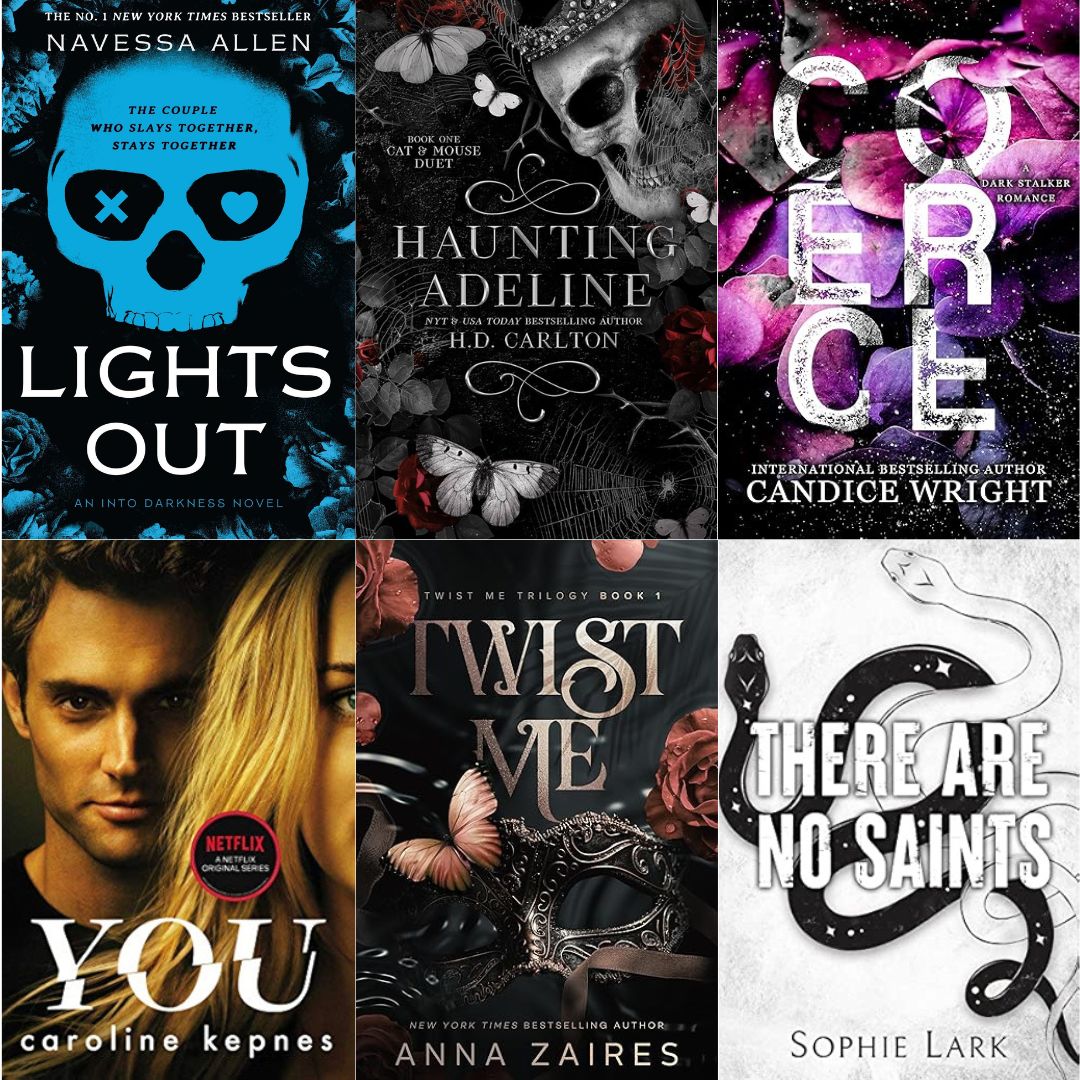
- Haunting Adeline by H.D. Carlton
- Lights Out by Navessa Allen
- That Sik Luv by Jescie Hall
- The Danger You Know by Lily White
- There Are No Saints by Sophie Lark
- The Bad Guy by Celia Aaron
- Little Stranger by Leigh Rivers
- Obsession by Gemma Weir
- Stolen Touches by Neva Altaj
- Her Vigilante by Lillian Lark
- Untouchable by Sam Mariano
- Descent by Sam Mariano
- Twist Me by Anna Zaires
- Take Me With You by Nina G. Jones
- Corrupt Idol by Dinah Harper
- My Stalker, My Protector by Jessa Kane
- Notice by K. Webster
- You by Caroline Kepnes
- Even If It Hurts by Sam Mariano
- Coerce by Candice Wright
- Torment by Dylan Page
- The Collector by John Fowles
The Big Thing To Understand About The Stalker Romance Trope
Here’s the major thing about this trope that a lot of people (mainly those who haven’t read much of it) don’t understand.
What people call ‘stalker romance’ is really a collection of very different power dynamics that happen to manifest in the same behaviour.
When people argue about stalker romances, they’re usually arguing past each other because they’re picturing completely different books. One person is thinking of a sweetly unhinged protector who knows her coffee order, notices when someone’s getting threatening and scares them off before they do anything bad. Before the heroine has even realised they’re a threat.
Another is thinking of something brutal, coercive, and psychologically corrosive.
Both exist. Both can be stalker romances.
It’s an umbrella, not a single dynamic. The stalker romance trope covers everything from soft obsession to full-blown nightmare fuel, and readers are far more discerning about which version they want than the discourse ever gives them credit for.
Most of us don’t just like stalker romance.
We like a specific kind of stalker romance.

The Real Fantasy Isn’t Stalking
At the heart of the stalker romance trope is something romance in general has always promised but rarely delivers with this level of intensity: certainty.
No mixed signals.
No slow burn confusion.
No “Does he like me or am I projecting?” spiral at 2am.
He wants her. He knows it. He acts on it.
That’s the core seduction. The stalking is the mechanism, not the point.
In a lot of romances, desire unfolds gradually. In stalker romance, desire detonates on sight. The MMC doesn’t waffle. He doesn’t need convincing. He doesn’t need character growth to realise what he wants. The male leads in these books (and, occasionally the women) become obsessed immediately, usually in the first chapter we see them, often on sight.
They’re walking past a book signing and catch a glimpse of the author. Boom. Instant obsession.
They’re minding their own business, making coffee in their kitchen one morning, when their roommate’s hookup wanders in wearing nothing but a shirt. Boom. Instant obsession.
They stalk because they’re already interested.
The conflict doesn’t come from whether or not they’re interested. It’s what they’re willing to do about it.
There is something deeply intoxicating about that level of decisiveness. Especially in a genre landscape full of emotionally constipated men who need 300 pages and a near-death experience to admit they care.
Stalker romance cuts straight through that noise.
And those 300 pages can be dedicated to spice instead of hand-wringing and will they/won’t they.
They do. Repeatedly.
And it’s glorious.
Being Seen. Truly, Unsettlingly Seen
Another huge piece of the appeal of the stalker romance is attention. Not polite attention. Not performative interest. Obsessive, invasive, hyper-attuned focus.
He notices patterns.
He remembers details she forgot she shared.
He knows her routines, her habits, her vulnerabilities.
That level of awareness can feel terrifying or intoxicating depending on framing. Stalker romance leans hard into the intoxicating.
At its best, this trope scratches the fantasy of being known without having to explain yourself.
No emotional labour. No constant translation. He already sees it. All of it.
This is why so many versions lean into competence. He isn’t just watching. He’s handling things. Fixing problems before they become problems. Removing obstacles. Neutralising threats.
It’s not subtle. It’s not gentle.
But it’s very effective at delivering the feeling of being cared for with terrifying efficiency.
Acts of service. But make it unhinged.
A lover so attuned to you that you never have to explain your quirks, your needs, your trauma, your current level of mental stability and what will make you feel better. He takes one look at you and just knows. Understands. Takes action to make you feel better without expecting you to tell him how to do that.
Fear Plus Safety Is Intoxicating
One of the most interesting things about stalker romance is how often the MMC embodies both danger and protection at the same time.
He is the thing that should scare her.
He is also the reason nothing else can.
That paradox does a lot of heavy lifting.
The fear heightens the tension. The protection reassures the reader. When done well, the danger never feels truly aimed at the FMC. It feels contained around her, like a perimeter he’s built and refuses to let anyone cross.
That’s why a lot of people who enjoy this trope are very particular about tone. They don’t want relentless terror. They want a controlled threat. They want to feel the edge without falling off it.
This is also where stalker romance starts to bleed into other beloved tropes. Possessive heroes. Vigilantes. Anti-heroes. “Touch her and die” energy. The stalking becomes one expression of a broader promise: she is protected, whether she asked for it or not.
The Safe Rollercoaster Effect
Enjoying the stalker trope doesn’t mean you’d actually swoon over some guy stalking the shit out of every corner of your life just because he happened to look hunky while doing it.
It’s a fantasy. If it happened in reality, the majority of us would just call the Po Po and let them handle it. But being fully aware you (probably) wouldn’t like it in real life doesn’t stop you enjoying the ride when it’s fictional.
Stalker romance works because it offers controlled danger with a guaranteed landing. You get the adrenaline spike without the real-world consequences. You get to explore fear, loss of control, obsession, and power imbalance inside a narrative contract that promises resolution.
Romance as a genre already does this with emotional risk.
Stalker romance just turns up the volume.
You know you’re not reading a cautionary tale. You’re reading a fantasy where the chaos eventually coalesces into something stable. Even if that stability looks a bit…morally sideways.
That safety net is doing a lot of work. And it’s one reason this trope thrives in fiction while being universally condemned in reality.
Power Exchange Without Negotiation
Let’s be honest. A significant chunk of stalker romance is about power.
Who has it.
Who gives it up.
Who pretends they don’t want it.
Sometimes that power exchange is explicit and erotic. Sometimes it’s psychological. Sometimes it sits in that murky space where desire and fear blur together and the characters themselves don’t quite know which side they’re on yet.
What makes stalker romance distinct from other dominance-heavy tropes is that the power imbalance exists before consent is negotiated. Before attraction is acknowledged.
Sometimes before the FMC even realises what’s happening.
That’s deeply transgressive. And exactly why it appeals to people who enjoy pushing against the edges of romantic safety.
It’s also why there’s such a strong split between readers who want this framed as primal play or CNC, and readers who want it treated as psychological suspense rather than kink.
Same surface behaviour. Completely different emotional experience.
Again, umbrella problem.
POV Is Everything
Point of view is the moral thermostat of stalker romance.
When you’re outside the MMC’s head, he’s a threat. When you’re inside it, he’s often a man who has decided, with frightening certainty, that this is his person.
Access to his interiority reframes everything.
We see intention instead of mystery. Devotion instead of randomness. Logic, however warped, instead of chaos. That doesn’t make his actions ethical, but it makes them legible. And legibility is what turns fear into fascination.
This is why so many stalker romances include MMC POV. It’s also why I included an MMC POV in That Boy, despite the fact I’d never written a male perspective before. That Boy isn’t a stalker romance (though Matt has his moments), but when you have a morally ambiguous dynamic between love interests the story is so much richer when you get both POVs.
Endless panic is exhausting to read.
Once the reader understands the rules of the game, the tension can shift from survival to negotiation.

Different Flavours Of Stalker
If you actually spend any time reading stalker romance, one thing becomes very obvious very quickly: nobody is asking “Do I like stalker romance?” in the abstract.
The real question is always “Which version do I want right now?”
Because, like I said, ‘stalker romance’ is a collection of very different power dynamics that all happen to use the same transgressive behaviour. Same surface actions. Completely different emotional experiences.
And readers are far more intentional about this than the discourse gives them credit for.
These are the main lanes I see, over and over again.
The ‘She’s Into It’ Version
This lane leans into taboo validation rather than fear. The FMC might be startled, but she isn’t traumatised. She’s curious. Intrigued. Sometimes quietly thrilled. Sometimes very vocally thrilled.
The emotional alignment happens fast. The tension doesn’t come from resistance so much as escalation. Secrets. Proximity. The point where interest tips into obsession and nobody pretends it isn’t mutual anymore.
This is stalker romance as illicit fantasy. Less terror, more I probably shouldn’t want this… but I absolutely do.
Book Recs:
Haunting Adeline by H.D. Carlton
A taboo, high-heat stalker romance where fascination and desire kick in early and the danger is part of the thrill, not a reason to run.
Lights Out by Navessa Allen
A darkly funny, sexually charged take on stalker romance where the FMC clocks the obsession fast and leans into it with enthusiasm.
That Sik Luv by Jescie Hall
An intimate, voyeuristic obsession romance where being watched becomes part of the attraction long before it becomes a problem.
The Danger You Know by Lily White
A slow-creep, psychologically charged stalker romance where curiosity outweighs fear and inevitability replaces resistance.
There Are No Saints by Sophie Lark
A predator-prey obsession where the FMC is mentally engaged, complicit, and drawn into the darkness rather than chased through it.
The Caretaker Stalker
This is surveillance as protection.
He watches to make sure she’s safe. He intervenes quietly. He handles problems she never even realises existed. The stalking isn’t framed as domination so much as responsibility.
This lane overlaps heavily with competence porn and protector dynamics. It often feels less cruel, even when it’s deeply invasive, because the intent is caretaking rather than control. He isn’t watching to own her. He’s watching because someone has to, and he’s decided that someone is him.
Acts of service, taken to an unsettling extreme.
Book Recs:
The Bad Guy by Celia Aaron
A quintessential caretaker-stalker romance where constant surveillance, provision, and intervention are framed as protection and responsibility rather than ownership.
Little Stranger by Leigh Rivers
A quietly intense obsession where the MMC watches, guards, and emotionally shelters the FMC, positioning himself as her unseen protector long before she realises it.
Obsession by Gemma Weir
A competence-heavy stalker romance where vigilance, monitoring, and interference are justified as safeguarding, blurring care into fixation.
Stolen Touches by Neva Altaj
A protector-first obsession, dark mafia romance, where the MMC’s surveillance and decisive intervention stem from a self-appointed duty to keep her safe at all costs.
Her Vigilante by Lillian Lark
A vigilante-leaning caretaker stalker romance where watching, guarding, and quietly removing threats is the MMC’s primary expression of devotion.
The Monster Lane
This is where the trope earns its reputation.
Obsession without softness. Control without apology. Fear isn’t a side effect here. It’s part of the appeal. The MMC isn’t trying to reassure anyone that this is fine or healthy or romantic in a conventional sense.
This lane demands very clear expectations and a high tolerance for discomfort. It isn’t pretending to be gentle, and it doesn’t want to be. The fantasy lives in the transgression itself, not in smoothing it over.
Book Recs:
Untouchable by Sam Mariano
A brutal, unapologetic obsession where control is the point, consent is coerced, and the MMC makes no attempt to soften what he’s doing or why.
Descent by Sam Mariano
A deeply uncomfortable dark billionaire romance where the power-imbalance is intense, obsession escalates into captivity, and the fantasy lives squarely in domination rather than safety.
Twist Me by Anna Zaires
A classic monster-lane stalker romance where fixation turns into abduction and fear is inseparable from desire from the very first page.
Take Me With You by Nina G. Jones
A psychologically harrowing obsession where the MMC’s surveillance and pursuit are relentless, intimate, and deliberately destabilising.
Corrupt Idol by Dinah Harper
A chilling stalker romance that leans fully into predator territory, offering obsession without softness and transgression without apology.

The ‘Sweet Stalker’ Evolution
A softer, more sanitised evolution of the trope, where the behaviour is framed as intense devotion rather than menace.
This version often goes out of its way to reassure the reader. He’s obsessed, yes, but he’s respectful. Protective. Emotionally available. The edges are sanded down just enough to keep the fantasy palatable without losing the core appeal.
It’s controversial. It’s also wildly popular. For a lot of readers, this is the gateway drug.
Book Recs:
Lights Out by Navessa Allen
Yes, this one gets a second mention because it’s genuinely the sweetest example of a dark romance I’ve read to date. It’s absolutely a stalker romance, and very much a she’s totally into it dynamic, but there’s no escaping the fact that Josh is essentially a golden-retriever cinnamon bun who just happens to be watching you a bit… enthusiastically.
My Stalker, My Protector by Jessa Kane
A short, high-heat gateway stalker romance where obsessive watching is framed as pure devotion and protection, with constant reassurance that the MMC’s intensity is loving, not threatening.
The Bad Guy by Celia Aaron
Another double entry, this one often straddles caretaker and sweet-stalker territory, leaning hard into reassurance, competence, and devotion, sanding down the menace without removing the obsession.
Notice by K Webster
A quieter, emotionally driven stalker romance where fixation is framed as connection and care, keeping the tone intimate and reassuring rather than frightening.
The Psychological Thriller Version
Less kink. Less reassurance. More slow-burn dread.
Here, the stalking is deliberate, methodical, and unsettling. The romance doesn’t replace the tension. It grows alongside it, and it doesn’t always end well.
When people say they want ‘actual stalking’ and not primal play disguised as it, this is usually what they mean. The emotional experience is closer to suspense than seduction, even when the romance eventually lands.
And it doesn’t always land. Sometimes, these stalkers turn out to be so obsessed they’d rather kill the object of their desire than let them go.
Book Recs:
You by Caroline Kepnes
A masterclass in psychological stalking where obsession is intimate, methodical, and increasingly lethal, and love is just the story the stalker tells himself while destroying everything in his path.
Even If It Hurts by Sam Mariano
A deeply unsettling obsession where control, manipulation, and fixation escalate toward emotional and physical harm, and the romance never fully displaces the threat.
Coerce by Candice Wright
A bleak, tension-heavy stalker romance where surveillance and coercion drive the narrative and obsession feels more like a countdown than a courtship.
Torment by Dylan Page
A harrowing psychological obsession story where fixation curdles into violence and the emotional payoff is deliberately uncomfortable rather than reassuring.
The Collector by John Fowles
A classic psychological stalker narrative where obsession leads to captivity and destruction, and the fantasy of possession ends in devastation rather than love.
Most people don’t live in one lane forever.
They move between these versions depending on mood, tolerance, and what kind of intensity they’re craving at the time.
Very few want all of them all the time.
And that’s the part that often gets lost in the noise.
Liking stalker romance doesn’t mean liking every stalker romance. It means knowing which flavour scratches the itch you’re currently in the mood to indulge.
The Consent Conversation (In Brief, Because We’re All Adults Here)
Yes, this trope raises ethical questions. Yes, it plays with consent in ways that would be unacceptable outside fiction. No, enjoying it does not mean endorsing it.
The genre has largely solved this internally through transparency.
Trigger warnings. Clear signalling. Reader-driven sorting. People opt in with eyes open.
What interests me far more than the morality debate is how intentional the readership is. This isn’t accidental consumption. People know exactly what they’re picking up, and they choose accordingly.
Stalker romance survives not because readers have no idea what they’re getting into before they pick it up (though some certainly aren’t fully prepared!), but because they are deliberate.
Which Version Works For You?
If you’re ever trying to articulate your taste, these are the questions that actually matter:
- Do you want to be inside his head, or afraid of him?
- Do you want the FMC resistant or receptive?
- Do you want caretaking or cruelty?
- Do you want erotic tension or psychological suspense?
- Do you want fear as flavour, or as the point?
Answer those, and you’ll know whether a book is likely to work for you long before the first chapter.
Why The Stalker Trope Is Here To Stay
Stalker romance endures because it taps into something primal about desire and attention. The fantasy of being chosen with absolute certainty. Of being the centre of someone’s world in a way that feels overwhelming, consuming, and inescapable.
It takes the romance promise and sharpens it until it’s dangerous.
That’s not for everyone. It doesn’t need to be.
But as long as people crave intensity, obsession, and love stories that flirt with the edge of discomfort, stalker romance will keep finding new ways to reinvent itself.
Sometimes softer. Sometimes darker. Sometimes unapologetically feral.
And honestly?
We wouldn’t want it any other way.






 4.28 Average