Skip to content

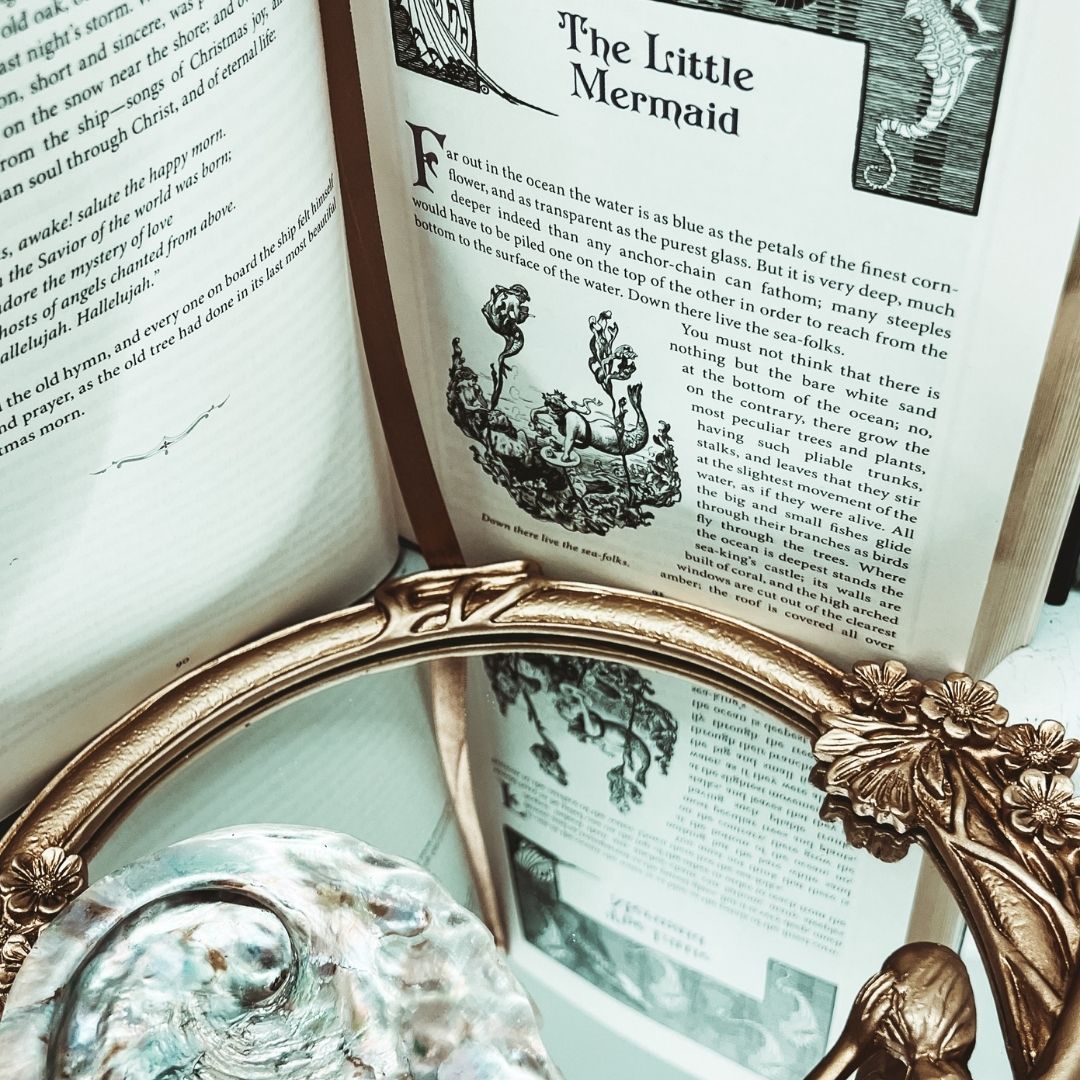
Fairytale retellings form one of the most vibrant mini‑genres in contemporary publishing. Where romantasy is concerned, they’re particularly prevalent, but few tales are as resilient (or as hotly debated) as reimaginings of Hans Christian Andersen’s The Little Mermaid (1837). From its tragic original form to Disney’s exuberant 1989 musical, the story of a sea‑dwelling heroine who trades her voice and her home for a chance at love has been told and retold for nearly two centuries.
The boom of YA fantasy in the 2010s, the massive success of the Pirates of the Caribbean franchise, and the resurgence of merfolk with Disney’s live‑action remake have made mermaids one of the most popular subjects for novels and movies.
Little mermaid retellings tap into very specific anxieties around identity, bodily autonomy, social mobility, and self‑sacrifice. Modern authors repeatedly return to this romance trope because its core motifs naturally lend themselves to reinvention.
This blog specifically came about because of Voice of the Ocean. I’ve been watching Kelsey Impicciche’s Sims videos on YouTube for years (actually obsessed). So when she announced she had a Little Mermaid retelling in the works I was delirious with excitement, but couldn’t read it immediately on release due to stupid work.
In the interim, my inability to avoid spoilers on TikTok and Boostagram left me…torn.
A lot of people loved it, a lot of people hated it.
Some of the people who hated it are people I know to be very good judges of quality writing.
And I so desperately did not want to be disappointed by it.
So much so that, to be honest, I haven’t actually managed to make myself read it yet.
Instead, I found myself musing on the subject quite. Remembering various retellings of The Little Mermaid I’d read, wondering what made them so pervasive, so prevalent and, in particular, what makes them work.
And what makes a book a genuine Little Mermaid retelling, as opposed to simply a book about mermaids? Why do certain versions of this tale so completely capture the imagination?
Quick Reference Book Recs
Fantasy Retellings
- To Kill a Kingdom by Alexandra Christo
- Sea Witch and Sea Witch Rising by Sarah Henning
- Drown by Esther Dalseno
- Midnight Pearls by Debbie Viguié
- The Little Selkie by K. M. Shea
- The Surface Breaks by Louise O’Neill
- The Seafarer’s Kiss by Julia Ember
- Mermaid by Carolyn Turgeon
- Fathomless by Jackson Pearce
- Bride of the Sea by Emma Hamm
- The Salt Grows Heavy by Cassandra Khaw
- Part Of Your World by Liz Braswell
- Voice of the Ocean by Kelsey Impicciche
Modern Retellings
- The Summer of Chasing Mermaids by Sarah Ockler
- Fish Out of Water by Jennifer Sommersby
- The Mermaid’s Daughter by Ann Claycomb
Retelling Adjascent
- The Deep by Rivers Solomon
- The Mermaid and Mrs Hancock by Imogen Hermes Gowar
- The Girl From The Sea by Molly Knox Ostertag
What Counts As A Little Mermaid Retelling?
Before we dive into this, it’s worth taking a deep breath and asking what exactly constitutes a little mermaid retelling. Andersen’s short story is unusually specific for a tale of its time: a mermaid rescues a human prince from a shipwreck; she falls in love and longs for a human soul; she visits a sea witch who grants her legs (at the price of her voice and the promise of excruciating pain); she must win the prince’s love or dissolve into sea‑foam.
Those beats have become a kind of modern mermaid canon. And while there are many books featuring mermaids that don’t include these elements, and others that have a nod to Andersen’s tale here and there, for a novel to qualify as a genuine retelling (IMO) it needs at least two of the following structural elements. And these aspects should be central themes, not just allusions or cameo references:
- Crossing worlds: a mermaid or siren leaves their ocean home and enters the human realm (or vice versa). The story hinges on the boundary between land and sea.
- Transformative bargain: the protagonist makes a pact (often with a witch or another supernatural power) that requires giving up a part of herself.
- Voice and silencing: losing one’s literal voice or experiencing metaphorical erasure and/or agency loss.
- Pain as price: walking on land hurts; the character suffers physically and emotionally to inhabit a new identity.
- Love or longing across worlds: the engine is romantic or existential yearning that crosses a social or physical divide.
- Soul or immortality themes: questions about what it means to be human or to possess an immortal soul.
Works that keep these bones, even when they twist the aesthetic and setting, resonate most strongly as Little Mermaid retellings.
Although they don’t need every element, a true retelling of The Little Mermaid often follows the same pattern of essential plot points: a person born of the sea encounters a drowning human and saves them, falling in love in the process. They’re so enamoured by that human they strike a Faustian bargain that grants them the ability to walk on land, often at the cost of their voice. The story ends in either an Andersen‑esque tragedy or a Disney‑style happily ever after.
The Little Mermaid Trope And Feminism
Most people think of the name ‘Ariel’ when this story comes up in conversation, but the truth is that Anderson never named his mermaid. She is only ever referred to in his story as ‘the little mermaid’ or ‘the youngest princess’.
She had no name, as she had no autonomy, as she had no voice.
Literary criticism of Andersen’s The Little Mermaid has long emphasised the heroine’s silence is not just an imposed punishment, but the physical manifestation of a deeper self-negation running through the story. Her loss of voice externalises an internal belief that belonging requires erasure rather than recognition.
In Disney’s version, voice becomes an even more explicit currency. Ariel’s singing talent is introduced early and Ursula’s demand for her voice is framed as a calculated blow designed to take something important and beautiful. This element has become the most visible one used in retellings, likely due in large part to the emphasis Disney placed on it, but also because modern sensibilities perfectly dovetailed into the issue of a woman having no voice and being forced to diminish herself in order to win love and belonging.
Andersen may not have realised it, but he was writing a treatise on feminism that was at least a hundred years ahead of its time. The Little Mermaid articulated, in narrative form, a feminist analysis of self-erasure, bodily autonomy, and conditional belonging before feminism existed as a formalised ideology with language that could name it as such.
Why The Wave Breaks On YA
Ironically enough, mermaid stories move in cycles, rising and falling in popularity like the tide. When they surge, young adult fiction is almost always where the wave breaks first. That’s not accidental. The Little Mermaid’s central tensions map almost perfectly onto adolescence. The main character can usually be found testing the limits of parental authority, reshaping the self, longing for a world that feels just out of reach, and paying a painful price for desire and independence.
YA is fertile ground for Little Mermaid retellings because it already trades in heightened emotion, identity crisis, and transformation as narrative currency.
I should say at this point, I don’t personally like YA very much, I find younger characters boring and coming of age narratives terribly overdone. And yet I can enjoy a good Little Mermaid retelling even when it’s written for young adults.
The ocean has far more depth than the average teen angst drama.
So it’s no coincidence that many of the most visible Little Mermaid retellings of the past decade were pitched squarely at teen readers. To Kill a Kingdom reframes the mermaid as Lira, a siren who tears out princes’ hearts until she is punished by being made human. The familiar rescue-and-bargain structure is still there, but the tone shifts dramatically: enemies-to-lovers romance replaces yearning devotion, and the story moves at the pace of a pirate adventure rather than a tragic fairytale.
Sea Witch and Sea Witch Rising approach the myth from a different angle. The sea witch is reinterpreted as a sympathetic figure, while the classic bargain has a fully realised social system wrapped around it.
In both cases, the focus is less on romantic destiny and more on power, consequence, and choice.
The Surface Breaks takes Andersen’s structure and turns it into a weapon. Louise O’Neill keeps the bones of the original plot but reframes them as an explicit feminist critique: Gaia’s body is scrutinised, her silence is enforced, her pain is aestheticised, and the price of belonging is submission. Where Disney resolves the story with romance and reassurance, O’Neill’s version ends in fury. It’s a reminder that YA retellings are often at their strongest when they refuse to soften the implications of the source material.
And while the fantasy trappings are popular, contemporary transpositions are just as common, and often just as effective. The Summer of Chasing Mermaids strips away magic entirely but retains the most potent motif of all: the loss of voice. Its protagonist, Elyse, is rendered mute after an accident and sent to a coastal town where she must renegotiate who she is without the thing that once defined her. The novel uses the mermaid story as metaphor rather than myth, applying it to questions of self-expression, belonging, and gender expectation in the modern world.
Seeing how varied and successful they are, it’s easy to understand why YA continues to dominate The Little Mermaid retelling space. The genre is willing to interrogate the fairytale’s underlying assumptions, to let young women be angry rather than compliant, and to treat transformation not as a reward but as a risk. Whether the story is told with sirens and sea witches or microphones and small-town stages, the same core images persist.
Voice.
Sacrifice.
Longing.
And the question of how much of yourself you’re expected to give up in order to be loved.
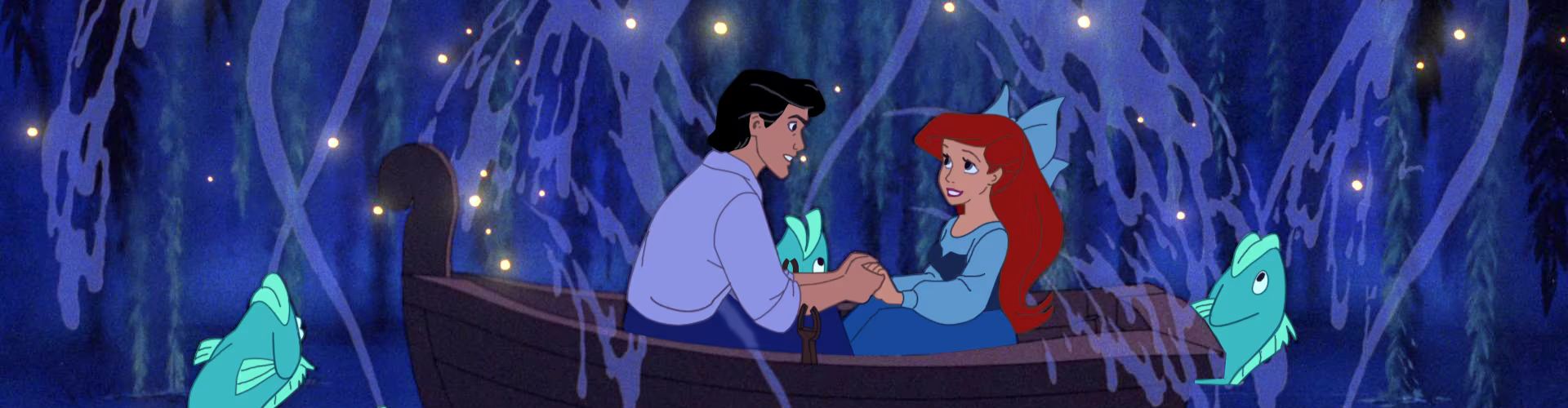
Variations On A Theme In Little Mermaid Retellings
Look closely enough at The Little Mermaid retellings lining my bookshelves (okay, Kindle in large part, I have limited shelf space, you know), and the same shapes start repeating.
Dark Inversion Meets Swashbuckling Adventures
There’s a delicious subset of retellings that flip the moral polarity or amplify the violence. Dark, violence-forward retellings tend to take The Little Mermaid’s existing cruelty and simply stop pretending it was ever romantic. To Kill a Kingdom works because it leans into the inversion, recasting the mermaid as a predator, reframing the bargain as explicit punishment (not tragic choice), while the fairytale structure is stripped of yearning and repurposed for momentum and spectacle.
Sea Witch and Sea Witch Rising shift attention from individual moral failure to the social conditions that produce exploitative bargains, so the familiar tragedy unfolds with consequences foregrounded rather than softened. The Salt Grows Heavy pushes the same logic into grotesquerie, imagining a mermaid who has already survived the fairytale’s ending and must live inside the physical and psychological damage her bargain wrought, with no thought of romance or redemption.
Drown stays much closer to Andersen’s original structure, expanding the undersea world. The story’s emphasis on bodily suffering, irreversible loss, and the futility of sacrifice remain fully intact, refusing to recast endurance as virtue. Similarly, Mermaid by Carolyn Turgeon preserves the tragic spine of the original tale, using dual perspectives to underline how little agency the mermaid truly possesses and how thoroughly her desire is shaped by confinement, not choice.
Even The Mermaid’s Daughter approaches the myth through aftermath rather than romance, treating The Little Mermaid’s story as a generational wound, the consequences of which echo forward instead of being neatly resolved at the moment of transformation.
If you follow me, you’ll know I have a penchant for dark romance so it’s hardly surprising I favour the darker retellings of this tale. Even when they’re not romantic. And that, perhaps, is the point.
This tale was never a romance.
As with many folklorish tales and older stories, The Little Mermaid is a lot darker at its core than most people think. If you’ve ever read the original Grimm tales, with their self-mutilating stepsisters and cannibalistic queens, you’ll understand how frequently modern audiences are unaware of the original horror. A lot of exceptional retellings of Andersen reject sentimentality and insist on reckoning with the original story’s promise.
Sacrificing selfhood to cross worlds and find acceptance that contradicts your nature does not end in personal fulfilment or the dizzying ecstasy of true love.
It is pain. It is loss. It is suffering.
It is not a thing we should aspire to do.
Feminist Revisions
What distinguishes feminist Little Mermaid retellings from darker or more violent revisions is not tone, but orientation. And no, I don’t mean sexual (I’ll get to the sapphic delights shortly). When a retelling takes a feminist cant, it’s not usually interested in making the story darker, harsher, or more transgressive. Instead, feminist retellings ask what conditions exist that allowed the original bargain to ever make sense in the first place.
Feminist retellings treat The Little Mermaid less as romantic fairytale and more a narrative on how femininity is crafted through loss.
Of voice. Of bodily autonomy. Of social power. Ultimately of selfhood.
At the heart of Andersen’s story is a premise feminism recognises immediately: belonging is conditional. Those conditions are unevenly distributed.
The mermaid does not cross worlds simply because she desires love. She does so because her own world offers no viable path to subjecthood. Yet the world she wishes to enter is no more welcoming. Her body is deemed wrong for the space she wishes to occupy. Her voice is excessive. Her pain is acceptable because it results in beauty and compliance.
Feminist retellings don’t pussyfoot around this point.
The bargain is not tragic coincidence.
It’s structural inevitability.
Some revisions confront this directly, exposing how femininity is disciplined through the body. The Surface Breaks refuses metaphor entirely. Bodily transformation, silence, pain. They are not symbols of romantic devotion, but mechanisms of patriarchal control.
The mermaid’s suffering isn’t ennobling; it’s instructional.
Similarly, Drown retains Andersen’s tragic framework while stripping it of any moral consolation. Endurance does not lead to transcendence. Beauty does not offset harm. The story’s bleakness is its feminist force. It states plainly: women are trained to mistake suffering for worth.
Other feminist retellings shift attention away from individual choice and toward the systems that produce it. Sea Witch and Sea Witch Rising destabilise the villain, reframing the witch. She is no longer aberration. She is a product of the same economy of desire and punishment that ensnares the mermaid herself. The bargain ceases to be a moment of temptation and becomes a function of scarcity.
When agency is rationed, exploitation follows.
Feminism is not a corrective that saves the mermaid, but an explanation of why salvation was never a path she could choose.
Some feminist revisions go deeper, undermining the fairytale logic by refusing narrative closure. The Mermaid’s Daughter extends the consequences of sacrifice across generations. The mermaid’s choice becomes an inheritance of loss, obligation, and unresolved longing.
The question shifts. It stops being “Was it worth it?” and becomes “Who will pay for it?”
Likewise, The Salt Grows Heavy insists the fairytale doesn’t end when the wedding does. Silence, bodily alteration, and submission are not reversible states. They leave scars. This is feminism as refusal.
Refusal to allow the story to clean itself up.
Voice, unsurprisingly, remains the most persistent feminist fault line. Contemporary transpositions like The Summer of Chasing Mermaids and Fish Out of Water relocate the bargain into modern frameworks. Ambition. Creativity. Parental control.
Silencing can operate without magic just as effectively.
At the same time, The Seafarer’s Kiss exposes how deeply the original tale’s violence is bound up in heterosexual destiny. By queering the narrative, it reveals that the demand for self-erasure is not universal, but culturally specific.
Feminist revisions aren’t trying to erase The Little Mermaid’s cruelty. Instead, they argue cruelty is the point.
The story endures because it captures, with unsettling clarity, the mechanics of conditional belonging. Feminism doesn’t bring a happier ending, but a sharper diagnosis. It stops asking whether the mermaid should have sacrificed herself for love, and instead wonders why sacrifice was ever presented as love’s prerequisite.
Villain POV and Role Reversals
Another recurring variation is the impulse to look sideways at the story’s moral architecture, because the obvious question that neither the original nor the Disney version ever answered was who the hell is benefiting from all this?
Villain-centred retellings don’t just humanise the sea witch for sympathy points; they expose how unstable the ‘villain’ label always was. Sea Witch gives us a woman shaped by the same pressures, bargains, and punishments as the mermaid. The antagonist is recast as someone who understands the cost of the system all too well.
Part Of Your World uses alternate timelines to reveal how arbitrary the original power dynamics are. When Ursula ‘wins’, Ariel’s voicelessness becomes political rather than romantic. Rulership exposes the fragility of the fairytale’s moral binaries.
And role reversals don’t stop with the witch. Some retellings destabilise the narrative by shifting monstrosity onto the mermaid, or refusing the assumption desire flows in one direction. The Twice-Drowned Prince inverts the rescue narrative entirely, sending the prince into the sea, forcing him to reckon with bodily transformation, loss of status, and dependency.
These reversals aren’t gimmicks. They’re stress tests. By swapping roles, authors reveal how much of the original story’s tragedy hinged on who is expected to change, who is allowed to speak, and who is marked as expendable.
It was never really about love.
These retellings strip away the comforting illusion of an innocent heroine and an evil witch. That dynamic is replaced with something far less tidy.
A system that requires someone to lose, and is largely indifferent about who that someone is.
Queer and Inclusive Retellings
One of the most generative developments in modern Little Mermaid retellings has been the queering of the story’s assumptions about desire, destiny, and transformation. When the narrative is released from a binary, heterosexual inevitability, we can view the mechanics of the tale in a new light.
The bargain. The silencing. The pressure to abandon one’s world.
They stop reading as tragic romance and instead show us culturally specific demands.
Not universal truths.
Ugly societal expectations.
Some texts do this without untethering from Andersen’s structure. The Seafarer’s Kiss delivers an F/F romance that draws on Norse mythology. The mermaid’s longing is reframed as conflict between rigid social hierarchies and chosen connection.
As with feminist takes on this tale, the question stops being whether love is worth the sacrifice, and becomes whether a system requiring self-erasure as the price of belonging is legitimate at all.
Sexual orientation is as marginalised and exploited as femininity and womanhood. LGBTQ retellings of The Little Mermaid paint this starkly, showing us that society is happy for queer folk to bear the consequences of their expectation of ‘normalcy’ just as much as women are presumed to suffer for the patriarchy.
The Mermaid’s Daughter queers the tale in a different way, reimagining the Prince as a woman, extending the consequences of the mermaid’s sacrifice across generations. The novel treats queerness, artistry, and bodily pain as intertwined legacies rather than isolated plot points.
Other queer and inclusive works engage less directly with Andersen’s plot while still conversing with the broader mermaid tradition. The Mermaid, the Witch, and the Sea is a looser retelling of The Little Mermaid, but its use of pirates, witches, mutable identities, and forbidden love situates it firmly within the same mythic ocean. It challenges fixed categories of gender and role without relying on the original bargain structure.
Queer reimaginings of The Little Mermaid allow us to appreciate the undertow of the tale. Not one of heterosexual longing, but a story about enforced transformation in pursuit of belonging.
By queering the narrative, authors expose the horrific truth of societal expectation. That a person should physically change their body, silence their voice, abandon themselves or their world. All so them might prove themselves acceptable and accepted enough to be ‘worthy’ of love.
That is the riptide of The Little Mermaid that has always been so gripping. It’s the reason this story endures and this trope is told and retold so prevalently and often so provocatively.
The point of queer retellings isn’t to diversify the fairytale’s cast (though they do, and rightly so). The point is the elevation of how harrowing the original promise always was.
We need love, acceptance, a sense of belonging.
But those things are only accessible if you’re willing to assimilate. To mask. To sacrifice individuality and selfhood whenever those things clash with the world view of the many or the powerful.

What Makes Popular Retellings Work?
The Little Mermaid retellings that gain the most traction tend to balance familiarity with disruption. They are immediately recognisable as part of a shared cultural story, while offering a clear point of divergence that promises something new.
This isn’t about novelty for its own sake, but about giving readers a conceptual hook that signals intent. Whether the story reframes the mermaid as a threat rather than a victim, centres the witch, foregrounds feminist rage, or rewrites the ending entirely, successful retellings make their intervention legible early.
Readers know the story they’re getting, but also know how that tale will be unsettled.
At the same time, popularity often depends on retaining enough of the tale’s core machinery to activate that recognition. Even the most revisionist retellings tend to keep the bargain, the loss of voice, or the painful crossing between worlds, because these elements have become the emotional shorthand of the myth.
When a story chooses to set these elements aside it steps outside the realm of retelling and into another sphere altogether.
The retelling functions as a shared cultural language. Authors who understand this don’t merely replicate those motifs, but redeploy them with purpose, using tone to sharpen their impact.
The biggest criticism I’ve seen of The Voice of the Ocean (and the reason I’m now worried I won’t like it) is that the book is merely replicating the motifs, and not providing any tangible development to the tale. I can’t comment on whether that’s true or not, but certainly the retellings i’ve read that didn’t hit were guilty of a scene-by-scene play through of the Disney film, or a very close reiteration of Andersen’s original.
The good ones add substance. Diversity. Social commentary.
They bring us greater meaning in a familiar form we find comforting.
Whether a book leans lyrical, brutal, furious, or adventurous, the most resonant retellings commit fully to a mood and allow that mood to shape how sacrifice, agency, and transformation are experienced.
In doing so, they meet readers where their expectations already are, then force them to sit with the consequences of those expectations. That tension, between comfort and discomfort, recognition and resistance, is where the trope continues to thrive.
Echoes, Refusals, Counter-Myths
Beyond retellings of The Little Mermaid there are books that sidestep following Andersen’s tale and retelling canon too closely, yet still echo the tale’s core concerns. That doesn’t mean all books about mermaids are ‘really The Little Mermaid’.
No.
The point is that some novels contain mermaids, the sea, voice, or transformation, but refuse the structural bargain that defines Andersen’s story.
Voice and transformation may be less literal and more metaphorical. The longing for the human world disappears. No transactional exchange of selfhood for acceptance is demanded. Or the aspiration to cross worlds doesn’t appear at all. These novels retain flavours of the original, nod to it, allude to it, but offer something very different to the genre.
Refusal. And a kind of counter-myth.
Retellings depend on reader recognition of an established narrative.
Counter-myths depend on genre literacy.
The Deep doesn’t retell The Little Mermaid in any recognisable structural sense. There is no prince, no bargain, no desire for the surface world. Instead, the novel imagines a merfolk descended from those lost during the transatlantic slave trade, now water breathing and living entirely underwater.
They carry collective memory as both burden and inheritance.
The sea is not a threshold to be crossed, but a place of continuity. Voice is not something to be traded away; it is communal, historical, and overwhelming. In the context of The Little Mermaid tradition, The Deep does something radical.
It rejects the idea that legitimacy, safety, or meaning lie on land at all.
It doesn’t argue with Andersen’s premise.
It steps outside it.
The Mermaid and Mrs Hancock delivers a mermaid narrative that doesn’t grant the titular mermaid interiority or aspiration. She does not long to become human. There’s no bargain. Instead, she’s captured, exhibited, and exchanged, functioning less as a romantic subject than as a commodity.
The absence of the familiar Little Mermaid arc is deliberate.
By refusing the mermaid’s desire altogether, the novel exposes how often mermaids in fiction exist to absorb human longing rather than express their own.
Similarly, The Girl From The Sea retains imagery of secrecy, oceanic otherness, and divided worlds, but strips away punishment entirely. There is no silencing, no bodily mutilation, no demand that one identity be surrendered for another.
The tension lies in disclosure rather than transformation.
The mermaid does not need to become human to be loved, and love does not require the erasure of her nature. That’s genuinely refreshing, especially since this is a sapphic novel. It offers yet another way to draw meaning from the narrative. One that’s inclusive of LGBTQ+ identities without limiting the message to one of exclusion due to nature.
What remains of The Little Mermaid here is not plot, but emotional architecture: the fear of being known, the risk of belonging.
What unites these works is not fidelity to Andersen, nor a shared refusal to treat his story as the narrative centre of gravity for mermaid fiction. They’re not rejecting the heritage of this very dominant canon, but rather giving themselves freedom to explore a world Andersen cracked open without limiting themselves to the map he made of his time there.
They do not ask how the bargain can be reimagined, softened, or survived.
They do not presume a bargain exists at all.
Some purposefully avoid retelling territory, and bear similarities simply because it’s unavoidable in a genre so shaped by one tale. Others have simply taken what was relevant to the story they had to tell, and discarded the rest.
The result is not only some amazing mermaid fiction, but the realisation of how much of The Little Mermaid’s power comes not from mermaids as mythic beings, but a very specific cultural fantasy about assimilation, legitimacy, and the price of acceptance.
Strict retellings test the elasticity of a single story and a specific existential question (in various forms). But counter-myths expand the imaginative boundaries of the genre. They allow mermaids to exist without yearning for erasure. To remain in the sea without feeling themselves incomplete because they are other to us, the reader. The point is no longer reader comfort and wish-fulfilment but the portrayal of the other as truly equal.
In a genre long dominated by the logic of sacrifice, that refusal isn’t deviation.
It’s evolution.

Why The Little Mermaid Endures
The endurance of The Little Mermaid has less to do with romance than with its brutal clarity. At its core, the story is not about love rewarded, but about what a culture demands in exchange for access, legitimacy, and recognition. The mermaid’s sacrifice is not heroic because it succeeds. It is harrowing because it is framed as reasonable.
That framing is what keeps the tale alive. Each generation inherits the same unsettling premise and tests it against new anxieties. About gender. About queerness. About labour, assimilation, migration, artistry, power. Retellings don’t merely modernise the story; they diagnose it, stress-test it, and sometimes refuse it outright. The persistence of feminist rage-fables, queer revisions, villain-centred inversions, and counter-myths signals not exhaustion, but pressure.
A pressure point we haven’t resolved.
And suddenly it seems so very apt these tales are set in the deeps. Where pressure is at its strongest.
What makes The Little Mermaid unique in the world of retellings is that it never fully explains itself. The story offers no stable moral centre, no clear villain, no clean reward for suffering.
Readers are stranded between empathy and unease.
Caught between two states.
That ambiguity invites intervention. It asks to be argued with. It is the whole point of the narrative. Not who is good or evil, who is right or wrong, which is best – land or sea. But the uncomfortable realisation that there are no simple answers to any of these questions, and personal choice isn’t optional.
Whichever you choose, you have a right to your choice. And any system that judges, marginalises, or punishes you for that is horrific in a way that is frequently minimised and normalised.
Which, of course, only makes it that much crueler.
As long as belonging remains conditional, as long as voices are traded for access, as long as transformation is framed as the cost of love or safety, the mermaid will keep resurfacing.
Sometimes sharpened into a weapon. Sometimes softened into comfort. Sometimes only skimming the surface and refusing to leave the ocean altogether.
The sea, after all, is a place for unresolved things.







 4.28 Average