Skip to content

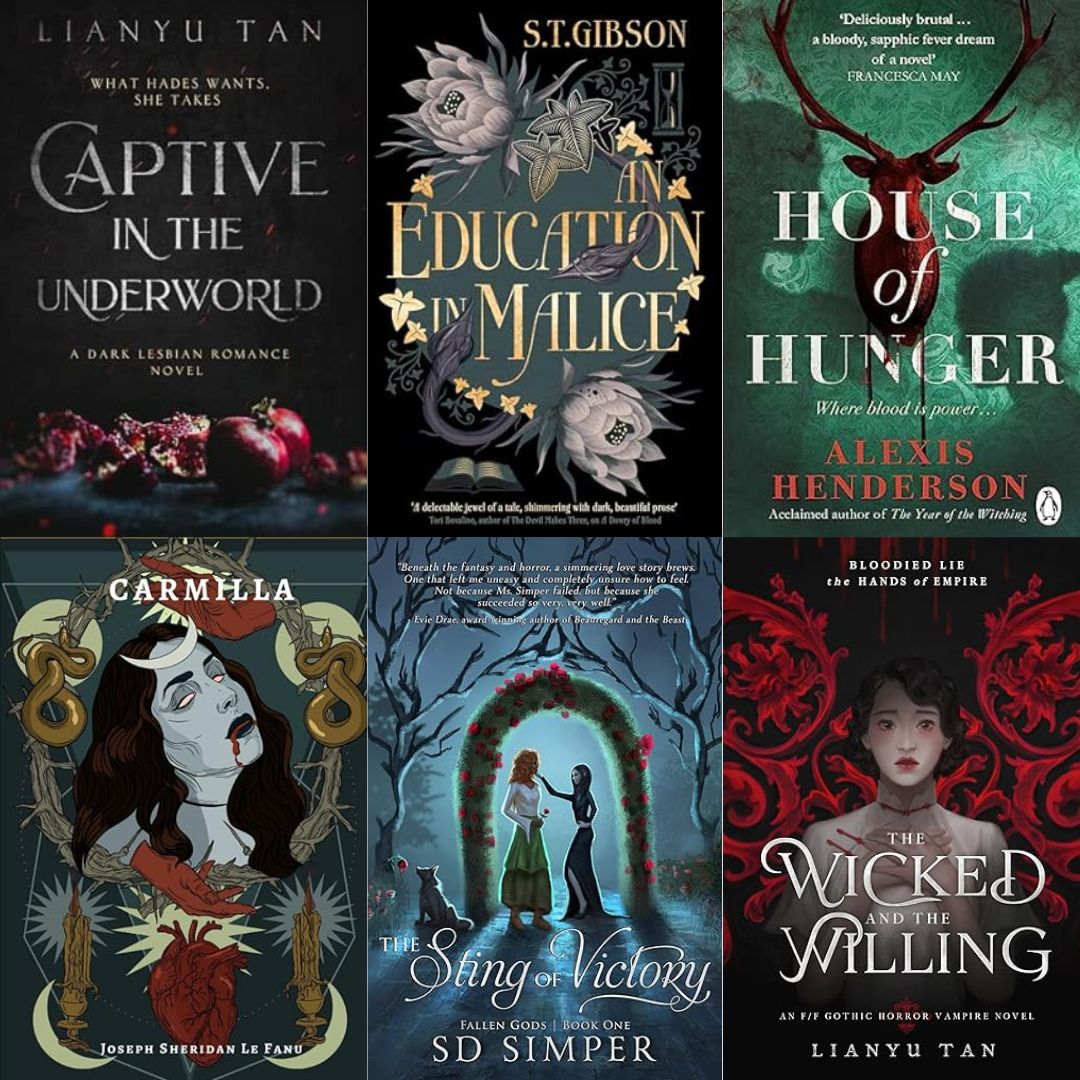
Romance is a truly miraculous genre because it cultivates a literary ecosystem of genres within genres within genres. Dark lesbian romance books are one of the most perfect culminations of that ecosystem. It presents incredibly niche books that scratch very specific itches. Ones that nothing else can quite reach.
They may be part of the wider dark romance genre, but lesbian-specific dark romance tales are a very different animal. Once you centre women loving women in a narrative, the darkness shifts.
Dark lesbian romances are not here to serve tragic lesbians suffering beautifully for literary clout. The point of these stories is not (or at least, should not be) to repackage queer pain as prestige.
Because the stories that work in this genre, that are unputdownable and stick with you for a while, understand they need to be very precise about what the darkness is doing. It’s structural.
Desire entangles with power.
Intimacy is dangerous.
Love isn’t the appearance of salvation from darkness so much as recognition that you’re comfortable with and belong in the night.
These are stories about women choosing each other inside structures designed to break them. Contain them. Diminish them in some way.
The best examples of sapphic dark romance often flip the whole system on its head. They take these systems, and invert them. They use the system to become the very thing that system tried to deny them. Which often makes it all the more intimate. Deliberate. Unsettling.
And isn’t that just delicious?
Quick Reference Book Recs
- Carmilla by J. Sheridan Le Fanu
- The Wicked and the Willing by Lianyu Tan
- House of Hunger by Alexis Henderson
- An Education in Malice by S.T. Gibson
- House of Crimson Hearts by Ruby Roe
- Captive in the Underworld by Lianyu Tan
- The Sting of Victory by S.D. Simper
- Don’t Stop Me by Eden Emory
- Lady Venom Takes a Mistress by Kat Blackthorne
- Providence Girls by Morgan Dante
- Queen of Humboldt by Tagan Shepard
- Hearing Red by Nicole Maser
- Black Iris by Elliot Wake
- Seeds of Sorrow by Sarah James
What Changes When Dark Romance Is Sapphic
In sapphic dark romance, danger can’t rely on the same shorthand that most heteronormative tales hinge on. There’s no default patriarchal power dynamic humming in the background when both halves of the romance are women. One partner isn’t automatically assumed to hold physical, social, or sexual power by virtue of gender alone.
That doesn’t make these stories safer or softer.
It makes them more deliberate.
In dark lesbian romance, power has to be sourced deliberately. Immortality, age, class, magic, institutions, ideology, and psychological leverage step in where gendered dominance usually sits.
Now, you’re probably thinking “But most dark romances have at least one of those things!”
And yes. They do.
But when those power imbalances exist between a man and a woman it is assumed the man holds the power. Inverting to give the advantage to the woman is rare, and usually comes with additional taboo. A reverse age gap is often more scandalous and socially unacceptable than age gaps where the older party is male.
Because it places the power in the hands of the woman.
Sapphic romances only have women. A woman holding power is inevitable, unavoidable, and needs more consideration. Authors need to very clearly build the world around these women to create the same kind of power dynamics we take for granted in straight couple romance novels.
The result is darkness that feels far more intimate because it had to be consciously engineered by author, character, or both.
Stories are sharper as a result. Because they’re not interested in shocking you. And they don’t take shortcuts to power. Romance feels dark and dangerous on a different level. It has purpose. It’s intimate, unsettling, and you can feel why it’s there to begin with.
The Fault Lines Of Sapphic Dark Romance
Across dark lesbian romance, you’ll notice the same pressure points surface repeatedly. That’s not to say these books are all samey, or that they follow formulas. It’s more an observation that desire, power, and danger work differently when the love story is sapphic. The specific way they work exposes fault lines running through the genre.
Hunger as a Language of Desire
Hunger is one of the most persistent engines in dark lesbian romance. And it’s not exactly subtle. Blood, magic, attention, control, validation.
Want is made bodily.
Dangerous. Inescapable.
When hunger enters the picture there are no yearning glances and metaphorical ache, those desires are externalised as appetite.
Something that can be fed, denied, indulged, or weaponised.
There’s a reason vampirism and gothic excess are such regular features in sapphic dark romance. They give desire literal teeth. Carmilla made lesbian desire explicitly predatory, intimate, and lethal. That was in 1872 and the genre hasn’t looked back since. The titular Carmilla does not love Laura despite her hunger; she loves her through it.
Possession and affection are indistinguishable. Danger is not a tragic byproduct but the very mechanism of intimacy.
And, incidentally, Carmilla predates Dracula. So if you think the aristocratic vampire as sexual predator and eroticised blood drinking started with a man, you’re wrong.
Modern iterations have simply refined the framework. House of Hunger institutionalises appetite, transforming blood consumption into a social contract and a romantic language. Hunger is ritualised. Desired. Normalised.
Love doesn’t exist in opposition to exploitation, but inside it.
That’s uncomfortable. And that’s the point.
The Wicked and the Willing also hinges on hunger, entwining it with colonial violence and erotic domination in a way that simply refuses to separate desire from harm or power.
These stories work because hunger is reciprocal or knowingly endured. If appetite becomes mere aesthetic shorthand, it loses its bite.
Power Without Patriarchy
Because power cannot be assumed by gender in dark lesbian romance, sapphic tales tend to set up forms of power without patriarchy. In Captive in the Underworld, mythic coercion is reframed through endurance and choice rather than rescue. The imbalance is undeniable, but the romance doesn’t form through escape from power, but by navigating through it on increasingly negotiated terms. The coercive start doesn’t outstay its welcome, though if you’re used to the darker end of dark romance, you’ll likely find Hades (did I mention this is a gender inverted examination of the Hades/Persephone myth, in which Hades is a woman?) softens a bit too quickly.
The Sting of Victory positions power as monstrous and seductive in equal measure, refusing to allow immortality and domination to be neutral traits. Lady Venom Takes a Mistress also leans unapologetically into monstrous femininity, refusing to soften control by making it more palatable or redemptive.
Clarity holds the power here, because power can’t be implied. It had to be sourced, interrogated, and displayed in all its uncomfortable glory. This is a structural element to sapphic dark romance. When a novel doesn’t quite hit, it’s usually because imbalance carries no true consequence. The power dynamics are left feeling aesthetic or ‘vibes’ based.

Obsession As A Mirror
In heteronormative dark romance, obsession is often directional. One person watches. Hunts. Cages. Claims.
Predator. Prey. And we love it.
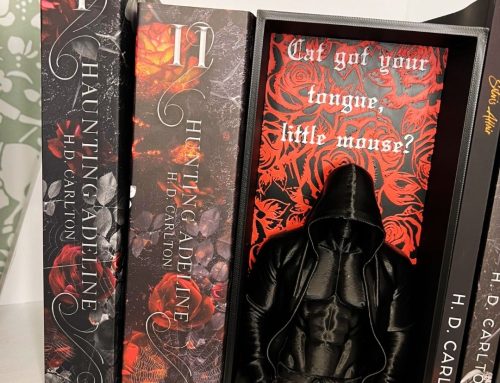
The entirety of Haunting Adeline hinges on tension created by the question of whether Adeline escapes Zade’s obsession, or submits to it. Most stalker romances follow a similar pattern. Even lighter ones like Lights Out carry tension in the question of whether or not Aly is actually into this.
Sapphic dark romance tends to disrupt that trajectory.
Fixation is more likely to function as a dark mirror. Desire isn’t directional so much as escalating. One person does not feel drawn to the darkness of another, despite the danger. Instead, two people recognise something dangerous in each other and choose to forge it into something stronger. And that’s often darker, and even more dangerous.
The tension doesn’t come from predator and prey so much as mutual complicity. You’re not usually waiting to see if someone escapes, or if they want to be caught.
You’re watching two people decide, again and again, not to run.
Take Black Iris (great book), which takes obsession and completely strips it of any kind of moral cushioning. Love does not prevent harm. It accelerates it. Fixation is mutual, corrosive, and self-aware, and the narrative refuses to pretend otherwise.
We’re used to experiencing Enemies to Lovers as a softening arc; the dangerous becomes the desirable. And we love that. But sapphic dark romances like House of Crimson Hearts use the same trope, but there’s nothing soft about it. We don’t go cleanly from enemy → lover. Instead we escalate through cycles of enmity in a volatile oscillation of dominance, desire, and retaliation.
And it’s so much more satisfying.
Institutions As Villain
Blame and harm are two other things that shift when the romantic couple in a narrative are both women. Sapphic romances are less interested in personifying the darkness of a single love interest and more focused on systems.
Academia, religion, courts, cults, families, magical hierarchies. Structures that corrode everyone within them.
While love often mitigates his darkness in straight romance (even if only for her), darkness that comes at an institutional level isn’t affected by two people falling in love unless they actively force change as a couple.
In An Education In Malice, academic power, mentorship, and intellectual dominance become eroticised threats. The institution isn’t there simply to frame the romance (which can happen in dark academia when the love interest is the source of the darkness, not the academic institution itself). Instead, the institution shapes and distorts desire through validation, ambition, and control. Point of interest, this one is essentially a retelling of Carmilla, but it brings institutional rot into the dynamic.
Providence Girls similarly creates danger through religious and cosmic systems, with love acting as their refuge and doom. The romance cannot fix the structure. Instead it exposes the truth of the system, or at the very least strains against it.
At its best, sapphic love weaponises rot.
Survival, Not Salvation
A significant number of dark lesbian romances completely reject redemption arcs. Love does not save the world. It doesn’t even redeem the half of the couple seen to be morally grey or ‘dark’ at the start.
Instead, love helps both characters survive.
This is particularly obvious in stories with dystopian, occult, and crime-inflected themes. Romance functions as an alliance, not an escape.
In Seeds of Sorrow, love becomes a dangerous allegiance formed under mythic and criminal pressure. Hearing Red forges intimacy under constant threat, presenting safety as temporary and trust as provisional. Queen of Humboldt frames love as compromise inside a system that remains fundamentally unforgivable.
These stories work because they allow the premise of the world and its darkness to stay to the end. Two people fall in love, and that might change how they endure the darkness, but it doesn’t mitigate it. The world doesn’t get any kinder. The damage isn’t undone, or even healed.
What changes is that they’re no longer facing it alone.

Darkness, Harm, And Burying Your Gays
For so long, queer representation simply did not exist in fiction in any meaningful, mainstream way. When queer characters did begin to appear more frequently in fiction, they were rarely allowed to exist at the centre of the story.
They were the plucky sidekick.
The best friend.
The cautionary tale.
Bury your gays wasn’t a niche trope, it was the dominant mode of early LGBTQ+ ‘representation’.
The sad fact is that stories trying to include LGBTQ+ characters often ended up murdering them.
So to have a genre of romance where queer women are the whole point is no small thing.
Here, lesbians are not the side characters. Not the lesson. Not the tragic footnote. They’re the emotional core of the story, given the same narrative weight, space, and legitimacy as straight couples.
That is a beautiful thing. And despite how far LGBTQ+ representation has come in recent years, it is still not a prevalent thing.
Dark romance, by its nature, hurts its characters.
In this genre, suffering is standard, and the fact the characters are queer doesn’t change the ethics of that. It doesn’t alter your personal boundaries, or what is reasonable or justified by the narrative.
So the point isn’t ‘sapphic women suffer’ but rather, is sapphic women suffering doing something new? Or is it quietly reproducing the same old story: that queer love is intense but unsustainable, meaningful but doomed, allowed to exist only temporarily.
The difference is erasure.
Darkness without agency isn’t romance. Shock without interiority is hollow. And when queer women are finally allowed to be the centre of the story, the darkness has to challenge the script, not confirm it.
That doesn’t mean the romance has to be safe. It just has to allow queer love to matter.
Thrusting sapphic relationships into the crucible of dark romance has to be done delicately.
Not because women are delicate creatures.
But because we’re sick to death of burying our gays.

What Makes A Good Dark Lesbian Romance?
Chucking a pair of lesbians into a book doesn’t make it good.
I know. It’s shocking.
But dark lesbian romance novels don’t succeed on the same axis. Taste varies wildly in this corner of the genre. What doesn’t vary is craft.
The books that endure, provoke, or meaningfully divide readers tend to share a few structural qualities that distinguish delicious and deliberate darkness from the kind of blah, meh feeling created by empty transgression.
Darkness Must Do Narrative Work
This goes for all dark romance, not just the sapphic. Darkness here cannot be atmospheric garnish. It should be load-bearing.
Captive in the Underworld starts with coercion. But it isn’t there to shock or titillate in isolation. It establishes the world.
Power is absolute. Choice is constrained. Survival precedes romance. The eventual emotional shifts only make sense because the story never pretends the initial imbalance didn’t happen.
Darkness allows intimacy to become legible.
Similarly, House of Hunger doesn’t use bloodletting and excess as pretty gothic wallpaper. The violence and decadence mirror the protagonist’s social precarity. Marion’s desire isn’t shaped by fantasy, but deprivation.
Once she sees she’s traded one form of servitude for another, darkness clarifies the romance.
When darkness is aesthetic, removing it doesn’t collapse the story. You can tell when you’re dealing with narrative darkness when the removal of the dark means nothing makes sense anymore.
Interiority, Agency, And Compromised Consent
Many dark romances include coercion, captivity, or extreme imbalance. What makes that compelling isn’t whether consent is compromised, but whether the interior life of the characters remains complex, contradictory, and active.
In The Wicked and the Willing, Gean Choo is never reduced to a passive object of suffering, even when she is undeniably trapped. Her fear, desire, revulsion, and longing coexist without being resolved into a single moral position. The novel refuses to simplify her responses, which is why the reader’s discomfort feels purposeful rather than manipulative.
Contrast that with Black Iris, where agency exists but is warped. Laney’s choices are destructive, obsessive, and often horrifying, yet the book remains rigorously committed to her interiority. The darkness works because we understand why she keeps choosing harm.
We know she shouldn’t do it. But we know why she does.
The mark of a great dark romance isn’t that the characters make ‘good’ decisions. Honestly, the nature of the genre usually means they’re making bad ones. But good dark romance (lesbian or otherwise) needs those decisions to belong to the character. Not the plot fairy’s, who force decisions simply because that’s the plot. And not the author’s need to escalate simply because it’s dark, or because I hit a tension beat and need them to do this.
Choosing to place yourself in a compromising situation isn’t always defensible. But when it’s inexplicable it stops being enjoyable to read. And that’s just bad writing.
The Romance Arc Has to Be Emotionally Coherent
If attraction suddenly materialises, and the only apparent reason for it is as a reward for enduring violence, the ‘romance’ feels … imposed.
It’s easy to overlook this in a genre that centres coercion and lack of consent, but those elements of dark romance have to exist within a strong emotional attachment in order for them to work for the reader.
If you can’t see why one character is even attracted to the other, it’s impossible to fathom why they’re suddenly so open to crossing personal and societal boundaries in order to be with them.
Like…do you even like this person? Two pages ago you detested them, nothing changed since.
Den of Vipers (though not sapphic) is a great example of this. We’re told Roxy is tough. We don’t really see that for ourselves, it’s just expressed. We then watch her endure extreme violence, humiliation, and coercion very early on.
Then, inexplicably, romance.
The escalating brutality she endures is extreme, and out of that is born…desire? Why? Because she endured so much and deserves to get dicked as a reward? Because the plot demands it?
When you can’t figure out why someone becomes attracted to someone else beyond survival, everything feels very thin. And, honestly, kind of icky.
Extreme content is tolerable when romantic progression remains emotionally legible, even when it’s deeply uncomfortable.
Books like An Education in Malice succeed because the romantic entanglements consistently follow intellectual and psychological pressures that are established at the start. It starts as rivalry. It becomes fixation. Admiration curdles. It becomes obsession. Desire emerges as a direct result of forced proximity, comparison, and power. It’s not a sudden revelation.
Shifts in the relationship follow shifts in knowledge or leverage.
Sticking The Landing
The ending of a book can make or break it. That’s true in any genre, but where dark lesbian romance is concerned it very specifically means the story cannot flinch at what it’s built.
Endings work when they’re honest about the world the characters live in and the choices they’ve made inside it. When love doesn’t magically disinfect the rot, but exists alongside it.
Providence Girls lands because it refuses consolation. The ending is devastating, unresolved, and almost uncomfortably intimate by conventional romance standards. But it’s completely consistent with the book’s cosmology.
Monstrosity was not erased by love. Love didn’t fix what was broken. If that wasn’t consistent with the rest of the book, the ending would feel like a punishment. Instead it hurts in a good way, because it was inevitable, but they love each other anyway.
The Sting of Victory leaves a similar aftertaste. Loving a monster changes you. It costs something. The ending doesn’t absolve the characters or give them an out to the consequences of what they’ve chosen.
What weakens dark lesbian romance endings isn’t bleakness. It’s retreat. Pulling back from the implications of what the characters have done, survived, or willingly stepped into, to make the ending more comfortable. When a story spends hundreds of pages insisting the darkness matters, and then flinches at the last moment, it undermines everything that came before.
Dark romance doesn’t need to be kind.
It just needs to be honest.
Being Gay Shouldn’t Make A Difference, But It Does
Dark lesbian romance is risky.
Lesbian romance as a genre is still underrepresented, and dark lesbian romance takes that risk and multiplies it. Anyone who doesn’t understand queer erasure, or doesn’t understand dark romance, can read these books badly. They can come away thinking a book is saying “lesbians are deviant”, or “women loving women is unnatural”, or reduce everything to “bitches be crazy”.
That reading misses the point entirely.
What these stories are actually doing is insisting that women taking women as lovers create relationships that are just as complex, meaningful, volatile, and emotionally messy as any other configuration of desire.
Dark romance shouldn’t behave differently just because the couple are both women.
But it has to.
Because when you remove men, patriarchy, and all the implied power dynamics that come with them, you can’t assume anything. There is nowhere to hide. Power has to be grown and nurtured from nothing.
Who has it. How it works. How it moves. What breaks it. What’s aberrant. What’s deviant.
All the things heteronormative dark romance takes for granted have to be named, built, and justified on the page.
That’s a high narrative bar.
And it’s also completely liberating.
Because while these stories can’t rely on gender norms, mainstream social expectations, or inherited power structures, they also don’t have to obey them.
They’re free to explore love, lust, power, obsession, kink, coercion, manipulation, even violence, to any extreme they want.
All extremes are acceptable here, provided they do one thing:
Own it.
Book Recs By Genre
In case it isn’t obvious, check your trigger warnings before reading anything!
If you want gothic vampire decadence (blood as romance grammar)
- Carmilla by J. Sheridan Le Fanu, delivers predation as intimacy, hunger as courtship.
- House of Hunger by Alexis Henderson for blood-drinking as institution, class contract, and eroticised survival.
- The Wicked and the Willing by Lianyu Tan for gothic vampirism braided with colonial power and abuse.
- House of Crimson Hearts by Ruby Roe serves vampire hunter vs royal vampire and is rife with obsession, power flips, and violent chemistry.
- An Education in Malice by S.T. Gibson is perfect if you’re in the mood for rivalry, seduction, and a teacher-student power dynamic inside a women’s college. It’s gothic, bloody, manipulative. Dark academia and twisted mentorship weaponising intellect.
If you want fantasy or mythic with teeth, try:
- Captive in the Underworld by Lianyu Tan exposes the misogyny and cruelties of the Hades/Persephone myth with an expertly done gender flip of Hades. If you’re a seasoned dark romance reader you’ll likely find this falls at the lighter end of the ‘darkness’ spectrum. Still a great read!
- The Sting of Victory by S.D. Simper is an epic dark fantasy that explores the true cost and consequences of loving a monster (and really commits to it).
- Lady Venom Takes a Mistress by Kat Blackthorne delivers monstrous femininity and control, played unapologetically.
If you want contemporary rot in the form of crime, taboo, obsession, and systems that stay unforgivable, try:
- Queen of Humboldt by Tagan Shepard puts a sapphic twist on mafia romance with enemies-to-lovers-to-enemies energy, graphic violence and heavy trafficking themes.
- Seeds of Sorrow by Sarah James is another mob setting and another Hades/Persephone twist, this one adding coercion and blackmail to a volatile enemies-to-lovers.
- Don’t Stop Me by Eden Emory is a taboo erotic twist on the ‘ex’s dad’ trope in the form of the ‘ex’s mum’. It delivers an age gap romance in an adults-only lesbian kink club.
- Black Iris by Elliot Wake is the perfect level of obsession without moral cushioning; the choices are horrific, but weirdly make perfect sense.
If you want survival horror + ‘love as alliance’ try:
- Hearing Red by Nicole Maser is a post-apocalyptic danger-fuelled, trauma narrative with a slow-burn bond forming under constant threat.
- Providence Girls by Morgan Dante is an epistolary cosmic horror romance that couples a whole lot of yearning with body horror and monstrosity that love doesn’t magically cure.




 4.28 Average