Skip to content

There’s a deeply satisfying inevitability to truly good dark vampire romance books. And since we find ourselves approaching spooky season I am, naturally, contemplating the nature of vampires while re-reading some old favourites, and realising that I’ve actually been a fan of dark romance for far longer than I realised.
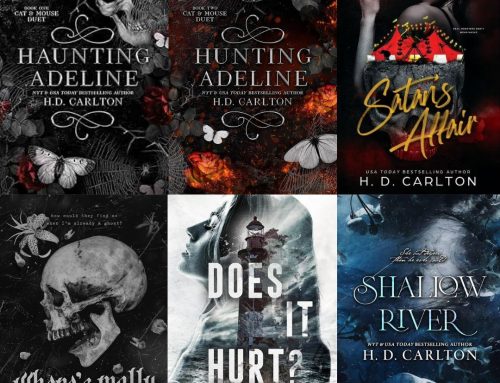
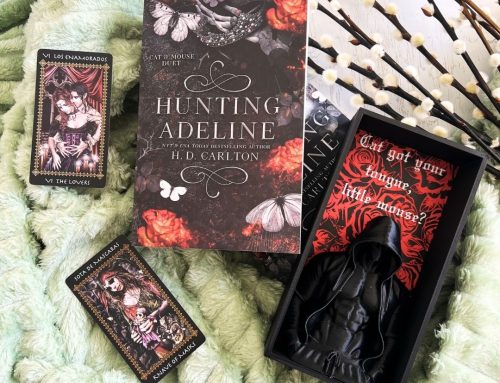
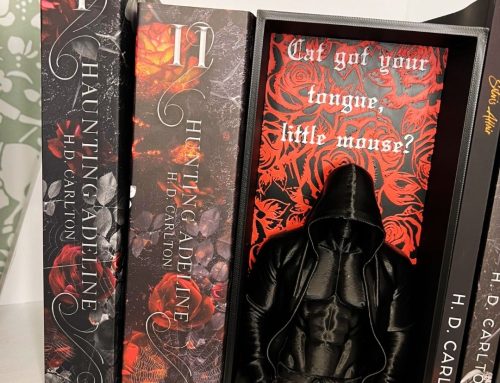
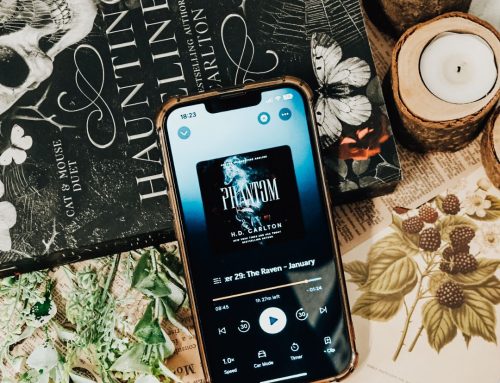
I thought the obsession began when curiosity got the best of me, I picked up Haunting Adeline, and suddenly found myself freefalling down a H.D. Carlton rabbit hole and landing in a wonderland of dark romance novels.
But. As it turns out. I’ve been a lifelong stan.
Take everything dark romance likes to play with: obsession, possession, power imbalance, dangerous desire, compromised consent, devotion intense enough to become frightening.
Then make half of the couple an immortal, predatory bloodsucker.
Job done, kinda.
Vampires work so well in dark romance because vampirism makes the language of extreme romantic desire literal, visceral, physical.
I need you.
Touch her and die.
I could devour you.
You’re mine. Forever.
From a human, it’s all sexy as hell. Mildly alarming depending on the person saying it (looking at you, Zade). But a vampire uttering those words?
Deadly fucking serious.
Once you make those fantasies literal, they stop being harmless expressions of devotion and become hunger, or restraint, consent, dependence, ownership, and leave you contemplating the cost of forever.
Which, frankly, is where dark vampire romance gets interesting.
Quick Reference Dark Vampire Romance Book Recs
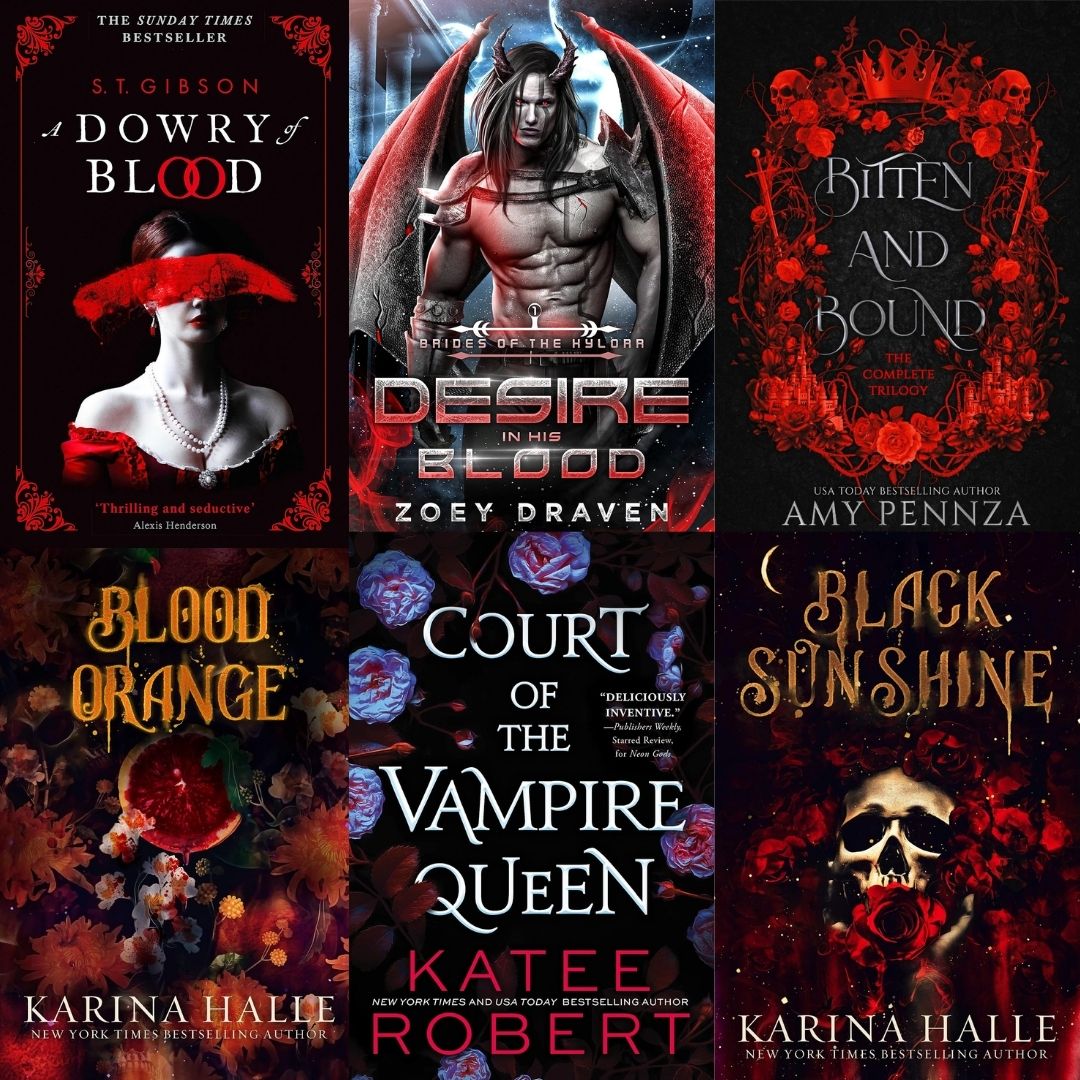
Black Sunshine by Karina Halle throws an almost-vampire into the hands of the predator who kidnaps her, then makes discovering what she is almost as dangerous as wanting him.
Bitten and Bound by Amy Pennza sells a princess into blood servitude to a vampire king and his lethal general, where court politics rapidly become the least indecent thing happening.
Desire in His Blood by Zoey Draven marries a desperate human woman to a ruthless Kylorr lord bent on revenge, then lets bloodlust, vengeance and inconvenient attraction ruin everybody’s sensible plans.
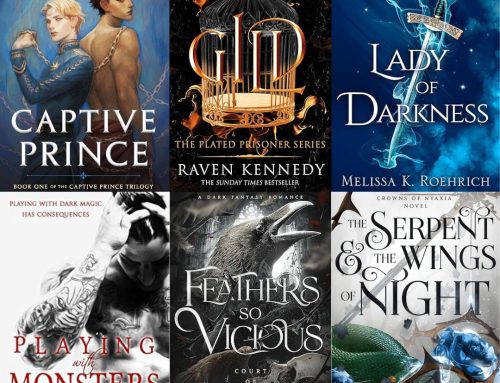
Court of the Vampire Queen by Katee Robert starts with a half-vampire woman being offered up as a blood sacrifice and escalates into three powerful vampires, tangled bonds and an extremely enthusiastic approach to sharing.
Blood Orange by Karina Halle sends a witch assassin after the vampire who inspired Dracula, then adds reincarnation, ancient obsession and several centuries’ worth of reasons this is a terrible idea.
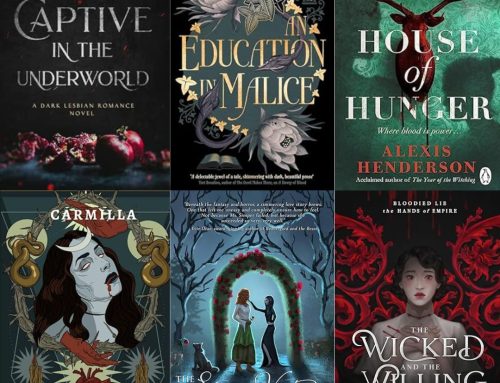
An Education in Malice by S.T. Gibson gives Carmilla a dark-academia makeover, where rivalry, obsessive mentorship and blood-drinking become one exquisitely unhealthy education.
A Dowry of Blood by S.T. Gibson lets Dracula’s first bride narrate a centuries-long reckoning with love, control and abuse before finally deciding the only appropriate response to his affections is to kill the bastard.
Vampire Romance Was Dark Before Dark Romance Had A Name
Modern dark romance has a very recognisable language and feel: morally grey heroes, obsession, coercion, possessiveness, power imbalance, the type of unhinged logic that leads you to believe it’s reasonable to break into a girl’s house in a mask and befriend her cat (looking at you, Josh).
Vampire romance was already playing with most of that. And I’m not going to retroactively classify every old-school paranormal vampire romance as dark romance. They’re really not. But you can see the ancestry.
Christine Feehan’s Dark Prince gives us an immensely powerful immortal male whose ability to remain human (okay, fine, Carpathian), is bound up with finding his lifemate.
J.R. Ward’s Black Dagger Brotherhood took paranormal romance somewhere grittier, bloodier and more overtly sexual. Dark Lover introduces a secret world of vampire warriors, violence and dangerous supernatural relationships. By Lover Awakened, Ward gives us Zsadist, a brutally traumatised former blood slave whose capacity for intimacy sits directly beside everything horrific that made him who he is.
Hell, even Charlaine Harris managed some insipid watered down version of dark romance in the Sookie Stackhouse novels (one of the only series you’ll catch me saying the TV show is better). The Vampire Diaries was flirting with dark romance. I didn’t realise this until recently when I finally read the series and, incidentally, reading the series was what kickstarted this whole thought process. But it’s there. On every page. And because it’s L.J. Smith it’s sublimely done.
Vampire novels are, in many ways, precursors to dark romance. Hell, Anne Rice arguably birthed the genre.
But most paranormal romances remain gloriously that; romance with paranormal shit going on. The presence of vamps doesn’t automatically propel them into dark romance land.
But you can definitely see the bridge that led us there.
Dangerous immortal.
Fated attachment.
Possessiveness.
Blood.
Violence.
Sexual threat.
The fantasy that an immensely powerful creature, fundamentally separate from humanity, chooses one person above everyone else.
Modern dark vampire romance just has a different vocabulary for pushing all those boundaries even further.
Take Karina Halle’s Black Sunshine: stalking, kidnapping, and a vampire hero whose attraction is indistinguishable from predation. The darkness isn’t atmosphere. They’re not falling in love despite the danger. It’s the air one of them breathes and the other covets.
It contaminates and complicates and compounds their love affair.
Bodies As Resource
Vampiric hunger makes a lover’s body useful. Romance always makes the body desirable, but when vamps get involved it becomes a functional resource. Love can be a source of strength for anyone. For a vampire a lover is a literal source of nourishment and power. Bitten and Bound’s Princess Given is highly desirable. But as a blood slave, her body has political and physical value far beyond attraction or even sex. Desire in His Blood delivers feeding with consequences: blood loss, weakness, recovery.
The inverse can also be true; feeding on vampire blood can be healing to a human, or transfer energy, powers, create a psychic or physical bond between human and vampire. And while magic in general always has the potential to do this, blood is a very visceral way for dark romance to play with something uglier than simple attraction.
There are cute versions of this in the likes of the Sookie Stackhouse books, but dark romance lets it unleash the twisted potential of that dynamic and all the wonderful power reversals it brings. (Court of the Vampire Queen does this particularly well.)
Wanting someone and needing them emotionally is one thing. Physically requiring something from their body is something else entirely, and because of the bodily nature of blood, these things become deliciously difficult to separate.
Suddenly you’re not reading about how badly he wants her. It’s about what loving him requires her to give.
And the toll giving it will take.
Why Is Restraint So…Sexy?
Gorging on blood is such an obnoxiously obvious sex metaphor that vampires have been getting away with seductively biting throats since Joseph Sheridan Le Fanu wrote Carmilla in 1872 (incidentally, if you’re a fan, you need to read An Education in Malice).
But while the hunger and cravings and literal eating of your lover is a bit…obvious, something really interesting happens when the ravenous beast restrains itself.
No, I don’t mean drinking pig’s blood and refraining from feeding on humans. We want our monsters monstrous (this is dark romance, after all). But if craving blood expresses desire, refusing blood can express devotion.
Restraint is only meaningful when something genuinely dangerous is denying themselves something irresistible.
Everyone loves a bad boy. Dark romance already gives us full permission to swoon over the morally questionable MMC whose murderous tendencies do nothing to quell our desire for him. If anything, the fact he’s fully capable of smiting anyone who looks at his girl the wrong way is part of the allure.
And, sure, there’s always some degree of this man is dangerous what if he hurts me?
Which is why an MMC fearing loss of control, because his girl is so damn sexy that bedding her could completely unravel him, is so fucking hot.
But it reaches a whole new level when I want you so much I’m struggling to control myself, stops being sexy romance hyperbole and becomes, If I lose control, I’ll kill you.
He smells her blood. Hears her heartbeat pulsing through her veins. Craves a thing his body is designed to take.
And chooses not to claim it.
The refusal becomes a whole different kind of intimacy. And when the act is delayed, the eventual bite is the culmination of so much tension feeding becomes the feral climax of a kind of slowburn that doesn’t require sexual restraint.
Which means we can have the spicy. All the spice. And still get the slowburn.
And that, my friends, is a dark romance reader’s ultimate indulgence.
Forever Is A Much Bigger Promise When Nobody Dies
Romance loves forever. There are literal debates about whether we can even class something as a romance if there isn’t a HEA. Is HFN enough? Or does the genre demand the promise of forever?
We love a forever. Til death do us part.
But vampires make the notion of forever ending only in death an oxymoron. Death is usually the beginning, with vampires, not the end. The point your vampire lover kills and turns you is the declaration of forever, not the culmination.
Forever, in human terms, can never truly be forever. Mortality is the limit.
Vampires have no pesky mortality to put a cap on the love story. More than that, they don’t age. ‘Let’s grow old together’ becomes ‘let’s be young, virile and hot together for-literally-ever‘.
Now, I want you forever requires considerably more consideration.
Because do you?
Like, really?
Five hundred years is a spectacularly long time to spend with a single lover. I struggle going more than a week cohabiting with mine without requiring one of us to fuck off for a weekend.
Just so we don’t murder each other for snoring too loudly, or understanding that near the washing basket isn’t in the fucking washing basket.
But, seriously, immortality allows vampire romance to interrogate commitment in ways ordinary romance just can’t. Turning a lover is often glamorised and romanticised as a gift. It’s heroised as a rescue. We can see it as sacrifice or sacrament depending on the story. And it can also be read as an act of possession, or an outright violation.
The uncomfortable thought is that, actually, it’s all of those things at once. In any story, regardless of which facet gets the focus and attention. Turning a human into a creature of darkness is a complicated and consequential affair. Whether it’s done for love, in the name of love, in defiance of love, or flat-out against the will of the human involved.
Dark romance burns inside exactly that contradiction. Turning someone to save them and murdering them in the process. I also read A Dowry of Blood this year and it’s brutal on this point. When you consider the consequence of forever through the lens of immortality everything suddenly looks considerably uglier.
Constanta’s relationship with the vampire who saved and remade her lasts centuries, giving coercive control something ordinary abusive relationships cannot have.
Her sire didn’t just end her human life, he became the architect of almost all of her life as a vampire. That is the new reality she wakes to, and much of the novel is Constanta wrestling with the impossible notion that this state of affairs will never end.
He’s immortal, he sired her, she genuinely lives with the sense that this is an endless situation without hope of escape for hundreds of years. Speaking as someone who has experienced an abusive relationship on regular, human terms, I can’t tell you how terrifying that thought is.
Forget the blood drinking and the superhuman strength and the level of cruelty that comes with complete dissociation from humanity. Horror, violence, gore, whatever.
But being trapped with your abuser for all of fucking time?
No.
Absolutely not.
I’d rather wrestle radioactive sharks.
And that’s one of vampirism’s darkest romantic possibilities. A terrible relationship normally ends, somehow. People leave. Lives change. Someone dies.
Immortality removes any natural endpoint, meaning forever stops sounding uncomplicatedly romantic.
And, somehow, that makes choosing it anyway irrevocably more poetic.
If You Can Replace Him With A Billionaire, You’ve Wasted The Vampire
There’s nothing wrong with defanging a vampire. My Roommate Is a Vampire gives us a delightful tale of a centuries-old blood-drinking immortal who’s basically a sweet roommate with a rather…eccentric diet.
It’s a cracking read and the lack of a genuinely vampy nature in the vampire works because the book is a light-hearted romp.
Dark romance tends to have a lot of romping. And it can be light-hearted (Navessa Allen is the queen of this). But if the vampire in question can effectively be switched out for someone older, slightly eccentric, and fabulously wealthy, the author has missed the point.
Blood Type gives us an enormously wealthy, powerful vampire, but Beckham’s vampirism adds scale and setting without ever changing the relationship. Much of what makes him dangerous could easily belong to a controlling billionaire. And dark romance already has a plethora of those. Not to mention mafia bosses, stalkers, captors, killers and men with enough money and power to make normal rules optional.
A vampire can take all of that somewhere human men physically can’t. And if you’re not going to let them, why bother making them a vampire?
A vampire can physically hunger for the person he loves. Crave something from her body he genuinely needs to survive. Hurt her. Yes, by controlling her, but let’s be honest any old man can do that. Vampires hurt harder when they lose control than they do when they’re controlling. Protect her by murdering her. Or by exercising restraint. Change her permanently to match his own shape (with or without her consent). Make possession biological, dependence literal and forever a threat as much as a promise. Because being together forces her to outlive everyone she’s ever known until her whole world shrinks to nothing but him while simultaneously expanding to last forever.
All of that is exactly the point of dark romance: to explore the places ordinary romance daren’t tread.
Remove the predator from the vampire, make centuries of immortality psychologically irrelevant, ensure hunger never meaningfully affects intimacy, consent, power, or consequence, and…what are you even writing?
‘Cause it sure as shit isn’t dark romance.
A good dark vampire romance understands the nature of the genre and the nature of vampires, and the fact they’re basically one and the same thing. Vampires are a fucking boon for dark romance authors, and the best bloody well know that.
Blood Orange works so well as a modern dark vampire romance because it doesn’t lose its grip on either. Its Dracula-inspired vampire belongs to a supernatural history with real weight and consequence. Witchcraft, reincarnation, violence, and blood are as much a part of the relationship as love, desire, and passion.
You can’t make the vampire human without gutting everything good about the story.
An Education in Malice does the same thing but so subtly it’s actually rather sublime. Vampirism creeps gradually into a story already obsessed with intellectual power, rivalry, and mentorship. When blood finally becomes the point, it deepens dynamics already established around desire and control in a way nothing else could.
Vampirism changes the meaning of intimacy.
If it doesn’t, you’re not reading (or writing) a dark vampire romance. It’s just a romance with a vampire in it.
Vampires And Dark Romance Are The Same Monster
And that’s kind of the whole point. Because dark romance is already the thing that pushes normal well beyond all bounds and boundaries. It fucks with consent, violence, morality, all the things we hold ourselves against as humans to measure our worth and goodness. Dark romances literally start with page-long lists of things inside that everyone’s going to be badly triggered by.
We all want emotional damage followed by a HEA from romance.
We ask dark romance for psychological damage, plus a thoroughly deranged and unhinged ride into a fantasy that society refuses to give us permission to want.
That’s the whole genre.
Show me a vampire drinking pig’s blood and refusing to drink human blood and I’m like, fine, okay, so you’re the cuddly kind of vampire. That worked in Buffy the Vampire Slayer for Angel and later Spike, because they were meant to be the love interest in a regular romance plot. Buffy was paranormal (and my personal teenage obsession, which probably explains a lot), and it had some dark moments for sure. But it was never dark romance, and it was never trying to be.
So taming the vampires made perfect sense.
Angel didn’t want to feed on humans. He had huge remorse for the times he had in the past. The only time he ever broke that personal code was when he’d lost his soul or was otherwise compelled to. Even when he finally, finally feeds on Buffy (hello climax of the delicious slow burn that took three seasons, we’re totally here for you), she forces him into it for survival.
He doesn’t do it because restraint fails him.
And that’s fine. When you’re doing a soft, sweet, nice little romance thing.
But dark romance doesn’t work like that. Dark romance says “Your nature is hideous, I love your monstrousness.”
You can’t do that if you don’t allow the darkness, the danger, to be their nature rather than their choice.
The best dark romances don’t humanise the monsters or ask them to become normal enough to deserve love. They give the beasts full permission to be hideously monstrous, then allow someone to fall for the monster.
Characters like Zade and Lana Myers are so relentlessly compelling because their darkness is genuinely an abyss. They’re not making choices love can persuade them out of. The darkness is their nature. Adeline doesn’t swoon over Zade because he’s misunderstood. She understands him perfectly and falls in love with him anyway. Logan doesn’t love Lana on the condition she stops being the woman her trauma made her. If anything, dark romance demands that the person who loves the monster is the one whose understanding of love, morality and acceptable behaviour moves to meet the monstrosity.
Vampires make that beautifully, horribly literal.
Dark vampire romance tales don’t end in a HEA because the vampire became human.
The human generally becomes a vampire.
Adeline ends up embracing Zade’s nature and changing her own to match it. So does Logan. This is the dynamic we all devour in dark romance, so it’s no wonder we all go feral for a vampiric version that allows that turn to be literal, bodily, carnal, visceral.
If his monstrous nature can be switched off by falling in love, there’s nothing for her to truly accept. The fantasy we’re all chasing evaporates into a comforting, don’t worry, he’s a good man really. Which is precisely why adding vampires to romance doesn’t automatically make the book dark, despite dark romance and vampirism essentially being the same animal.
They were made for each other.



 4.28 Average