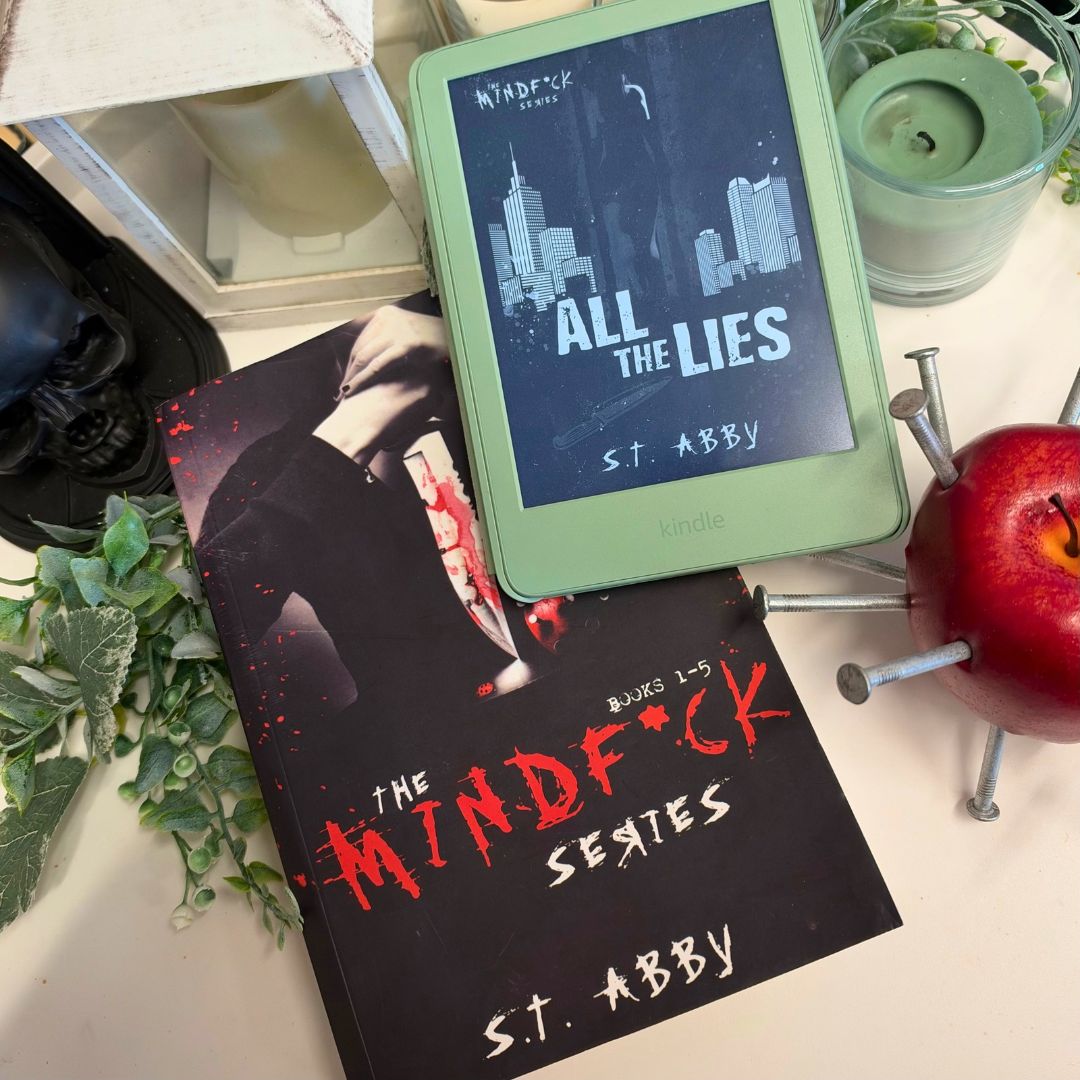
Rating: ★★★★☆
Genre: Dark Romance
Available On: Amazon (though I highly recommend the audiobooks)
Before we get into All the Lies, the usual warning: this review is absolutely not spoiler-free. If you haven’t read my reviews of The Risk, Sidetracked and Scarlet Angel, start there. We’re four books deep on a five-part story that has become a minor obsession so…yeah, I really overthought it, and I’m not skimping on the deets.
If you’ve not read the books yet, any of these reviews will ruin them for you. You have been warned.
We left Logan in Scarlet Angel on the cusp of finally finding out about Victoria Evans. For three books we’ve watched the hot-shot FBI guy hunt a killer while falling in love with her, and it was completely understandable he didn’t realise, because he lacked the information that could have allowed him to consider a woman might be involved, let alone that his girlfriend was the woman he’s trying to catch.
All the Lies drops the dots needed to connect it all straight in Logan’s lap. This novel also gives us the full story of what happened to Victoria (aka Lana) and her brother, Marcus. There’s considerably more FBI investigation, and yet another cliffhanger that sent me straight into Paint It All Red.
Like, I didn’t even pause for breath.
That said, there were quite a few frustrations in this book. Particularly because Lana makes more sense than ever, while Logan appears to completely lose the plot, right at the point he should be starting to put it all together.
The FBI Finally Gets To Act Like The FBI
This was one of the series that solidified my obsession with dark romance (H.D. Carlton and Navessa Allen also bear a lot of blame), and I’ve become a voracious devourer of opinions about books in the genre. Largely so I know what to read next, but also because it’s such a divisive genre I find it rather fascinating to see how drastically people differ in their opinions.
I adored this series. But I know a fair few dark romance devotees who found this particular instalment to be far too much investigation and case discussion. I can see why; it’s a divergence from the general norm for dark romance, and even for this series specifically which, previously, somehow managed to be about the FBI without reading much like it was about the FBI. But I enjoyed the FBI actually acting like the FBI properly for once.
Yes, it’s more procedural. But that’s what the FBI is. It’s how they’re supposed to work. I do also enjoy police/FBI procedurals like Criminal Minds, and Laura Griffin’s Tracers books are one of my favourite romantic suspense series.
Scarlet Angel started giving us more proper investigative work on the page. All the Lies takes that further, particularly through Logan’s interior working-through of the case. I liked getting to watch the team interview people, follow the evidence and try to reconstruct what happened in Delaney Grove.
And the original Rebecca Cannon murder got to be a proper mystery thread more as the books went on. I was trying to work out who killed her, why Robert Evans had been blamed, and what the town had been hiding before everything happened to Victoria and Marcus.
This is a book where I formed a clear theory on that, pretty early on TBF. The visit to Christopher Denver, Jake’s father, had Logan play a recording of Jasmine Evans singing; Christopher recognises it, reacts, and produces a recording of the old Founder’s Day performance. From that point on I had a good idea about the original murder and why it happened. I’m saving what I thought I’d worked out for the final review, because the answer belongs to Paint It All Red.
In this book though, Christopher raised the first point that put a dent in Logan for me, because he literally voiced the thought that Victoria might have returned for revenge if she’d survived.
Yet Logan’s still operating on the assumption that the killer is male. It never even occurs to him to think otherwise here, despite that very possibility being raised all the way back in The Risk when the team was discussing the specifics of the killer’s signature, and how it read like either a gay man or a woman.
Logan now knows that the Evans children were a gay man and a woman. But there’s no lightbulb aha moment going off in his brain saying…wait a minute. Gay. Woman. Didn’t we say it seemed like the killer could be one of those things? What if one of the kids survived?
And there he’d have the literal answer because, of course, Victoria did survive and become Lana. He also already knows Marcus had a boyfriend, Jake, whom the team has considered a suspect. It’s a short step from the info he’s given, it doesn’t even require a leap.
And he never makes it.
This is where the book starts digging itself into a hole. Because, maybe the guy who’s meant to be a hot-shot profiler getting everything completely, spectacularly, stupendously wrong wouldn’t have seemed quite so odd if it hadn’t come at the end of a book in which we finally see him being an FBI agent.
Diana Finally Answers The Riddle We’ve Been Building For Three Books
Personally, I didn’t need the details to understand how bad Lana’s trauma event was.
It’s been clear from the start from Lana’s behaviour, thoughts, reactions and actions that whatever had happened to her had been fucking brutal. So the details were the answer to a riddle we’d been building towards for three books.
A horrific answer, but a satisfying one that made sense.
If it hadn’t turned out to be as bad as it seemed, nothing we know about her would make sense, and everything she’d done would be unforgivable or hypocritical or at least nonsensical.
It was inevitable it would be hideous. The exact specifics I didn’t predict, but the general shape of it was exactly what I expected. Which is why I’m always baffled when people say it was shocking or brutal or whatever. If you’ve read this far into the series, what the fuck else were you expecting?
Did you want it to turn out it wasn’t that bad? Then what? Lana’s whole personality and the entire plot is just a massive overreaction?
In Scarlet Angel, Abby earnt the escalating darkness by building towards it. All the Lies is where we finally see what all those carefully revealed fragments have been leading towards. Personally, I found the descriptions of what Lana does in revenge more graphic than the details of what was done to her. We do finally see it properly in her memory, and it’s a tough read, but Diana’s recounting of events is tame compared to what we’ve seen Lana do on the page.
It baffles me that some readers seem fine with the gory details of murder but get squeamish about a second-hand account of what led the woman to be so damaged. Which is a rather bizarre reflection of rape culture.
Like, this is why women can’t come forward about shit like this, because the reaction is, oh no, that’s too much to happen to a lady, that can’t be right. She must be exaggerating. It’s just a bit much.
But a man getting brutalised on the page?
Totally fine, not an issue.
Obviously, finding sexual violence distressing is perfectly understandable. But enjoying the graphic revenge while objecting to the account of what made Lana so damaged?
So odd.
Delaney Grove Is Forced To Face The Truth
Lana and Jake were terrorising Delaney Grove in Scarlet Angel. But finding out exactly what the town did in All the Lies shifted my perspective on that enormously. They weren’t terrorising them so much as forcing them to look at the truth everybody already knew. They exposed the town’s wilful blindness. And, when forced to face what they’d all basically known about and ignored for years, the whole town just kinda… ran away 🤷♀️
They got off easy.
I can totally buy the town-wide amnesia. Small towns can be so weird, especially in the obsessive way they form group-thinking patterns, or can be shaped by someone who’s particularly charismatic or in an authority position.
It’s why small towns are such great settings for mystery novels.
But the part I found awful was that people knew WHILE the attack on Victoria and Marcus was happening. And they didn’t stop it.
Okay, maybe not all of them knew. But there were people aware of what was being done to two kids right outside their houses for hours, and just let it happen.
That stretches credulity a bit.
How does someone not do something? Call someone? From another town, from the city, whatever. Not one person placed a phone call?
Yes, the sheriff imposed a curfew. But a curfew doesn’t stop you using a phone. You’re telling me people were willing to be aware of that happening to two teenagers and do nothing because… what?
Somebody told them to stay inside and be good?
What are they, primary school kids?
Don’t be fucking daft. I’d be out there with a baseball bat. And this is America. You’re telling me nobody had a gun to go and stop this shit?
That they’d stay quiet afterwards is believable. The collective denial and the power of the sheriff make sense in that context. Still hideous, but more believable. But nobody doing anything while it happened feels like a contrivance you just have to suspend disbelief to accept.
Like, did it have to be on a residential street?
Had it happened somewhere secluded, the lack of intervention would have made much more sense.
But then, would it have been so reasonable for Lana and Jake to burn the whole town?
Probably not.
Lana’s The Reason The Whole Series Works So Well
Lana is probably the most psychologically consistent character I’ve ever read, while simultaneously being completely fucked up, deeply complicated, and weirdly simple.
She cracked open completely in All the Lies, but what we find inside her makes total sense. It’s not contrived or forced or a stretch.
It’s just Lana.
In Sidetracked, Ferguson and Laurel showed that her moral code wasn’t limited to personal revenge. Scarlet Angel tested those rules when Hadley saw what she was capable of. And all through the series, even when Lana’s compartmentalised life starts coming apart, the character herself remains astonishingly consistent.
She doesn’t need to become a different person once Diana tells us what happened. We already knew her through the things she did, the rules she followed, the people she protected and the parts of herself she let Logan see.
Even saving Logan from the corrupt authorities in this book is entirely consistent with who she is. She’s risking her secret and everything she’s worked for because she loves him.
The haunted-house killing, incidentally, seems to be a scene a lot of other readers loved, but weirdly I barely remember it. I think there was a chainsaw, a costume, and Jake came and got her out? I’ve read all these books multiple times and remember a lot of them vividly, but that scene just didn’t make much impression.
I don’t mean it was bad. It was just Lana… being Lana 🤷♀️
Hadley Makes Sense, But I Wanted More Of Jake
Hadley is a great example of ST Abby developing a supporting character properly.
Her gradual change from suspecting Lana to understanding and protecting her has happened over several books. We saw the effect of Ferguson and Laurel, the aftermath of the Boogeyman, and the beginnings of a genuinely awkward friendship. She’s also had some direct POV in Scarlet Angel, which helps.
So when Hadley makes a choice, I understand it. It’s completely believable and didn’t happen instantly.
Jake’s more complicated.
Lana knows him intimately. Logan doesn’t know him at all, so he only experiences his observations of Jake and what Jake says to him. He has no understanding of Jake, and I don’t remember him ever seriously considering Jake’s psychology or motivations, certainly not in this book.
Lana has no need to explain Jake to herself, and the fact she never does is part of why her POV is so compelling, and the books are so well paced. ST Abby doesn’t linger on pointless exposition having characters tell themselves or others or the reader things they’ve literally no reason to say out loud or think. And Logan has no real reason to investigate Jake’s feelings at this point.
Lana and Logan are also too obsessed with each other to focus on Jake’s story.
Which leaves us understanding Jake’s loyalty and the broad history behind it without getting enough of Jake.
I already understood his relationship with Marcus without knowing the specifics, and I found it a little underwhelming when we finally got his side of it. It basically boiled down to being young and gay and scared of admitting it, never saying it, and then losing Marcus and feeling so guilty that he dedicated himself to avenging his lost love and the sister who remained. Heartbreaking, yes, totally understandable, sure, but… I just wanted more.
Jake had so much potential.
It’s something I’m going to come back to properly in Paint It All Red, because the biggest frustrations with Jake’s development hit with the series finale.
Leonard Sees The Signs So Why Can’t Logan?
Leonard was literally a nonentity for me in the first three books.
When he suddenly started having opinions and doing stuff in All the Lies, I actually stopped on my first read and thought, “Wait, which one’s Leonard?”
He’d been so inconsequential that I didn’t even remember him. The guy who does the PR had more page time.
Then suddenly Leonard’s seeing things Logan’s missing, asking questions Logan hasn’t thought of, working out Lana’s secret and very unsubtly trying to nudge Logan in the right direction.
And supposedly it’s all because of Katie? That means he can see Lana more clearly?
Having personal experience of a woman with trauma might make it easier for Leonard to pick up on the fact Lana has more going on than she’s admitting. It could maybe let Leonard get a taste of the flavour of Lana’s trauma, which makes him think.
But they’re all PROFILERS.
They should do that anyway.
And Logan knows Lana far more intimately than Leonard, so why on earth does Leonard see this and follow this train of thought while it never occurs to Logan? (Also, why are all the characters in this book L names?)
I spent a lot of Scarlet Angel defending Logan for not realising Lana was the killer, and I stand by that. He didn’t have the information that would point him towards Victoria, and he had no reason to interrogate his girlfriend about her trauma. He was seeing her through the wrong framework.
But by this point he has more information. Victoria is part of the investigation. Christopher has raised the possibility that she could be the killer.
And Lana saves him. Sure, Logan doesn’t know it was her. He’s been knocked unconscious and is dazed. He sees enough to register the general female shape of the person who saved him, but not enough to identify her.
But he’s been saved by a potentially female vigilante. Why isn’t he wondering why a female vigilante would risk herself to save the FBI profiler who’s hunting her? Then asking what motive could make a woman do that? Then considering the possibility the vigilante has feelings for him? Then looking at the women in his life who fit that bill?
Sure, maybe not immediately looking at Lana but at least considering the possibility someone has a fixation with him. It’s not that he should have recognised Lana immediately, more that he should at least have thought to ask those questions properly.
Leonard has fewer pieces than Logan and still manages to cop on. Alarmingly quickly.
Even after Leonard’s very unsubtle attempts to nudge Logan in the right direction, Logan remains oblivious. Which just makes our MC feel more like he was avoiding seeing what should have been becoming apparent by this point. Not that he’s bad at his job or just oblivious.
It’s like he didn’t want to look at it and have to see it.
Which in itself is a perfectly reasonable response.
But it becomes mega uncomfortable when coupled with what he does once he thinks Lana is Kennedy Carlyle.
Logan’s Meltdown Was Inevitable, His Theory Wasn’t
The cliffhanger of this book was inevitable. That Logan would realise at some point and confront Lana, and there’d be a huge misunderstanding, was unavoidable. There was no way for him to realise the full truth without talking to her. And there was no way he’d calmly have a nice chat when he first realised this woman he’d fallen so hard for wasn’t all she appeared to be, or was so much more than he realised.
He was bound to have a meltdown.
Personal devastation, professional stupidity. That’s a major identity blow for someone like Logan, even without the anguish.
The part I found engineered was the specific assumptions Logan jumps to when he realises Lana is Kennedy Carlyle.
He believes Kennedy has become obsessed with Victoria and is carrying out the murders because of that obsession. But Lana, the woman he knows, doesn’t match the profile of the woman he’s assuming Kennedy Carlyle is. And that profile doesn’t really match what he knows about the vigilante.
It’s almost like Logan’s brain arranges the pieces in an order he can tolerate because the truth is too hard to look at. And that doesn’t fit everything we know about Logan or his actions. Which is why I can’t simply decide he’s subconsciously avoiding the truth and leave it at that.
Lana’s Side Makes Perfect Sense, Logan Doesn’t
The finale is probably the most argued-about part of All the Lies. Logan believes he’s learned who Lana really is. They have sex, he handcuffs her to the bed, and he leaves her there without letting her explain.
Some readers call it sexual assault; others don’t. Personally, I didn’t have an issue with the consent in the scene at all. I did have an issue with how well Logan’s reasoning for it held up.
Lana could have stopped him or said no. She didn’t. She was fully aware, in control, and consenting despite what he was doing, because she felt he was owed it.
She understood why he was doing it.
From her POV it doesn’t read as a violation, more like something she gives him because she knows what she’s taken by hiding the truth from him.
Plus, she knows this is probably the last time they’ll ever be together.
It’s so sad 😞
Her side, as usual, makes perfect sense.
His doesn’t.
Because if Logan believes his own explanation, it’s a shitty thing to do. The fact he thinks Kennedy has serious mental health issues makes it way worse, not better. And if any part of him questions that she’s Kennedy, or why she’s doing it, he’s taking his anger out on a woman he doesn’t understand or see well enough to justify blaming her for any of it.
And he blames her for all of it.
I can understand the hate sex as an impulsive emotional reaction. Hate-fucking Lana would make sense if it was purely:
“Oh shit, this thing is over. I thought I’d found my lobster, but she’s actually a raging psycho. But she’s still sexy as hell and I’ve no idea how to process all this shit so my body’s telling me to fuck her senseless.
Because that is something I can understand.”
That makes sense to me as an emotional rage outburst.
Had that been Logan’s why in this scene, I’d have bought it without question. But the justification he has is too overthought to read as an impulsive instinctive response. And when you follow all that overthinking, it genuinely doesn’t make much sense.
Like, at all.
Either this was highly convenient plot-fairy magic on ST Abby’s part that contrived a huge misreading to facilitate the cliffhanger, or Logan was (at least subconsciously) punishing a woman for something he’s not sure she did. Or at least, not sure she did for the reason he assumes she did it.
It doesn’t read like he doubts the explanation, even subconsciously. But if he did, that completely changes the scene and makes it alarmingly ugly. And there’s no answer on the page. It’s either a plot contrivance we have to accept doesn’t really make sense for Logan’s character, or Logan did a really, really shitty thing.
I don’t know which is worse.
But the cliffhanger itself? Absolutely worked.
I didn’t pause between books. I was straight on to the next one 🤣🤣
The Weakest Book In A Five-Star Story
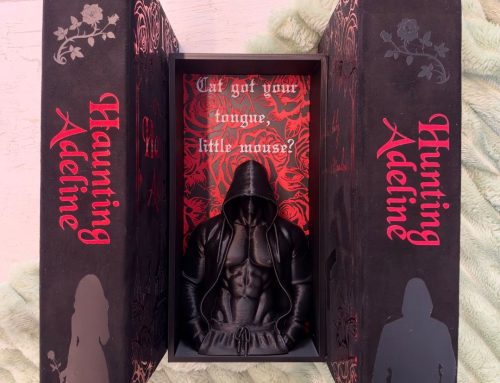
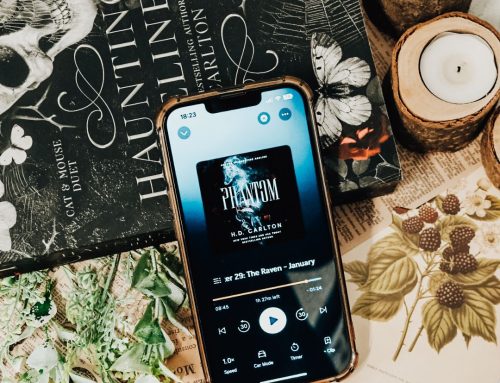
The five books of the Mindfuck series are basically one novel, split in five. Even if it had been written as a single book, I don’t think it would have shortened the narrative. Each book is pretty short anyway, so the omnibus ends up as just a hefty book. It’s about the same length as Haunting Adeline and actually shorter than Hunting Adeline.
ST Abby’s prose is incredibly economical. She doesn’t meander; there’s no excessive description. Everything is briefly seen, shown, described, and she moves on. It’s not a literary novel, but it was never trying to be. It’s not perfectly written, can be a little clunky or repetitive, and some of the dialogue gets a bit cringe. I’ve said similar about the writing throughout and I don’t think All the Lies marks any particular change in writing quality.
All the Lies has more discussion, reasoning, and particularly Logan’s interior working through of case thoughts, which does make this book a little different to the others. But again, that’s the switch in how heavily the investigation features, not bad writing.
Regardless, for me, All the Lies was the weakest book of the series on several levels. Not that it was bad. It’s still a great read. But there are more frustrations in this one.
It’s a five-star series for me, and I struggle to distinguish because if you take All the Lies as a standalone, it’s a four-star read. But in the context of this series, that’s like saying a five-star read has a bit of a sag towards the end of the middle, and picks right up again for the climax.
One of them has to be the least good of the five, it just happened to be this one.









 4.28 Average