Skip to content

If you’ve seen all the ‘I published my novel on a £200 budget and make £10K in a month’ larks floating about, you’re probably a sceptic. Like, you’re very likely wondering what the actual cost of being an indie author is. If you can really launch a career as an Indie on a shoestring. Whether it’s actually possible to earn a fortune in a very small amount of time without significant investment.
The short answer is, for most people, no.
You can’t.
Earning money as an Indie required one thing in SPADES: visibility. That either comes from a lot of hardcore marketing (usually involving paying out cash money in ad spend), or the kind of viral presence that only comes from a) being an influencer, or b) doing something spectacularly unexpected that breaks the internet and makes people curious enough to buy your book.
For most of us indies, neither is happening.
I’m certainly not an influencer. I have a tiny following. The algorithms on social are a bitch. So expecting to have thousands coming in each month in sales? Completely unrealistic. Weirdly, when I decided to stary publishing my weird little romantic suspense series, it wasn’t with the expectation I’d make a lot of money from it.
It was just something I wanted to do. And do well.
2024 and 2025 proved to be a very expensive start. One that I knew wouldn’t produce much (if anything) in the short term, but was necessary to lay the groundwork for everything I want to follow. I count the real ‘start’ of this project as August 2024, when my first book went live (though I did have expenses before then).
August was the launch of my novella, Eve Was Framed.
Eve Was Framed was never intended to be a meaningful source of sales revenue. From the beginning, it was designed as a lead magnet, something to give away for free to readers who signed up to my email list. Any sales it made were incidental rather than the point. My first full novel, Bane, launched a few months later in November 2024.
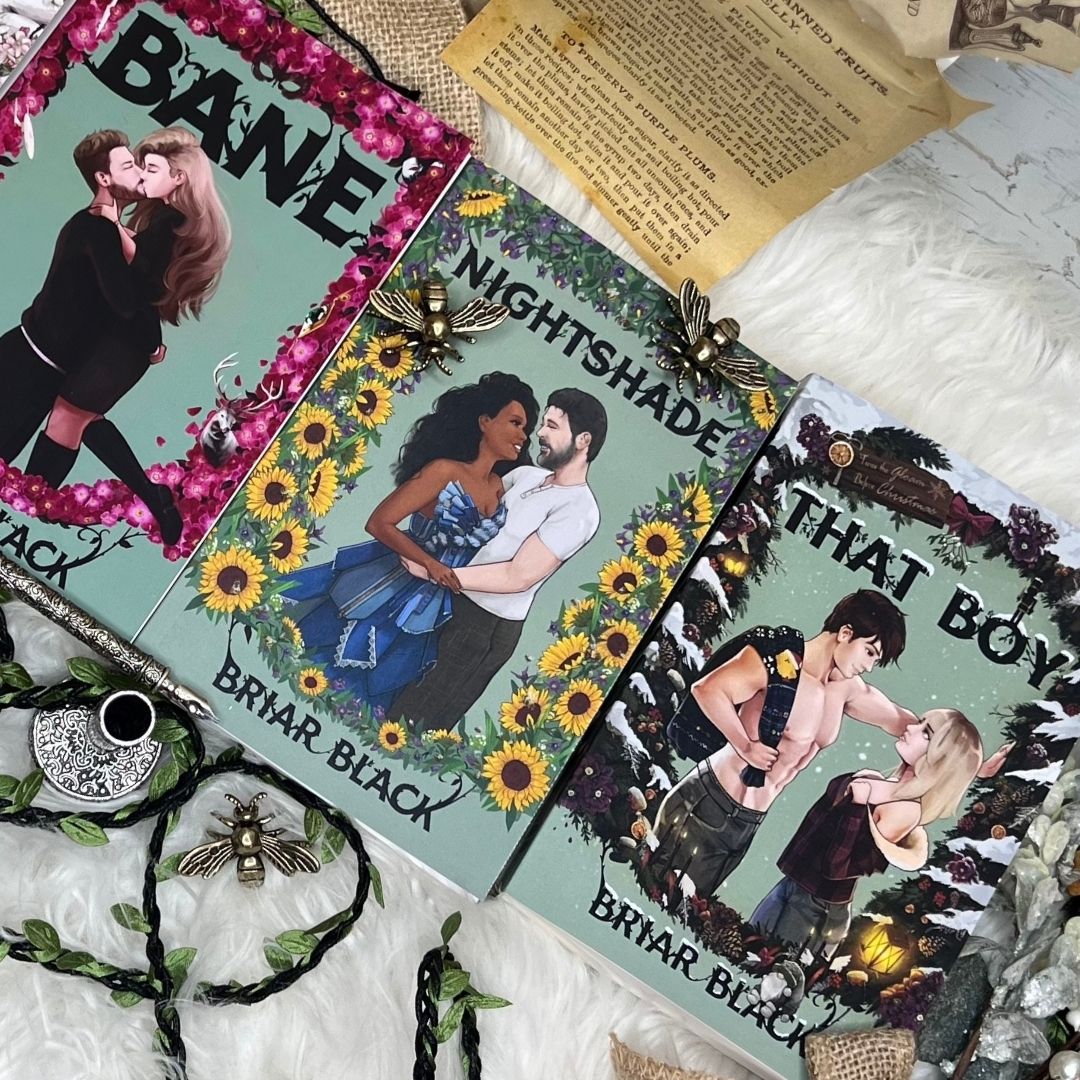
2025 was my first full calendar year publishing fiction. It saw the release of two additional novels: Nightshade in June and That Boy in November.
There are much cheaper ways, and even completely free ways, of doing almost everything I did here. But I’ve been a professional copywriter and ghostwriter in the marketing world for a very long time. If you’ve read Eve Was Framed and Bane, you’ll know Amelia runs her own marketing agency. All of the inspiration for her came directly from real-life work with excellent marketers and highly creative people.
That background also means I know enough about writing to know how important proper editing is, both developmental and copyediting, and how essential it is not to attempt to proofread your own work. It’s impossible. I couldn’t bring myself to cut corners on that side of things. I wanted the books to be done properly.
That same thinking extended beyond the books themselves. I also wanted a website that could function as a real platform, not just a placeholder, and that could eventually generate revenue in its own right. I knew getting it to that point would take a long time and a lot of work. The amount of time it takes reduces in direct proportion to how much work you can put in, and I was already working a full-time job and writing all these damn books. So I knew, going in, that it was going to take a while.
Even so, staring at the costs going out compared to the money coming in was scary.
But it’s a good kind of scary, and one I rarely see indie authors actually talking about.
Either because they don’t like sharing the real numbers it takes to get them where they are. Or because they genuinely managed to “make it” without doing things as thoroughly/expensively as I have. Or, and I think this is far more likely, because a lot of the expenses have been quietly forgotten while they’re busy making TikToks about how much their books have made compared to how little it supposedly cost them to get there.
Am I cynical?
Yes.
I told you.
I’ve been in marketing for years.
Shit doesn’t sell itself.
With that in mind, and now that I have a full calendar year of publishing (and all the many expenses that go with it) under my belt, it felt like the right time to pull back the proverbial curtain and actually crunch the damn numbers.
I had a rough idea of how much I’d spent before doing this.
I was wrong.
It was a lot more than I thought.
And I suspect that’s why there’s such a visible disparity between what a lot of indie authors share about their expenses, and how much I know it must have cost them to do what they’ve done. That’s not to say everyone has spent a fortune. Some indie books don’t get professional editing and are still great. With enough dedication, beta readers, time, and patience, that’s absolutely possible. Likewise, marketing can be done organically if you’re able to build a genuinely dedicated following.
Everything here can be done without spending money.
I just know, far better than most, how rare that actually is. And I had neither the time nor the patience to take the free route myself.
2024: The Setup Year (AKA: The Money Sinkhole)
2024 was never supposed to make money. It was always going to be expensive, and I knew that going in. This was the year everything had to be built before it could do anything useful.
It was also the year I released my first two books. Eve Was Framed launched in August, and Bane followed in November. Of the two, only Bane was intended to be a commercial product. Eve Was Framed was created specifically as a reader magnet, something to give away for free in exchange for email sign-ups. Any sales it made were incidental rather than the point.
That distinction explains why the income side of this table looks the way it does.
2024 Income
In total, I made £88.82 in 2024.
- Amazon KDP royalties: £86.77
- Amazon affiliate links: £2.05
The affiliate income came from people buying books I’d recommended on my site, not my own. It was small, but it existed, which was more than nothing.
That’s it for income.
Now for the expensive part.
Front-Loading Setup Cost
The largest chunk of spending in 2024 went on infrastructure.
- Limited Company Setup & Accountancy: £226.25
- Website, Hosting & Initial Branding: £6,000.00
- Domain Registration: £25.98
Infrastructure total: £6,252.23
You don’t need a limited company to be an indie author. You don’t need a professionally designed and developed website with a full WooCommerce site, integration with a Print-On-Demand merch supplier, integration with Amazon’s affiliate programme, and enough SEO structure to support a small pyramid.
Both of these were choices I made because I wasn’t trying to build something temporary. I wanted a site that could function as an actual platform and, eventually, generate revenue independently of book launches.
That decision meant absorbing a large, unavoidable cost early, long before the books had any chance of earning back even a fraction of it.
Editing: The One Thing I Refuse To Skimp On
Editing was one of the larger costs in 2024.
- Eve Was Framed: £1,092
- Bane: £3,757
Total editing and proofreading costs: £4,849.00
Both books were professionally edited and proofread. This wasn’t an area I was willing to skimp on. I’ve been writing professionally long enough to know that you can’t meaningfully catch your own mistakes, and that “I’ll fix it in revisions” is not the same thing as having another set of trained eyes on the work.
Could this have been done more cheaply? Yes. With enough time, patience, and unpaid labour, almost anything can be done cheaper, or free. I didn’t have the time, and I wasn’t interested in gambling on patience.
I also personally take issue with not paying people for their time. It takes an age to properly read and give feedback on a book. If you’re offering real editorial notes or proofreading (even as a beta reader without professional training), that’s graft. It’s hard. It’s work. And people should be paid for that work.
So, this is what it cost.
Making Them Pretty
- Eve Was Framed cover: £160
- Bane cover: £160
Total cover costs: £320.00
My covers are divisive and won’t be to everyone’s taste. I don’t care. I love them. I could have spent a lot less on them, or done them myself in Canva. I could have spent a great deal more. Personally, I think they were a steal and my illustrator should really charge more for his talent.
Are they right?
Who knows.
Frankly, it’s the one element of this process I didn’t overthink or test, or try out, or worry about whether “everyone else in this genre has covers that look like this”.
Technically, I probably should have done that. But The Cheshire Set isn’t really like other books in the romantic suspense genre.
Not that I wrote something completely, ground-breakingly original. Just that they’re quite quirky for that particular genre, which often leans more towards the procedural side of mystery: detectives, PIs, scientists at the very least.
The kind of covers you do see in that genre really didn’t suit my books.
I felt covers like that would misrepresent the series for the reader. That might be the smart marketing decision, potentially leading to more sales because more people saw the covers and were comforted by a familiar, easy-to-understand format.
But then they’d read the books and feel cheated. Because the book didn’t quite match the promise of the cover.
I didn’t like that idea.
So the covers are intentionally quirky.
They do fit some current trends.
I’m not an idiot.
The illustrated character style is very popular (though polarising, I’m aware), and I’d seen several covers I absolutely adored with a kind of ‘clues hidden in the border’ concept going on. Bane is very on the nose for that. There are literal plot elements in the rose border.
The briar rose border.
See what I did there?
After that one (which was actually done first, despite Eve Was Framed coming out sooner), they get a little less literal. Eve was very much symbolic. Apple blossoms and snakes to represent the Eve Was Framed concept.
And yes, maybe that confused a couple of people.
Again, I don’t care.
The people it confused aren’t people who are interested in books like Eve which, incidentally, is a female-rage, finding-your-power, stepping-into-your-power, anti-romance ballad.
The snakes are a metaphor.
Launches and Marketing (Because I’m Not An Influencer!)
- Eve + Bane Launch Costs: £1,836.00
- Meta Ads: £1,846.18
Total launches & marketing: £3,682.18
These costs covered managed launches, influencer outreach, ARC distribution, merch, and early attempts at paid traffic. The Meta ads were mostly aimed at list building, with some experimentation around sales ads and social engagement.
Some of that worked mechanically. None of it worked effortlessly.
This was the year where a lot of lessons were paid for upfront!
2024 Totals
- Total income: £88.82
- Total costs: £15,103.41
- Net position: –£15,014.59
This is what a setup year looks like when you don’t pretend labour is free, platforms are optional, or quality happens by accident.
I didn’t expect 2024 to be profitable. Genuinely, I don’t expect this venture to become profitable for at least another year (probably more) so I certainly wasn’t expecting it in 2024!
I did underestimate how confronting it would feel to see the full number written down.
And that’s the table most people don’t show.
Which is why I’m showing it. And why (despite the pain) I need to delve into the first full year of my publishing journey.
And all the other money I spent…
2025: The Year It Started Doing…Something
If 2024 was about building everything from scratch, 2025 was the year I found out whether any of it worked at all.
This was my first full calendar year publishing fiction. It included the release of two novels: Nightshade in June and That Boy in November. It was also the year where I stopped guessing and started seeing patterns, not always comforting ones, but at least real ones.
The numbers are still ugly. They’re just ugly in more interesting ways.
2025 Income
In total, I made £669.00 in 2025.
- Amazon Royalties: £507.41
- Amazon Affiliate Links: £41.59
- Backlink Placements: £120.00
The biggest chunk is still Amazon royalties, which isn’t surprising given that books are the primary product. What was interesting was how the other income streams started to show signs of life.
Affiliate income came from people buying books I’d recommended on my site, not my own. Slowly, steadily, without any launch spikes or hype cycles. The backlink placements were the first time the site itself earned money simply because it existed and had an audience. That didn’t happen by accident. It happened because of the work done in 2024 and throughout 2025.
That’s SEO shit. And it’s both mind-numbing and (eventually) extremely lucrative.
2025 wasn’t the year the website started generating life-changing income. But it was the year it started to pay for itself, and that was honestly the best I could expect. Particularly when the time constraints of a full-time job and writing three novels and a novella in 18 months meant I didn’t really blog that much.
Or, like, at all for much of the year!
Infrastructure: The Ongoing Cost of Being ‘Proper’
- Limited Company Running Costs & Accountancy: £543.00
- Domain registration: £25.98
- Website / Branding Graphics: £936.69
Infrastructure total: £1,505.67
Compared to 2024, this is where the numbers calm down. The expensive part of building the platform was already done. What remains is the cost of maintaining it, improving it, and occasionally fixing things I broke.
The site continued to evolve throughout the year, but there were no more huge, existential invoices. Just the ongoing reality of running something that isn’t held together with duct tape.
If I had a better head for numbers and the patience to deal with HMRC or accounting software I’m quite certain I could have done all the accounts myself. But I don’t do it for my day job and sure as shit wasn’t going to be doing it for this.
My accountant is a rock star, she just handles everything for me. And as you’ve probably noticed, I very much have a philosophy of paying people what they’re worth. So no, I don’t count that as expensive for what she does, though if you’re trying to mitigate costs you can learn to do it yourself.
Just don’t ask me to help you.
Editing & Proofreading: Where the Money Really Goes
Editing was the single biggest expense again in 2025.
- Nightshade – developmental editing: £1,320
- Nightshade – line editing & proofreading: £1,925
- That Boy – developmental editing: £1,500
- That Boy – line editing & proofreading: £2,000
Total editing costs: £6,745.00
This was the year I discovered not all editors are created equal.
I had one team work on Eve Was Framed and Bane, but unfortunately the editing part of that team went on maternity leave, and I had to switch things up in 2025, with mixed results.
The Nightshade line editor and proofreader did an amazing job. Alas, That Boy was a bit dark for her tastes and she passed on taking it on. I was also on the fence about the developmental editor I’d had for Nightshade. She did a good job, but she wasn’t as good as my original (still on maternity) editor, so I decided to look for someone else.
That Boy ended up with a great developmental editor, but the line edit and proofread was an unmitigated nightmare. The initial work was good. Story-level comments, helpful feedback. But everything after that was a complete farce.
This was also the point I realised I was absolutely right to have never relied on beta readers and always insisted on having a real editor, because what I didn’t realise until it was too late was that the final editor who worked on That Boy wasn’t a professional editor at all. She was a beta reader who had edited enough books that her list of projects and reviews presented her as being far more experienced and professional than she actually was.
Lesson learned.
A friend of mine (who happens to be an editor herself, though not as her main occupation, which is why she’d never agreed to do it before) was forced to step in and fix the mess the one I paid had made.
My friend refused extra payment, for which I was eternally grateful, but still feel endless guilt over, leading to buying her a lot of books and wine.
She seems happy with this arrangement.
Needless to say, it was a very stressful experience, and probably why I came to the end of That Boy feeling burnt out.
Covers: One Re-Do, No Regrets
- Nightshade cover: £160
- That Boy cover: £300
Total cover costs: £460.00
That Boy cost more because I had the cover redone. I commissioned it too early, before the book was finished, and the story shifted. It started out in spring with a rather light, bright, hopeful vibe going on. It ended up a Dual POV that was a lot darker in tone and theme, and I shifted the season to winter, and needed the cover to change too. Something like ‘wisteria border and sunshine’ and more ‘moody Christmas’.
That one’s entirely on me.
I don’t regret it. The final cover fits the book. The earlier one didn’t. And yes, I paid my artist twice. He designed two covers. It wasn’t his fault it was for the same book!
Sometimes the cost of learning when not to commission something is paying for it twice.
We put it pin in future covers after that, until I’ve actually FINISHED the damn book!
Launches & Marketing: Smaller, More Targeted, Still Not Magic
- Nightshade Launch: £2,000.00
- BookBub Promos: £900.00
- That Boy Launch (including promos, no BookBub): £1,500.00
- Meta ads: £850.89
Total launches & marketing: £5,250.89
Compared to 2024, this wasn’t a more controlled year for launch spending. Nightshade was more expensive to launch than Eve Was Framed and Bane combined, and it was only after that I reined it in.
I work with a marketing agency that manages launches. Costs included their (very reasonable, probably undercharging for how much they do!) fee, paying influencers, sending out ARC copies, and PR boxes with more ARC copies and merch. I don’t have the breakdown for everything specifically. However, I do know that roughly £1K per launch went to influencers and sending out ARCs.
I also had more branding work done than was really necessary. This included some absolutely lush PR boxes that were a bespoke design and cost a fucking fortune to print. One job for 2026 is to get those up on the website and TikTok Shop as an actual product people can buy, because so far all I’ve done is fill them with books and t-shirts and give them away. (Sidebar: postage to other countries is exorbitantly expensive.)
I’m very grateful that my marketing agency handled all the logistics around that. I’m also grateful they pointed out that I went a little OTT with Nightshade and should probably rein it in a bit next time.
Separate to that, the BookBub featured deal and New Release for Less promo I did for the launch of Nightshade (featured deal on Bane, New Release for Less on Nightshade) cost £900 total.
Several sites were used to promote the free periods for Bane and That Boy in November/December, and those costs were included in the £1,500 That Boy launch fee. That fee was intentionally reduced after Nightshade, with promo site costs bundled in rather than billed separately, as had happened with BookBub.
I didn’t use BookBub for That Boy because I wasn’t able to secure a featured deal. Had I been able to, I would have happily paid for it. The featured deal on Bane was well worth the money. The New Release for Less promo, on the other hand, was very expensive and resulted in four sales in total.
I will not be doing that again.
Award Entries: Paying to Be Taken Seriously
- IPPY Award Entries: £185.12
This covers entries for Bane (which went on to win a Silver for Best Romance in 2025), plus entries for Nightshade and That Boy in the 2026 awards (I won’t know if they’ll win anything until summer when they announce winners).
No illusions here. Awards cost money to enter. I chose to enter anyway.
You can decide for yourself whether that’s worth it. Personally, I feel it was. If for no other reason than I’d been refused a Featured Deal by BookBub approximately fifteen thousand times prior to winning an IPPY, then suddenly they said yes.
That Featured Deal is why I have nearly 200 reviews for Bane on Amazon, compared to 30ish each for Nightshade and That Boy.
All of this is long-term strategy, remember? Reviews are what sell books. Period. You can run as many ads as you like to your books but until you’re in triple digits getting sales is graft.
2025 Totals
- Total income: £669.00
- Total costs: £14,146.68
- Net position: –£13,477.68
So no, 2025 wasn’t profitable either.
But it was different.
So, What Did It All Add Up To?
Across 2024 and 2025, I earned £757.82.
Across the same period, I spent £29,250.09.
That leaves me with an overall net position of –£28,492.27.
On paper, that’s grim.
Did I need a website? No.
Did I need one with an integrated WooCommerce shop and a load of setup for merchandise literally nobody has bought yet? Also no.
Did I just want it for vanity’s sake? Yes. Partly.
But more than that, I wanted it because I know better than most people how valuable a good website is long-term. I’ve written content for businesses for my entire professional life. I know what it can do when you give it time.
Long term, I don’t want to rely on ads to generate sales. I want people to find me and buy my books. That kind of traction takes years to build, and you need a solid base to work from.
I could have done it a lot cheaper. I didn’t want to. I wanted to do it well.
I didn’t have to have a website at all, but I wanted to start the SEO ball rolling immediately. And 2025 proved that it’s starting to pay off. The site was set up to generate income not just from book sales, or even merch sales (which I remain hopeful will actually happen at some point, and in the interim at least I have cool stuff to send out in PR boxes), but from the site itself.
Just sitting there, with my content on it, it’s now generating income.
A tiny amount per month from affiliate marketing.
An even tinier (but growing) amount from people wanting backlinks on my site, linking to their own, because that’s valuable to help them grow their authority. They’re willing to pay for that because I’ve put the work in to make the site a growing authority.
I could have made more than that, but I’m picky. I only accept people who actually have something I’m willing to link to, that’s truly relevant to my readers. If I said yes to everyone that asked, I’d have hundreds more on the income sheet for the year.
But I’m discerning. Because, longterm, stuffing my whole site with craplinks would damage it.
And I want it to thrive.
The Cost Of Being An Indie Author
The upshot is this: so far, I’ve spent almost £30,000, and earned less than £800.
You’d think I’d be maudlin or depressed by that.
I’m not. I’m actually pretty pleased.
Like I’ve said, I didn’t have to do things this way, and you certainly don’t have to either, if your goal is to become an Indie Author. It’s entirely possible to do almost everything I’ve done far cheaper, or even for free. The main exception is anything that needs to be physically printed and shipped, but even there you can send ARC readers ebook copies only.
You don’t have to spend money.
Of everything I’ve spent, the one area I’m genuinely unconvinced was worth it was influencer spend. I have no direct way to track how many sales or downloads that generated, but the numbers aren’t high. Certainly nowhere near high enough to justify the cost.
They’re a fabulous bunch and they created some wonderful content that made me very happy to look at. But they were expensive, and from a purely cost-analysis standpoint…I don’t think they generated much (if any) paid sales, and negligible free downloads (i.e. subscribers to my list).
Beyond that, though, I’m exactly where I expected to be three novels in.
Yes, I hoped I’d have more regular sales by now. But my month-on-month revenue is growing, and every new launch causes a spike.
That’s normal.
And I say that as someone who’s worked with authors, both traditionally published and indie, for years. Sales don’t happen quickly. Most authors need multiple books out before they start seeing steady interest, and enough of a back catalogue that every new reader turns into a fan who reads everything and pre-orders the next release.
On average, that happens somewhere around book five to seven.
So for now, I’m pretty happy with the progress.
That Man is out in June. At one point I’d planned a three-to-four book release schedule for 2026, but I’ve used January as a pause-and-reflect month before diving headlong into that.
For two reasons.
First, despite my optimism, £30k spent to £800 earned is maths I have to take seriously.
Releasing three or four more books this year would mean finding the money to pay for editing, launches, and ongoing marketing to cover even more books. I’m not yet confident in my funnel to be certain I’ll ever make all the money I’ve already spent back.
The idea of dropping another £10–20k on top of that isn’t especially appealing.
Second, if I’m honest, I’m burnt out.
That Boy was an emotional book to write, and incredibly stressful to edit. The thought of diving straight into That Man immediately afterwards was a bit much. Instead, I’ve been tinkering with a whole new world and a whole new set of characters in a dark academia / dark romance project. It’s too early to say much more about that yet.
Now February’s here, I do need to sit myself down, have a stern word, and get That Man finished ready for June. If all goes to plan, there’ll be another Cheshire Set book out towards the end of the year.
And, who knows, maybe even a dark romance.
We’ll see.
I’m not forcing it.
For now, I’m slowing down slightly and reminding myself that while we all want our books to earn us enough to quit the day job and retire on a white sand beach somewhere, the reality of being an Indie Author is much slower.
And really, that’s not the point.
The point is the love of the craft. The joy of the worlds we create. And the probably far-too-great attachment we develop to these strange characters, who feel all too real and have a habit of breaking our hearts.


 4.28 Average