Skip to content


Rating: ★★★★★
Genre: Dark Romance
Available On: Amazon
I picked up Ninth House later than I should have. This was very much a ‘Bookstagram Made Me Buy It’ read. I kept seeing it. Over and over. Until I finally caved and decided to give it a go.
Man am I glad I did.
Dark academia feels like a genre I should have arrived at years ago. I have an academic background. I like my fantasy sharp-edged and morally uncomfortable. I’m endlessly interested in power, institutions, and the stories we tell ourselves to justify harm. And yet somehow, this one passed me by until 2025.
When I finally read it, I didn’t just enjoy it. I recognised it.
Ninth House isn’t a book you breeze through and forget. It’s a book that digs in, asks you to sit with discomfort, and refuses to let you mistake prestige for virtue or survival for victory. It’s layered, dense, occasionally abrasive, and deeply intentional in the way it withholds easy catharsis.
This isn’t a spoiler-light review (though I’ve tried to avoid them as much as possible) or a surface-level recommendation. It’s a close look at why this novel works, where it hurts, and why it stayed with me long enough to shape not just what I read next, but what I wanted to write.
Some books entertain.
Some books impress.
Some books leave a mark.
This one did.
@briarblackbooks Replying to @Eyvette Durst ♬ original sound - 🥂
The Plot Of Ninth House Hinges On Descents
There are three interlocking elements of the plot:
- Alex’s induction into Lethe
- The murder of Tara Hutchins
- What happened before Alex ever came to Yale
One line tracks Alex’s descent into drug use, crime, and a vile existence, with the only sunlight in that life being her best friend. This is not backstory padding. It is the foundation of her psychic and moral architecture. Alex does not just arrive at Yale broken; she arrives broken in a very specific way.
Another line tracks her beginning to recover as she comes to Yale and meets Darlington. Their dynamic is not soft or immediate. Darlington is initially mistrustful and resentful; Alex is guarded, traumatised, and operating on survival instincts honed in an entirely different world. And yet, they start to heal things in each other in an oddly beautiful way. Not through romance, and not through redemption, but through shared purpose and the fragile act of being seen without being consumed.
Then Darlington disappears.
At which point the structure does something devastatingly elegant: Alex descends again.
But this time, the descent is different. It is not numb chaos or self-destruction. It is purposeful. Focused. Furious. And threaded through it is a single, fragile line of hope for ascent, governed by a simple creed:
What would Darlington do?
And how do I get him back?
This mirroring of descent → partial ascent → descent → hope of ascent across the timelines is what makes the novel so compelling. The murder investigation, the occult politics, and the procedural mechanics of Lethe are not the spine of this story.
Descent is.
And that descent is not merely emotional or moral.
It is mythic.
There is a reason Lethe delegates are named after figures from Dante’s Inferno. The novel is not interested in salvation arcs that move cleanly upward. It is interested in circling, in spirals, in the cost of returning from the underworld changed and half-ruined and still having to keep going.
Trying to explain why this works without being spoilery is difficult precisely because the power lies in recognition, not revelation. You feel the structure long before you consciously see it.
Ninth House understands something many dark academia novels gesture at but do not commit to: that descent is not the opposite of growth. It is often the only way growth happens at all.
Galaxy Stern As The Anti-Chosen One
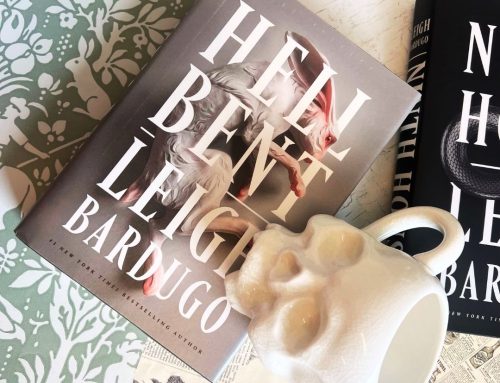
Ninth House was my first read by Leigh Bardugo, and I fell in love with her as an author through this novel. I’m genuinely unsure how I went so long without reading any of her books, but I devoured this one and immediately moved on to Hell Bent. I’ve since reread both. Ninth House was my favourite book of 2025 by a mile, and Galaxy Stern is a huge part of that.
Alex’s teeth and claws are metaphorical, but her flaws, quirks, and mannerisms are painfully real, and none of it is ornamental. They’re all driven by her unique gifts and the psychological impact those gifts have had on her.
In some ways, she fits the ‘chosen one’ archetype. In others, she is as far from a chosen one as a person could possibly be.
She has a unique gift that grants her unknown levels of power, yet that power does nothing but hurt her. Her whole life, from a very young age, is shaped and burned by her power in a visceral, incredibly believable, deeply human way.
Her abilities are fully supernatural, yet the toll they take on her is abjectly human.
She is not brilliant in a traditional sense.
She is not magically gifted in a way that grants control.
She is not aspirational.
She is durable.
Her ability to see Grays without assistance is not a blessing but a scar. It marks her as someone who crossed thresholds she didn’t consent to long before she had the language to understand what was happening to her.
Her childhood is marred by trauma. She abandons any attempt at normalcy and seeks solace in drugs, not for rebellion or thrill, but to bury her gifts because they are so damaging to her. And it costs her everything, in a far more raw way than most characters are ever allowed to experience.
Her innocence is brutally stripped.
Her hope and faith in humanity are destroyed.
Her self-worth, self-belief, and self-image are eroded down to nothing.
She hands her agency over to others in the hope that they will save her, and they only use her and hurt her more.
But she can’t see that. Because she’s young. And damaged. And she has no idea what her power is, or even if it’s real.
Then Yale happens.
Then Lethe.
And Darlington.
Yale and Lethe show her that her gift is real. Darlington shows her that it is precious. And slowly, painfully, she starts to understand that what nearly destroyed her might also be the thing that gives her purpose.
Alex is brittle, coarse, sharp, damaged. And beautiful. But not conventionally.
The quiet way she comes to see her own value through Darlington and her role within Lethe is cripplingly, heartbreakingly empowering.
Crucially, Alex is not impressed by Yale. Her outsider status does not romanticise poverty or trauma, but it does give her a lens that cuts cleanly through institutional bullshit. She recognises coercion because she’s lived it. She recognises predators because she’s survived them.
Her moral code is situational, ugly, and human. She does not seek justice in abstract terms. She seeks containment. Harm reduction. Damage control.
That makes her the perfect, horrifying fit for Lethe.
I’m sure she hits as hard for me as she does because of my own psychology, life experiences, and an odd, uncomfortable empathy with her. She gave me something close to catharsis. And I suspect that if you don’t have that connection with her character, she (and by extension the novel) might not hit as hard.
But for me, I loved this girl. Her characterisation. Her backstory. Her relationship with Darlington and her friends. The way she is written. And the way Bardugo takes the chosen one trope and twists it until it bleeds, turning it into something brutal, intimate, and genuinely special.
Darlington: The Polite Face of Power
Daniel Arlington (can we just pause to appreciate the perfection of him being known as Darlington) is often read as the golden boy foil to Alex’s grime. But that reading flattens him.
In his own way, Darlington is just as damaged as Alex. Just as traumatised. Just as desperate for meaning.
His devotion to Lethe is not simply intellectual or ideological. It’s personal. Lethe represents a way to transform his own reality, to heal things that were broken in him through no fault of his own. He longs for a world more fantastical than the one he was given, and when he discovers that such a world actually exists, he embraces it so completely that it becomes almost his entire personality.
Magic is not a curiosity to him.
It is salvation.
It’s all he’s interested in. All he cares about. All he aspires to. To be the best he can possibly be. To know as much about the Other as he possibly can. To see magic. To understand it. To wield it.
And then Alex walks in.
This girl with no formal education, no preparation, no reverence for the world he has suffered to access. And she simply sees it. All of it. Effortlessly. Everything he has bled for, she has lived with her entire life.
At first, he lets that make him judgemental. Bitter. Resentful. But when he finally sees past it and truly sees Alex, something shifts. The presence of her reshapes his understanding of reality itself.
She is the magic he has always longed for.
The world he is desperate to inhabit.
And he barely has time to realise this. He isn’t even consciously aware of it yet. Before he can name it, or examine it, or understand what she might mean to him, he is taken away from her.
They are forced apart at the precise moment when each is beginning to glimpse what the other could represent. Not salvation, exactly. But possibility.
This is what makes their relationship so devastating. It becomes the most delicious slow-burn dynamic, steeped in yearning so acute you’re never entirely certain whether what they feel is romance, or obsession, or simply the shared, desperate hope that this other person might somehow fix what is broken inside them.
Structurally, Darlington still represents something dangerous: well-intentioned complicity. He believes in rules. He believes in containment through procedure. He believes that if he does his job correctly, the system can be made safe.
The novel dismantles this belief with surgical precision.
Darlington’s fate is not punishment for arrogance. It is the inevitable outcome of trusting a system that treats human bodies as collateral.
In this way, he is not the moral compass of the novel.
He is the cautionary tale.
Worldbuilding: Magic as Infrastructure
Bardugo’s most impressive achievement here is making magic feel institutional rather than mythic. And that effect is amplified by how thoroughly the world is grounded in the real, physical reality of Yale itself.
Each house specialises.
Each ritual has paperwork.
Each abuse has precedent.
Magic is:
- Legalistic
- Audited
- Deniable
The societies resemble hedge funds with grimoires.
What elevates this worldbuilding even further is that Bardugo hasn’t invented this system whole cloth. She has taken a real-world elitist structure of secrecy and power and exaggerated it, rather than reforming it. Yale really does have eight secret societies. Their names are the same ones used in the novel. Their real-world counterparts exist.
I went down a rabbit hole on this during my second read, looking into the actual houses at Yale, and the moment it clicked that Skull and Bones is real, that the Bonesmen exist, that these societies and their acolytes are not purely fictional, the novel deepened in a way I hadn’t anticipated.
The fact that this wasn’t immediately obvious to me on first read is a testament to how well it’s written. As a Brit, poorly versed in the inner workings of American universities, I genuinely didn’t realise. But once I did, the entire system felt richer, sharper, and more unsettling.
It’s one thing to invent a complex network of secret societies from scratch and shape them to suit a narrative. It’s another thing entirely to take an existing system of elitism, secrecy, and potential corruption and simply turn the volume up, adding mythic and supernatural elements that map almost too neatly onto the reality beneath.
This is not fantasy as escape. It is fantasy as commentary.
Lethe itself is not a ninth power but a regulatory illusion. It exists to reassure the university that oversight exists, while ensuring real power remains untouched.
This is worldbuilding that understands how power actually operates in the real world.
Not simply through secrecy, but through normalisation.
Violence, Trauma, and the Refusal to Look Away
Ninth House has been criticised for its graphic handling of trauma. That criticism fundamentally misunderstands the novel’s intent.
This is not aestheticised pain. This is not violence for titillation, nor trauma as shorthand for darkness. The violence is uncomfortable because the institutions surrounding it are comfortable. Because the systems that enable it are calm, procedural, and impeccably managed.
Bardugo forces the reader to sit with what happens when harm is absorbed by structure rather than confronted.
Sexual violence that is excused as tradition.
Death that is administratively inconvenient.
Ghosts who are ignored because paperwork says they can be.
The novel refuses to soften these moments or hurry past them. It makes the reader experience the same friction Alex does: the sickening realisation that what should provoke outrage instead provokes a shrug.
This is why the Grays are not the true horror of the book. They are merely the residue. The echoes left behind when harm is allowed to happen, documented, and filed away.
The real horror is not the supernatural.
It is the institutional indifference.
It is the shrug.
And that refusal to look away is what makes Ninth House land as hard as it does. It doesn’t offer catharsis through exposure. It offers recognition. It insists that if you are unsettled, it’s because you are meant to be.
Structural Weaknesses (Because Yes, They Exist)
For all its strengths, Ninth House is not flawless.
The pacing in the middle third can feel dense, at times almost suffocating under the weight of procedural detail. The mechanics of Lethe, the societies, and their rituals occasionally crowd out emotional momentum, demanding patience from the reader.
Some of the society lore is introduced faster than it can fully land on an emotional level. The concepts are fascinating, but not every revelation is given enough space to breathe before the narrative moves on.
A handful of secondary characters function more symbolically than organically, serving the thematic machinery of the novel more than its emotional texture.
But these are not careless flaws. They are structural byproducts of ambition. Bardugo is not telling a streamlined fairytale or a tidy mystery. She is building a machine: interlocking systems, rituals, histories, and power structures that are meant to feel heavy, complicated, and occasionally overwhelming.
And like any complex machine, its seams are visible. That visibility does not weaken the work. If anything, it underscores the scale of what the novel is attempting (and IMO succeeding) to do.
Why Ninth House Was My Favourite Read Of 2025
Ninth House is not dark academia as escapism.
It is dark academia as indictment.
It asks a brutal question and refuses to soften the answer:
What if the monsters aren’t hidden beneath the institution, but are the institution?
Alex Stern does not save Yale. She survives it, carrying the knowledge that survival is not victory.
That alone would make the book linger.
But Ninth House was my favourite read of 2025 because of when it met me, as much as what it did.
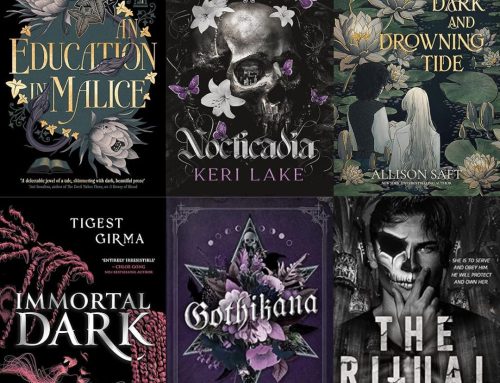
2025 was a year of new genres for me. Romance and fantasy have always been my constants, but I try each year to branch out, to follow new threads and see where they lead. In 2025, those threads were dark romance and dark academia.
The dark romance rabbit hole began in January with Haunting and Hunting Adeline. Dark academia followed a few months later, when I picked up Ninth House around April or May. I reread both over the autumn. And by December, I was penning a novel of my own that sits squarely at the intersection of the two: dark academia, dark romance.
That arc matters.
Ninth House is not a flawless novel. It is not the best book I’ve ever read. But something in it resonated with me in a way very few novels ever have. I have an academic background myself, so how it took me so long to find dark academia is honestly beyond me. But now that I have, I’m hooked.
What Bardugo taps into here isn’t just aesthetic or atmosphere. It’s a feeling. The recognition of how institutions shape people. How power disguises itself as tradition. How survival can look like success from the outside while feeling like something else entirely from within.
Ninth House didn’t just entertain me. It unsettled me. It stayed with me. It changed what I wanted to read, and what I wanted to write.
That’s why it was my favourite book of 2025.
And you can be sure that 2026 will be spent reading the rest of Bardugo’s work.




 4.28 Average