Skip to content

Rating: ★★★★★ (5/5)
Genre: Classic Coming Of Age
Available On: Amazon (I have the Seasons Edition of the first book… and the Wordsworth Collection version … and a Chiltern Classics edition … look, I REALLY love this book, okay?!)
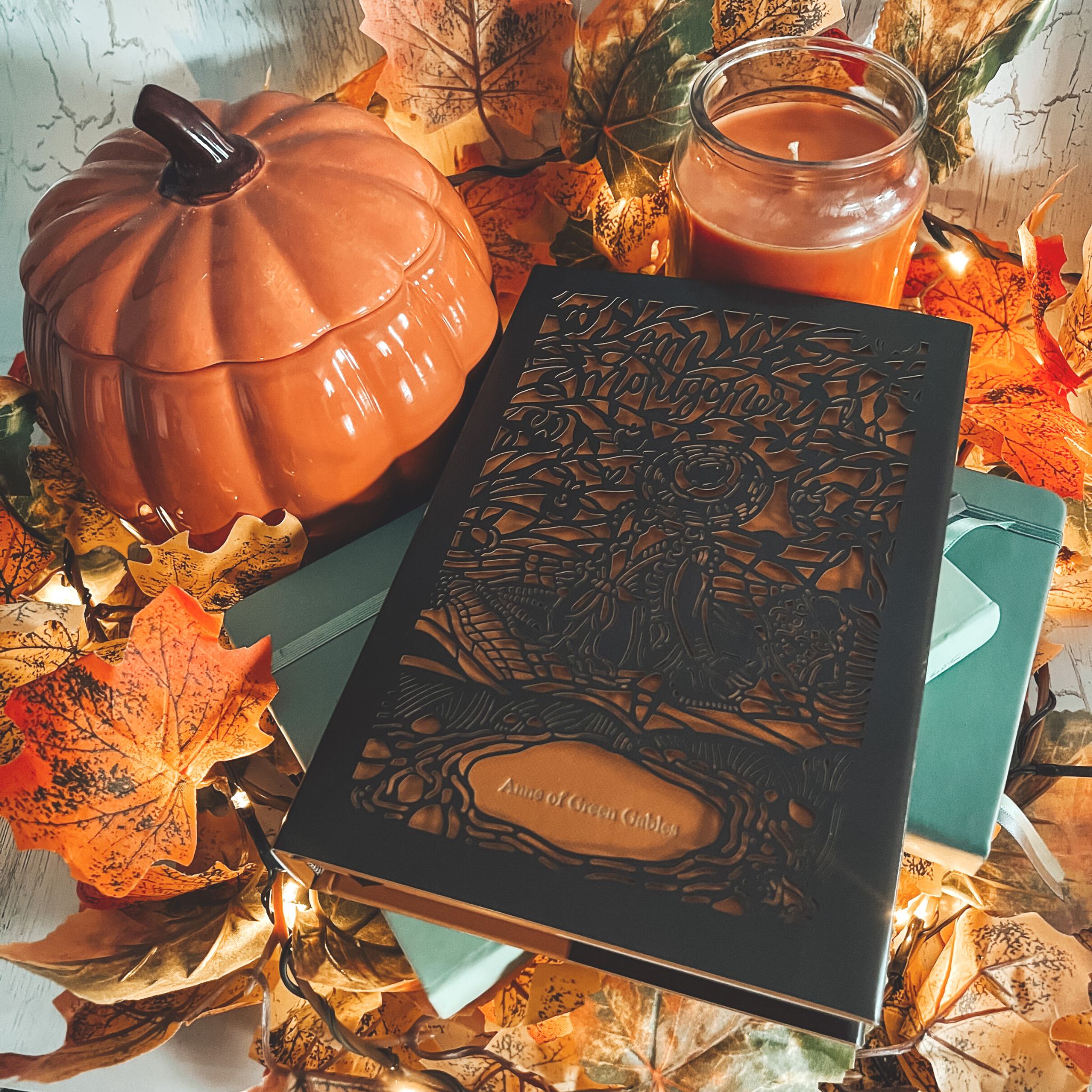
Ah, Anne of Green Gables, a tale that’s etched into my very soul. I’ll confess, dear reader, that this gem of a novel was more than a mere story to me during my tender years. It was a childhood favourite that I read and re-read so many times that I learned the story by heart. I was SO excited when this book was featured in the Autumn set of the Seasons Editions from Thomas Nelson; I was quite happy buying it again even though I already had a Wordsworth copy! And then I started collecting Chiltern Classics and it was one of the first ones I got.
Yes. I know. I have an addiction.
I couldn’t help but go full-autumnal when I took the photo for the blog, even though technically we’re still in summer.
Autumn is my favourite season. And to be honest this book takes me back to childhood autumns curled up in the reading chair in the lounge, a woodland of orange and red leaves outside the window. It was SO apt that it came out as part of the Autumn collection. I remember losing myself in the vibrant world of Green Gables, a place filled with beauty and grace, and feeling an undeniable kinship with the fiery and imaginative Anne Shirley. Her indomitable spirit and boundless creativity inspired me then, and they continue to do so now.
Imagine my delight when, years later, while exploring Netflix, I stumbled upon Anne With An E. The sight of it awakened memories of a past long gone, and I realised, with a twinge of nostalgia, that I’d not read this masterpiece in years. Naturally, I had to rectify this oversight immediately.
Upon re-reading, the magic was as palpable as ever. Lucy Maud Montgomery’s delicate prose, as captivating as a sunset over the ocean, took me back to a place I’d never truly left. Anne’s relationships, her trials and tribulations, her unabashed love for life – all were there, waiting for me like old friends.
The TV series, though somewhat divergent from the original, succeeded in its own way. It breathed life into Anne’s world and brought her unique charm to the screen. For those like myself, who’ve cherished this story, it’s a pleasant sojourn, even if not without its differences.
Anne of Green Gables is a timeless tale that transcends generations. It resonates as much now as it did in my youth. This re-read affirmed my belief that some stories never grow old; they merely wait, like the blossoms in spring, to enchant us anew.
Anne of Green Gables at a Glance
Author: Lucy Maud Montgomery
Publication Year: 1908 – 1921
Setting: The fictional village of Avonlea on Prince Edward Island, Canada.
Time Period: Late 19th century (roughly the 1870s–1880s).
Genre: Primarily a coming-of-age novel and classic of children’s literature, though the wider series is often viewed as containing one of the earliest examples of a slow-burn romance.
Romance Tropes: Enemies-to-Lovers, Academic Rivals, Slow Burn, First Love (Anne and Gilbert’s relationship unfolds gradually across the series)
Spice Level: Zero. This is a completely wholesome, family-friendly tale.
Themes: Belonging, imagination, friendship, family, identity, resilience, and growing up.
Charm and Beauty
The story of Anne of Green Gables revolves around Anne Shirley, an orphan girl with fiery red hair and an imagination that knows no bounds – honestly, it’s not difficult to figure out why I related to this one so strongly! Anne is mistakenly sent to live with Marilla and Matthew Cuthbert, siblings who intended to adopt a boy to help with their farm in the fictional community of Avonlea on Canada’s Prince Edward Island. Anne’s vitality and unbridled spirit win their hearts and those of everyone she meets.
What makes this story truly remarkable is not merely its plot, but how it’s told. Lucy Maud Montgomery’s writing style is lush and poetic, filled with vivid descriptions of the landscape that make Green Gables and its surroundings come alive. The narrative flows like a gentle stream, immersing the reader in a world both ethereal and grounded.
@briarblackbooks The original I read was from the library. This is the rather lush Chiltern edition. What’s THE book that got you into reading? #Booktok #Booktoker #Bookish #Reader #ReadersOfTiktok ♬ nhạc nền - Sò Vintage
Montgomery captures the essence of childhood with uncanny grace, portraying the growing pains, joys, and lessons of youth. Her characters are real, with tangible emotions and distinct personalities. Anne herself is a complex character, filled with dreams and desires, always reaching for more but remaining rooted in her love for her new home and family.
In both substance and style, Anne of Green Gables is a literary treasure, offering an intoxicating blend of innocence and wisdom, humour and pathos. Revisiting it after so many years only reinforced its timeless appeal, and I encourage any who’ve not yet journeyed to Green Gables to do so. Whether you are young or old, this classic has something to offer.
A Solid Five Star Read
There’s hardly a doubt in my mind as to the rating this timeless masterpiece deserves. Anne of Green Gables earns a glowing five stars for several reasons. Anne Shirley is not just a character; she’s a living, breathing entity filled with passion, determination, and a zest for life. Her growth and her relationships with other richly drawn characters give the story an authentic heartbeat.
Lucy Maud Montgomery’s writing style is both elegant and accessible, weaving a tale that captivates readers of all ages. Her prose paints pictures, resonating in the heart and mind long after the pages are closed. This story’s power to evoke emotions is unparalleled. Whether it’s laughter at Anne’s whimsical misadventures or tears at more poignant moments, the connection to the reader is immediate and profound.
The recent adaptation, Anne With An E, though different, pays homage to the original story and brings a fresh perspective that aligns with modern sensibilities without losing the charm of Anne’s world. There’s a reason I own multiple copies of this book and listened to the audiobook on repeat for about a year as a child. Anne of Green Gables is timeless. I would happily class it as literary excellence, as it’s a novel that continues to inspire, enchant, and warm the hearts of readers from all walks of life. It’s not just a book; it’s an experience, a childhood friend, a lifelong companion.
If you’re reading it for the first time as an adult, granted, it might not hit quite so hard as it does for someone with the childhood nostalgia attached to it. But it’s still a great book!
Major Themes in Anne of Green Gables
For a novel that looks like a simple story about a red-haired orphan arriving at a farm and struggling to fit in, Anne of Green Gables carries some surprisingly deep ideas and meaning. The main themes of Anne of Green Gables revolve around belonging, imagination, friendship, and the slow process of growing up. But when you put them all together it becomes a bit of an aria on growing up as a person with…quirks. Eccentricities. Oddities. You’re not like everyone else and they never let you forget it, but in time, you find that’s a strength, not a weakness, and people learn to love you rather than ostracise you for it.
If you felt like an outcast as a kid, this book was the most comforting read imaginable. Belonging is the whole point of the story. Anne begins the novel as a child who has never truly had a home. As she arrives at Green Gables, she already expects to be sent away again, and very nearly is. The emotional core of the tale is watching her gradually become part of Matthew and Marilla’s family. The story isn’t really about an orphan being adopted. It’s about someone finally understanding it is possible for them to belong somewhere. To feel accepted, loved, appreciated.
Another theme in Anne of Green Gables that’s indelible, and makes the story so magical, is the power of imagination. Anne doesn’t just live in Avonlea, she transforms it. She renames places, invents elaborate backstories, and turns ordinary scenery into something romantic and dramatic. Her imagination is partly how she survives a difficult childhood, but it’s also what makes her such a memorable character.
The novel is also very much about growing up. Anne makes mistakes constantly, sometimes spectacular ones, but she learns from them. By the end of the book she is still unmistakably Anne, but she has gained a sense of responsibility and purpose that she didn’t have at the beginning.
Friendship is another central theme in Anne’s world. And done beautifully because she starts off as this weird little creature nobody understands, and gradually developing very close friendships. Anne’s bond with Diana Barry is pure friendship goals in this series. It becomes one of the emotional anchors of the story, while her rivalry with Gilbert Blythe slowly evolves into something more complicated, and very relatable. Across the wider series, Anne and Gilbert’s relationship develops into one of the earliest examples of the slow-burn enemies-to-lovers dynamic that romance readers still love today.
The book also carries a quiet, incredibly soothing appreciation for nature and beauty. It’s Cottagecore before anyone knew that was a thing. Montgomery’s descriptions of Prince Edward Island are part of what makes the story feel so vivid, but they also bring to life one of the underlying lessons in Anne of Green Gables: that life is extraordinary if you learn to view everything from a place of curiosity and wonder.
Honestly, it’s the themes of Anne of Green Gables that give the novel its lasting charm. Yes, it’s a story about childhood mishaps and misfits in a small Canadian village. But on a deeper level, it’s about identity, belonging, and learning that you don’t need to fit in. You just need to learn how to shape your own place in the world.
The Gentle Romance
The charm of Anne of Green Gables is not limited to Prince Edward Island’s idyllic landscapes or Anne’s boundless imagination. Running quietly through the story is a thread of romance that develops as Anne grows from an impulsive child into a thoughtful young woman.
This is not a sweeping, dramatic love story. Instead, the Anne of Green Gables romance unfolds slowly in the background, almost as a natural extension of Anne’s personal growth. Relationships deepen, rivalries soften, and feelings develop gradually rather than through grand gestures or melodrama.
Think restraint. Think yearning. Think I’m still refusing to admit I like this guy but my whole body hums in anticipation of him appearing again.
The affection that emerges between Anne and all of the people around her feels very organic. Her emotions in general are warm, sincere, and very grounded despite her slightly erratic disposition.
In many ways, the romantic element simply adds another layer to the story’s established emotional landscape. It sneaks up on you. The focus remains primarily a coming-of-age tale, but the gentle presence of a budding love story gives Anne’s journey extra depth and possibility as she gets older.
Anne Shirley and Gilbert Blythe: An Old School Enemies-to-Lovers Romance
Despite not being the point of the story, the Anne and Gilbert relationship is what makes this saga sing. It begins with a childish insult. Gilbert (unimaginatively) teases Anne by calling her ‘Carrots’. From there, it rapidly degenerates into a fierce academic rivalry that lasts for years.
Anne refuses to forgive Gilbert for maligning her fiery red hair (as well she should!), and the two become determined competitors in school. And yet, beneath that rivalry a grudging, then growing respect blossoms.
Gilbert consistently recognises Anne’s intelligence and ambition. Anne slowly realises that her greatest rival may also be the person who understands her best.
For the modern reader, the Anne Shirley x Gilbert Blythe romance is one of the clearest early examples of the enemies to lovers dynamic.
I know. It’s kind of shocking given how quaint and unassuming the book is. But honestly, this is a killer E2L story. Their connection is a slowburn fuelled by shared experiences, intellectual competition, and the familiarity that can only come with the passage of real time (not plot convenient time jumps or ‘oh it’s a month later’). There’s no dramatic declaration that suddenly reveals they’re both in love and they’re shocked to discover it.
Anne and Gilbert’s love story evolves painfully slowly, painstakingly built on admiration, friendship, and equality.
Which, honestly, when you consider when it was written is actually kind of groundbreaking.
Instead of instant attraction, Montgomery gives readers something much slower and more realistic: two people growing up alongside each other until affection becomes inevitable.
So, Is Anne of Green Gables a Romance?
When people ask my favourite Classic read and this is my answer, the inevitable follow up is obvious: is Anne of Green Gables a romance?
Romance is my thing, after all. And the most infamous aspect of the tale is the love story between Anne and Gilbert.
But, strictly speaking, the novel itself is not primarily a romance. It is best seen as a coming-of-age story that follows Anne Shirley’s journey from lonely orphan to a young woman who finally feels at home in the world.
However, all that being said, the Anne of Green Gables romance element is undeniably present and inescapably compelling. The gradual development of Anne and Gilbert’s love story runs quietly beneath the main narrative and becomes more prominent as the series progresses.
In other words, the first book is about Anne finding her place in Avonlea, while the later books expand more fully on the Anne Shirley and Gilbert Blythe relationship as they move from hating each other, to being fiercely competitive, to grudging friendship, and eventually love.
But the kind of love that makes you love the notion of love and desperately wish to find your own Gilbert (or Anne, depending on preference of course!).
So while Anne of Green Gables is not a traditional romance novel, its slow-burn relationship arc has become one of the most beloved romantic storylines in classic literature. And, honestly, is why I love this story so much. If it was just a coming of age, it would be good. The depth added by Anne falling in love with her once-hated classmate makes it something I come back to time and time again.
Which probably explains why I own so many copies 🙈
What Romance Tropes Are In The Novel?
Anne of Green Gables features several romance tropes that are now considered classic in literature.
Enemies to Lovers: Anne and Gilbert begin as academic rivals, with Anne initially disliking Gilbert intensely after he teases her about her red hair. Over time, their relationship evolves, and they become friends and eventually romantic partners. This slow burn from animosity to affection is a timeless romantic trope.
First Love: The romance between Anne and Gilbert represents the innocence and intensity of first love. Their feelings for each other grow slowly and naturally as they mature, capturing the sweetness and simplicity of young love.
Love-Hate Relationship: Anne’s initial feelings for Gilbert swing between anger and admiration. She’s torn between her wounded pride and her acknowledgment of Gilbert’s talents and kindness. This complex dynamic adds depth to their evolving relationship.
Slow Burn Romance: The romance between Anne and Gilbert doesn’t happen overnight. It’s a slow and gradual process that builds throughout the series, filled with misunderstandings, friendship, and eventual realization of deeper feelings.
The One Who Got Away (Temporarily): There are moments where it the relationship between Anne and Gilbert might never happen due to misunderstandings or other romantic interests. This tension keeps readers invested in their relationship, hoping they’ll finally admit their feelings for each other.
Intellectual Rivalry: Anne and Gilbert’s relationship starts with a competitive edge, particularly in academics. They push each other to be better, and this intellectual rivalry serves as the basis for their initial interactions, fostering respect and admiration that later turn into affection.
These tropes work together to create a layered and engaging romantic subplot that complements Anne’s individual growth and the novel’s broader themes. It’s a romance that feels timeless and real, resonating with readers of all ages.
When Is Anne of Green Gables Set?
Anne of Green Gables takes place in the late nineteenth century, most commonly understood to be sometime in the 1870s or early 1880s. Lucy Maud Montgomery never specifies an exact year in the text, but the social and technological details throughout the novel make the time period fairly clear.
The story unfolds in Avonlea, a fictional village on Prince Edward Island, Canada, closely modelled on the rural communities Montgomery knew growing up. Total honesty, this book is what gave me the idea to create the fictional town of Ashfordby (based on the real towns I know in Cheshire) for my own series. It’s a great way of showing off a specific location because you can cherry pick things you like about this town, that village, the county as a whole, one specific quirky type of topography, and put it all in a single place.
But enough about my books. In this fictionalised town, life revolves around small farms, church gatherings, seasonal work, and a tightly knit local community where everyone knows everyone else.
Children attend small village schools, travel is largely by horse and carriage, and social expectations are strongly shaped by the values of the late Victorian era. (Canada was part of the British Empire at the time, so Victorian social norms applied there as well.) These details give the novel its distinctive atmosphere and help explain many of the characters’ attitudes and behaviour.
Understanding the historical setting also highlights how unusual Anne can appear to the people around her. Her dramatic imagination, outspoken nature, and fierce academic ambition are very much not the norm for a quiet nineteenth-century farming community where conformity and reputation mattered deeply. I deeply related to her character for these personality traits, but she’s far more radical in the context of the late 1800s than she could ever be in the modern world. Even the world of the 1990s, which is when I was first reading it!
What Genre Is Anne of Green Gables?
Anne of Green Gables by Lucy Maud Montgomery is primarily classified as a coming-of-age novel. It’s a classic work of children’s literature that can also be categorised within the genres of family and friendship fiction. The novel’s focus on Anne Shirley’s growth, development, and her adjustment to her new family and community makes it a beloved tale for readers of all ages. It contains elements of humour, emotion, and insight into human nature, making it a multifaceted and enduring work.
How Spicy Is The Novel?
This novel is not spicy at all. It is a wholesome and family-friendly story that focuses on the growth, adventures, and friendships of a young orphan girl, Anne Shirley. Her experiences are portrayed with innocence and charm, suitable for readers of various age groups, including children. The novel emphasises themes such as imagination, kindness, community, and self-discovery, without venturing into provocative or adult content.



 4.28 Average